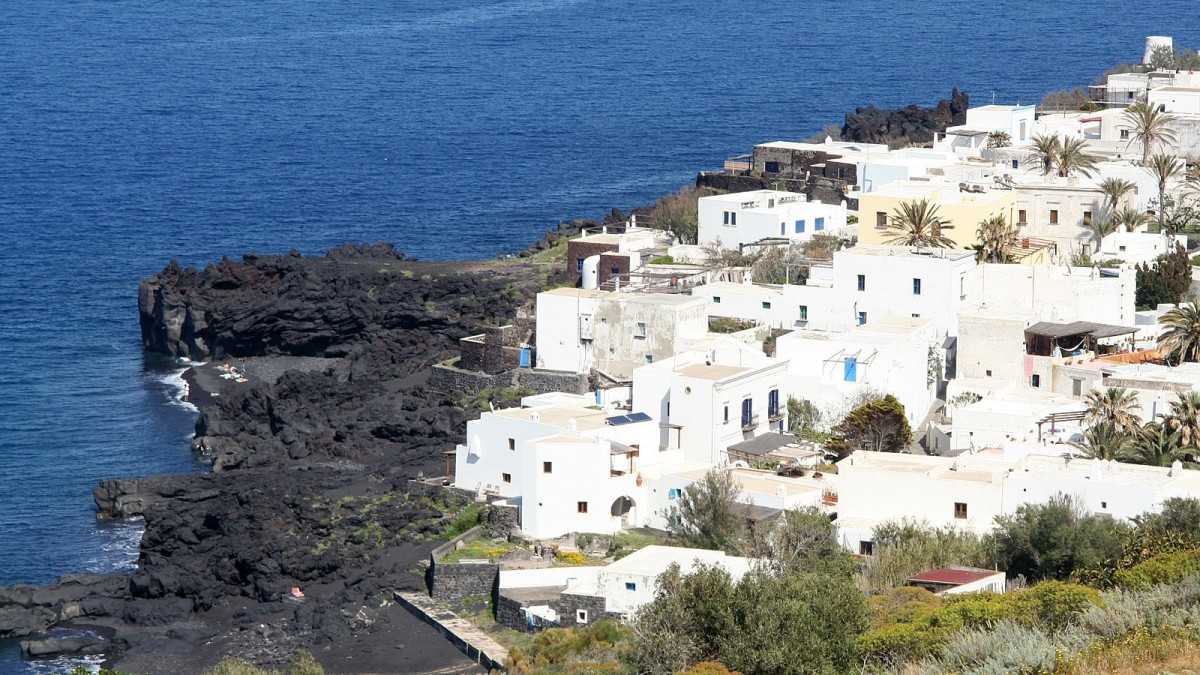
Stromboli can be visited in a single day, yet it has a way of staying with you. It is the only Aeolian Island with a permanently active volcano. White houses sit against the black mountainside, lava-sand beaches line the coast, narrow lanes are free of cars, and the crater lights up each evening.
Here is what to see in Stromboli without missing the essentials: the village and its churches, the isolated hamlet of Ginostra, scenic trails towards the Sciara del Fuoco, and the spectacle of eruptions after nightfall.
What to see in Stromboli on foot in one day
The island is small and traffic-free. Its only “cars” are Ape three-wheelers and scooters. Exploring on foot is the most authentic way to get under its skin. Places not to miss include:
- Church of San Vincenzo: in the heart of the village, with a terrace looking out over the sea and Strombolicchio.
- Piazza San Vincenzo and the village lanes: a maze of whitewashed lanes, bougainvillea and blue doors, well suited to an unhurried stroll.
- Ficogrande Beach: gleaming black sand and clear water at the island’s most convenient and busiest beach.
- Spiaggia Lunga and Piscità: a wilder, quieter stretch of coast, good for a swim away from the crowds.
- Strombolicchio: the sea stack and its lighthouse rising off the coast, reached by boat.
- The observatory and Sciara del Fuoco trails: viewpoints overlooking the lava flow as it descends into the sea.
- The house featured in Stromboli, terra di Dio: the home associated with Roberto Rossellini’s celebrated film starring Ingrid Bergman, of interest to film fans.
Visiting Ginostra
Ginostra is Stromboli’s most remote and evocative hamlet, with a small cluster of homes on the island’s south-western side. Very few people live here year-round, giving it an unmistakably suspended, almost timeless feel. It is worth seeing the stone houses among olive and prickly pear trees, paved mule tracks and near-total silence.
Ginostra can only be reached by sea. There are no roads linking it to Stromboli’s main village. The available options are:
- Hydrofoils or ferries operated by scheduled services, which call at Ginostra as well as Scari, the main port, during high season.
- Private boats or water taxis, a more flexible option for arranging departure and return times.
Trekking routes to explore
Trekking is one of the main reasons many people visit the island. However, the ascent to the summit craters at 924 metres has been prohibited since 2019. Access is regulated by Italy’s Civil Protection Department and varies according to volcanic activity levels. Key routes include:
Sentiero Natura, reaching around 290 metres: this is the only section accessible freely without a guide.
It begins in the village, passes through Mediterranean scrubland and has views towards the craters and Strombolicchio. It is of moderate difficulty and suitable for people without a high level of fitness.
Guided hike to 400 metres: this is the closest viewpoint to the craters currently authorised.
A certified volcanological guide is compulsory above 290 metres. The walk takes roughly five hours in total, including two and a half to three hours of ascent, and usually begins in the late afternoon to reach the viewpoint as darkness falls.
- Walk to Punta Labronzo: an easy, scenic route towards the observatory, suitable for anyone after views of the Sciara without a demanding hike.

How long it takes to visit Stromboli
One full day is enough to visit Stromboli, but spending at least one night on the island changes the experience completely. The reason is simple: the volcano is at its best after sunset, when the eruptions stand out clearly against the night sky.
On a day trip, arriving in the morning and leaving in the evening, there is time to explore the village, have a swim, walk part of a trail and watch the first evening eruptions.
Staying for one or two nights makes it possible to enjoy the island’s calm after day visitors have left, or take a night-time boat trip to see the Sciara del Fuoco from the sea.
Things to do in Stromboli in the evening
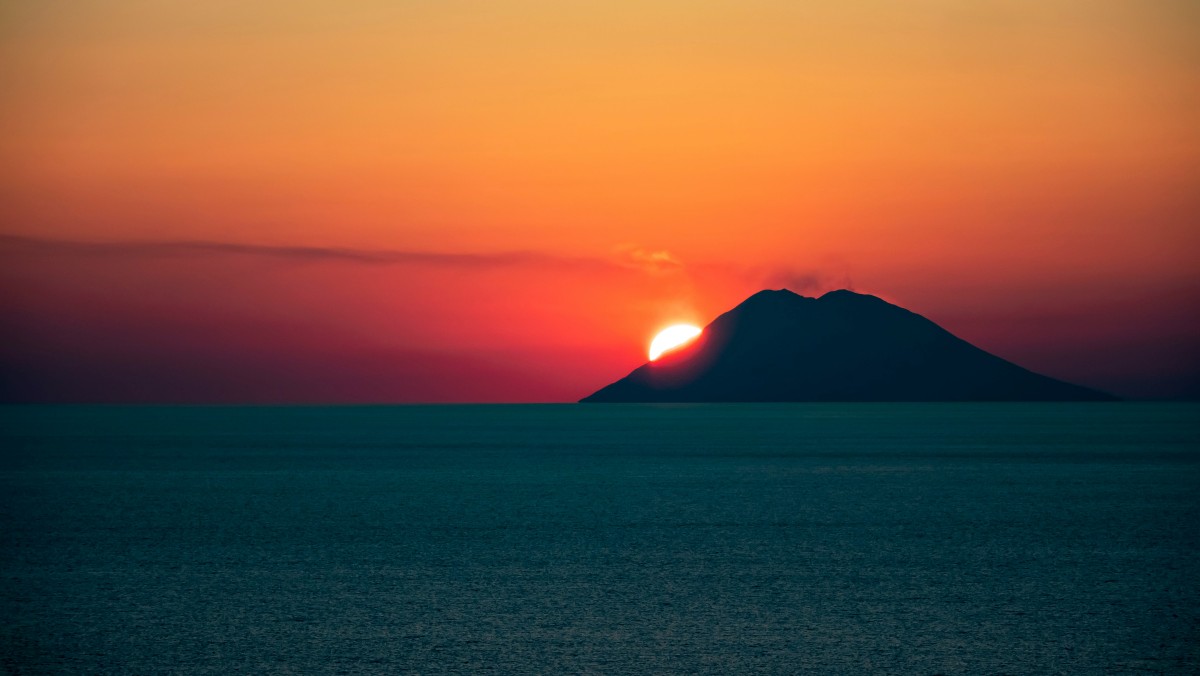
Stromboli’s evenings are particularly appreciated for the volcano’s eruptions. There are several ways to watch the display. The first is an evening guided trek to 400 metres, reaching the closest authorised viewpoint as darkness falls.
A more relaxed alternative is a night-time boat trip: boats position themselves opposite the Sciara del Fuoco, allowing passengers to watch the lava flow sliding down towards the sea from a remarkable vantage point.
What to eat in Stromboli
Stromboli’s food is typical of the Aeolian Islands: simple, seafood-based and scented with the Mediterranean. Its dishes draw on the catch of the day, local vegetable gardens and ingredients that have long been produced on the island. Typical choices include:
- Pane cunzato: rustic bread dressed with tomato, capers, anchovies, oregano and olive oil, sometimes with tuma, a soft local cheese, or ricotta.
- Fresh fish and seafood: swordfish and anchovies are common, often served in salads, grilled or stewed.
- Pasta with capers and aubergines: Aeolian capers are particularly prized for their intense, fleshy flavour.
- Aeolian salad: potatoes, onions, capers, olives and oregano.
- Granita and cannoli: classic Sicilian sweet treats, particularly welcome in the afternoon heat.
- Malvasia delle Lipari: the archipelago’s signature sweet wine, usually served at the end of a meal.
Other Aeolian Islands to visit
Stromboli belongs to an archipelago of seven islands, each markedly different. With a few extra days, the others are also worth exploring:
- Lipari: the largest and liveliest island, with an animated historic centre, the Castle, an archaeological museum and the dramatic Pumice Quarries.
- Salina: the greenest island, home to Malvasia wine and capers, with scenery made familiar by the film Il Postino.
- Vulcano: associated with thermal mud baths, fumaroles and the hike to the Gran Cratere della Fossa.
- Panarea: the smallest and most fashionable island, with dreamy coves, clear water and the islet of Basiluzzo.
- Filicudi: wild and unspoilt, a good spot for snorkelling and the celebrated Grotta del Bue Marino sea cave.
- Alicudi: the most remote and quietest island, with no roads or cars, and a retreat for people seeking proper isolation.
Living in Stromboli
Living in Stromboli means accepting a pace of life that is increasingly rare in Italy and Europe. The island has only a few hundred permanent residents, and that number shrinks further in winter.
Transport links depend on the weather. When the sea is rough, hydrofoils do not run, and the island can remain cut off for several days. During summer, Stromboli is full of tourists and activity; in winter, it becomes exceptionally quiet and authentic.
For people drawn to authenticity, raw nature and a small, close-knit community, Stromboli has something unusual to it.
Stay inspired for your travels in Italy —get our weekly newsletter for the latest travel, legal, and lifestyle news.