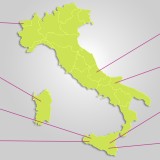
If you’re hunting for 1-euro houses for sale in Italy 2026, this map pulls everything together in one place. Each pin marks a village mentioned on the official €1 house website. Zoom in and click on a village to compare locations before deciding where you might actually want to take on a renovation adventure.
1-euro houses schemes in Italy 2026
€1 houses are still available in Italy in 2026, but schemes come and go as individual municipalities launch new calls or close old ones once properties are assigned or funding changes. Some villages pause their projects for a few years, while others quietly reopen with updated conditions, different renovation deadlines or higher deposits.
Research your 1-euro house village
Once the map has helped narrow down where you might want to start a €1 house project, it’s worth taking a closer look at what each 1-euro village offers in terms of services, connections and lifestyle. If island life appeals, then have a look at a map of the 1-euro house villages in Sicily, or of the 5 available schemes in Sardinia.
The villages shown on this map are those currently listed on the 1-euro house website. However, it’s a good idea to always click through to each comune’s official page before making plans, as local rules and availability can change with little notice.
What to check before applying for a €1 house in Italy
Before checking out the top 1-euro house villages for 2026 and falling in love with a crumbling stone balcony, there are a few practical things to confirm with each comune:
- Renovation timelines and obligations
Check how long you have to start and complete the renovation, whether you need to present approved plans, and what happens if you miss a deadline. - Deposit and financial guarantees
Many schemes require a security deposit or bank guarantee, often several thousand euros. Make sure you understand the exact amount, when it’s paid, and the conditions under which you’ll get it back. - Residency and use requirements
Some villages want you to become a resident, open a business or use the property as your main home or a guesthouse. Confirm whether you’re free to use it as a holiday home, rent it out, or if there are minimum-stay rules. - Local taxes and ongoing costs
Ask about purchase taxes, notary fees, registration costs, and yearly expenses such as IMU (property tax), waste tax, and utilities. - Official contacts and documentation
Only rely on information from the comune’s official channels. Make sure you have the latest public notice, application forms, and a verified email or phone contact at the town hall before you send money or sign anything.
Stay in the know about living in Italy as a foreigner—get our weekly newsletter for the latest travel, legal, and lifestyle news.