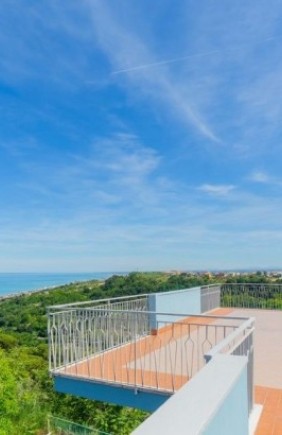
At the dawn of the new summer season, the topic of short-term holiday flats in Italy is back in the spotlight. Since the beginning of the year, new regulations on the topic have been in force, both at European and Italian level, and experiments have begun for a complete database of temporary rental flats, but there is still a lot to be done to fix various irregular situations. The Associazione Italiana Affitti Brevi (Aigab) takes stock of the sector, providing some interesting data and clarifying the situation of the relevant regulations.
The new rules on short-term rentals in Italy
On 29th February 2024, the European Parliament definitively adopted the new requirements on how to collect and share data on short-term rental services. This regulation will enter into force two years after its publication in the Official Journal of the EU. At the same time, Law No. 213 of 30th December 2023, in force as of 1st January 2024, introduced significant regulatory changes for short-term holiday rentals and the applicable tax regime.
While the new EU regulation aims to promote a transparent and responsible online platform economy, protecting consumers from fraudulent offers, the Italian Budget Law introduced new tax obligations for entrepreneurial short-let operators. Despite these regulations, the regulation of property managers remains a critical issue.
Short-term rentals database tests underway
From 9am on 3rd June 2024, tests for the implementation of a comprehensive database of short-term tourist rentals in Italy has been underway. The test will take place in Apulia, followed by Abruzzo and Lombardy.
"As the Associazione Italiana Gestori Affitti Brevi- AIGAB, which represents professional operators with their companies as protagonists of the entrepreneurially managed tourist rental market, we welcome the start of a gradual test phase on the implementation of the National Database of accommodation facilities and properties in short term rental and for tourism purposes (BDSR)," comment the sector's professionals. "We particularly welcome the fact that municipalities will be able to check the Ministry's lists in order to impose sanctions on those who promote properties without a CIN. We believe that in order to combat squatting, it is essential to have homogeneous rules at the national level, simplicity in the use of PA software, and to avoid the proliferation of rules at the municipal level that are often arbitrary and detrimental to the right to private property and competition."
The short-term rental market in Italy in 2024
In Italy, the short-term rental market is very active, with the country ranking third after the United States and France in terms of the number of real estate units offered for short-term rental on Airbnb. The Centro studi Aigab (Italian Association of Short Term Rentals) found that out of the 35 million residential flats in the country, there are 9.6 million unused second homes, accounting for 29 per cent of the total. Of these, only 640,000 are placed for short-term rental via online listings: 1.8 per cent of existing homes and 6.6 per cent of unused second homes.
This represents a potential of 2.5 million beds, about half of the national total, the vast majority of which are located in seaside resorts, the countryside or in villages, while in large cities about 15 per cent of the properties are empty. This real estate is 96 per cent in the hands of individual owners while 25 per cent is managed by professional operators.