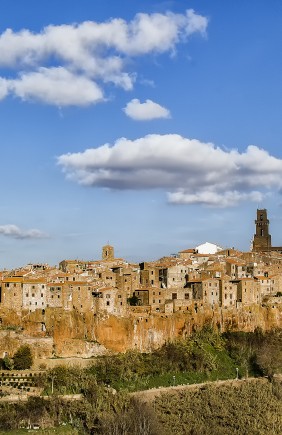
More than 14,000 hectares of public land are returning to the agricultural market under a scheme intended to shift the balance in Italy’s rural areas. Ismea has launched the ninth edition of the National Bank of Agricultural Land (Banca Nazionale delle Terre Agricole, or BTA) for 2026, putting cultivable land up for auction across Italy and providing subsidised finance for people under 41.
The most tangible development is a combination of repayment terms of up to 30 years and interest discounts linked to an insurance policy, designed to support generational renewal. The map of available plots can already be viewed online and shows a strong concentration in southern Italy and on the islands, with Sicily leading the way.
- What the 2026 Land Bank is
- Where the land is: regions with the greatest availability
- 2026 timetable: showcase period, bids and online auctions
- How to take part: registration, PEC email and security deposit
- What happens if there is more than one bid: auction and auction notary
- Payments and transfer of ownership: how it works
- Benefits for under-41s: long repayment terms and reduced interest
- Requirements to be demonstrated after a successful bid
- Legal compliance rules: new exclusions
What the 2026 Land Bank is
The National Bank of Agricultural Land is the scheme through which Ismea brings publicly owned, cultivable land back into use, making productive use of plots that are currently abandoned or unused. The initiative works as an official catalogue: each plot is listed with its location, existing crops and reserve price, allowing a transparent assessment before a bid is submitted.
The aim is to speed up the productive use of land and support people looking to establish or expand an agricultural business. This edition places particular emphasis on the financial sustainability of an investment, thanks to payment terms spread over time for young people. The expected result is a return to farming through sound, long-term projects.
Where the land is: regions with the greatest availability
The plots are not concentrated in a single broad area, but the greatest availability is in southern Italy and the islands. Sicily alone accounts for roughly 27% of the total area included in the call for bids, confirming its position as the region with the largest pool of opportunities.
It is followed by Puglia, Tuscany, Basilicata and Umbria, with plots connected to varied productive settings and well-established agricultural sectors. This distribution points to a potential impact on rural repopulation in southern Italy and investment capable of bringing stalled land back into use.
2026 timetable: showcase period, bids and online auctions
The process has two main stages, intended to prevent rushed decisions. The so-called fase vetrina, or “showcase phase”, runs between 1 July and 31 August 2026. During this period, the map and individual plot information can be consulted, but no bids can be submitted.
The window for taking part in the auctions then runs between 14 September and 14 November 2026, when financial proposals can be submitted. This timetable allows time to gather information, assess whether a plot fits the proposed project and prepare the required documents.
How to take part: registration, PEC email and security deposit
The auctions are open to individuals and companies, with no initial requirement for agricultural qualifications. The first step is to create a profile in the Land Bank area of the Ismea website, providing a certified email address (Posta Elettronica Certificata, or PEC) for all official communications.
After identifying a plot of interest, a financial bid is uploaded online during the bidding window. As a guarantee, each bid must be accompanied by a security deposit equal to 10% of the reserve price, paid by banker’s draft made out to Ismea. The deposit is returned if the bidder does not secure the land.
What happens if there is more than one bid: auction and auction notary
Where several proposals are received for the same plot, a 30-day booking period opens for other interested parties. This is followed by an online ascending-price auction, held before an auction notary (Notaio Banditore), who awards the land to the highest bidder.
If no competing bids are submitted, the first applicant is awarded the plot under the procedure. This structure provides transparency and traceability, both crucial when public assets are being put to use.
Payments and transfer of ownership: how it works
Once the auction has concluded, the outstanding amount is paid before the notary when ownership is transferred. For the successful bidder, the security deposit is credited towards the purchase price, while the remaining 90% is paid when the deed is executed.
A straightforward transfer process reduces uncertainty and makes the operational timetable more predictable. Formalising the transaction before a notary protects both sides and closes the competitive stage with a fully enforceable legal title.
Benefits for under-41s: long repayment terms and reduced interest
The incentive structure is intended to support young people entering the agricultural sector on a lasting basis. People under 41 can spread payment of the reserve price over a maximum of 30 years, secured by a mortgage. An interest-rate discount is also available if an insurance policy is taken out to protect the land being purchased.
This combination reduces the initial financial burden and helps with planning medium- and long-term investment. The relevant option must be selected when completing the bid on the online portal in order to access these benefits.
Requirements to be demonstrated after a successful bid
The benefits are not automatic. They are activated once the relevant requirements have been demonstrated within the timeframes set by Ismea. After the auctions close, a document-checking stage begins and may continue for around two years, in line with the period for which the ranking remains valid.
Requirements for individuals and companies
It is useful to distinguish between individual and company applications when setting out the required standards. The conditions are intended to ensure the land is genuinely used for agricultural purposes.
- Individuals: registration with the Chamber of Commerce’s Business Register and an active VAT number for agricultural activity when the award becomes final.
- Companies: agricultural-company status included in the company’s stated corporate purpose; an absolute majority of partners and shares held by young people aged 18 to 41; and management entrusted to the young shareholders.
Legal compliance rules: new exclusions
The new edition strengthens safeguards against illegal practices in agricultural work. People and businesses with convictions linked to labour exploitation or caporalato — the illegal recruitment and exploitation of agricultural workers — are expressly barred from taking part in the auctions.
This selection process limits the risk of distorted competition and encourages more transparent supply chains. It sends a clear signal in defence of agriculture’s social value.
Article seen on QuiFinanza: Ismea lancia Banca Terre 2026, all’asta 14mila ettari con tassi agevolati per i giovani