Verona is often treated as a quick stop between Milan and Venice, but it really deserves a bit more love. The historic centre is wrapped in a loop of the Adige River, full of Roman ruins, medieval towers and soft terracotta tones that look good even on a grey day. Having a clear plan of things to do in Verona helps, as there is a lot squeezed into that little bend in the river.
Why Verona in Italy is worth visiting
Verona sits in the Veneto region in northern Italy, with Lake Garda's villages just up the road. The historic core is a UNESCO World Heritage site, and once you start walking around, it is pretty obvious why.
What is Verona famous for?
The city is famous for its Roman Arena, one of the best-preserved amphitheatres in Italy, and for being the setting of Shakespeare’s Romeo and Juliet. Beyond the romance and ruins, people love Verona for its elegant piazzas, medieval bridges over the Adige River, and food and wine culture built around local Valpolicella and Amarone red wine producers.
Unmissable things to do in Verona
The old town sits in a curve of the Adige River, with most of the main things to do in Verona clustered between Piazza Bra, Piazza delle Erbe and the bridges. There are loads of little churches, side streets and viewpoints in Verona, but most first-time visitors ask the same thing: what not to miss in Verona. This list pulls together the essential Verona attractions. Once you've ticked them off, check out the quirky, less-touristy activities you can do in Verona.
Verona Arena
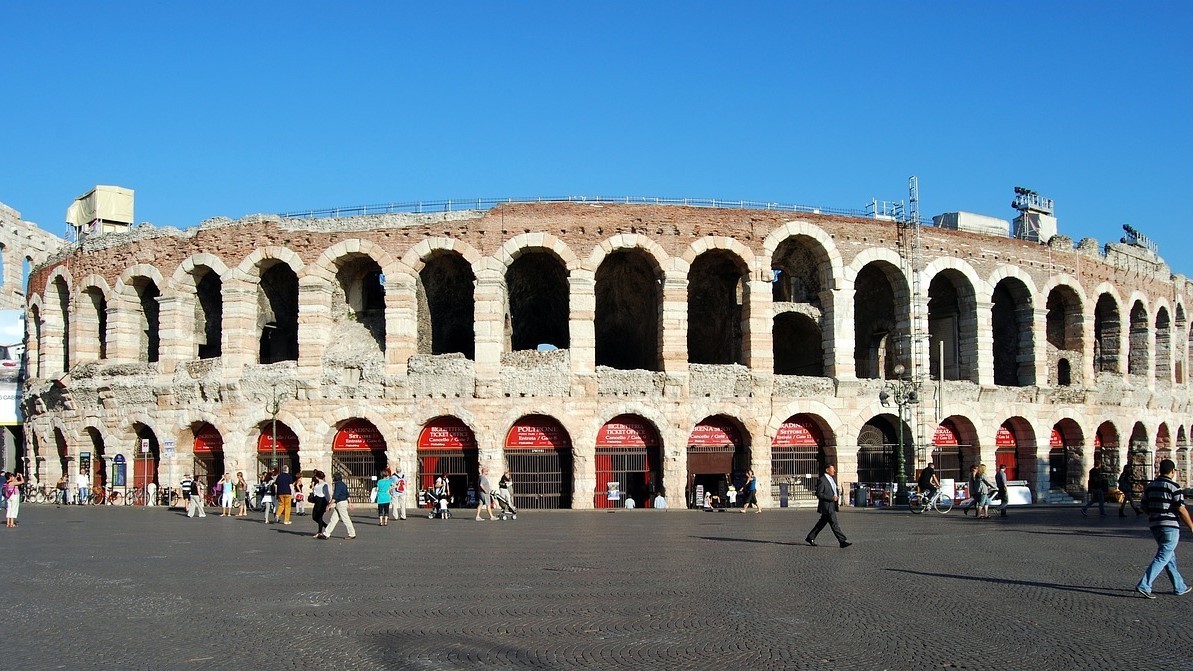
The Verona Arena Roman amphitheatre dominates Piazza Bra with its pale stone arches and stacked tiers of seats. Walking through the arches and up onto the steps, you realise how compact and steep it is, and how much of the original structure has survived.
- Visit in the evening during opera season if you can face the stone seats and long runtime, and bring a cushion and layer in case of a temperature drop.
Juliet’s House and balcony (Casa di Giulietta)

Juliet’s House and balcony hide behind a modest archway off Via Cappello, but the graffiti-covered passage and steady stream of people give it away. The courtyard is small, flanked by old brick walls, with the famous balcony protruding above and Juliet’s bronze statue holding court below.
Piazza delle Erbe and Piazza dei Signori
Piazza delle Erbe opens up like a film set, with uneven roofs, faded frescoes and a jumble of market stalls under striped awnings. In the middle, the fountain and column give it a proper old-European-square feel, while around the edges cafés spill out onto the pavement.
Slip under an arch, and you suddenly find yourself in Piazza dei Signori, which has a much more stately, enclosed atmosphere. Here, the palaces line up neatly, statues and arches frame the space, and you get the sense this was very much the seat of power.
Piazza Bra and Via Mazzini
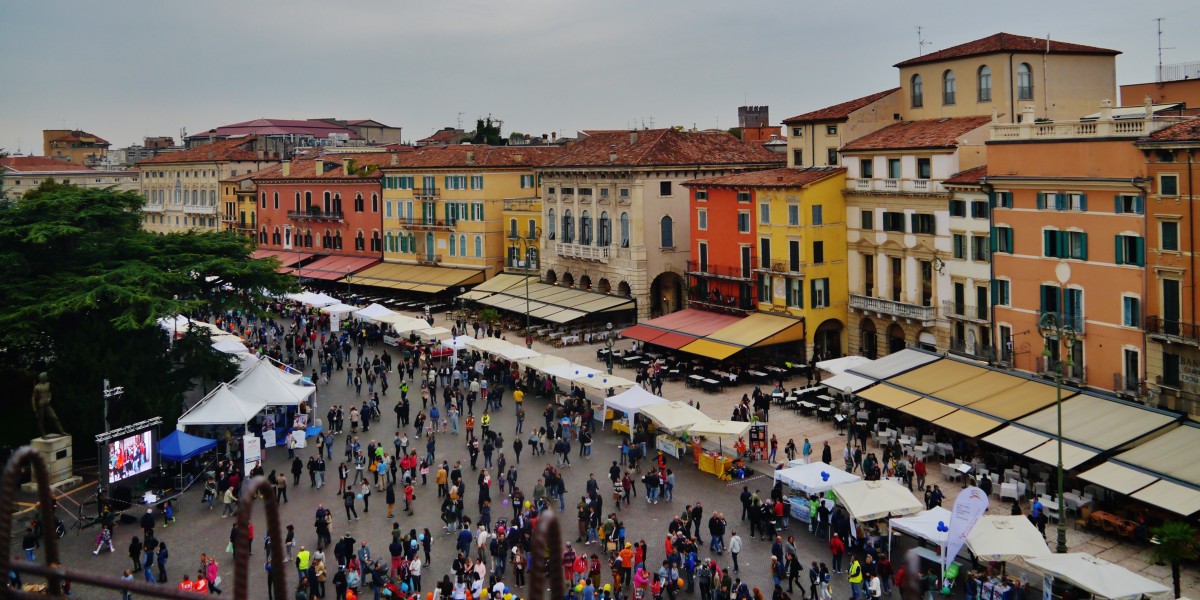
Piazza Bra is a broad open space ringed by pastel façades, trees and café terraces, with the Arena anchoring one side. You'll see commuters cutting across the square, kids zooming around on scooters and opera-goers gliding towards the entrance at night.
Via Mazzini shoots off from Piazza Bra as a polished stone canyon of shopfronts and shoppers. It is busy, commercial and not especially subtle, but it is very much part of the city’s everyday life.
Castelvecchio and Ponte Scaligero
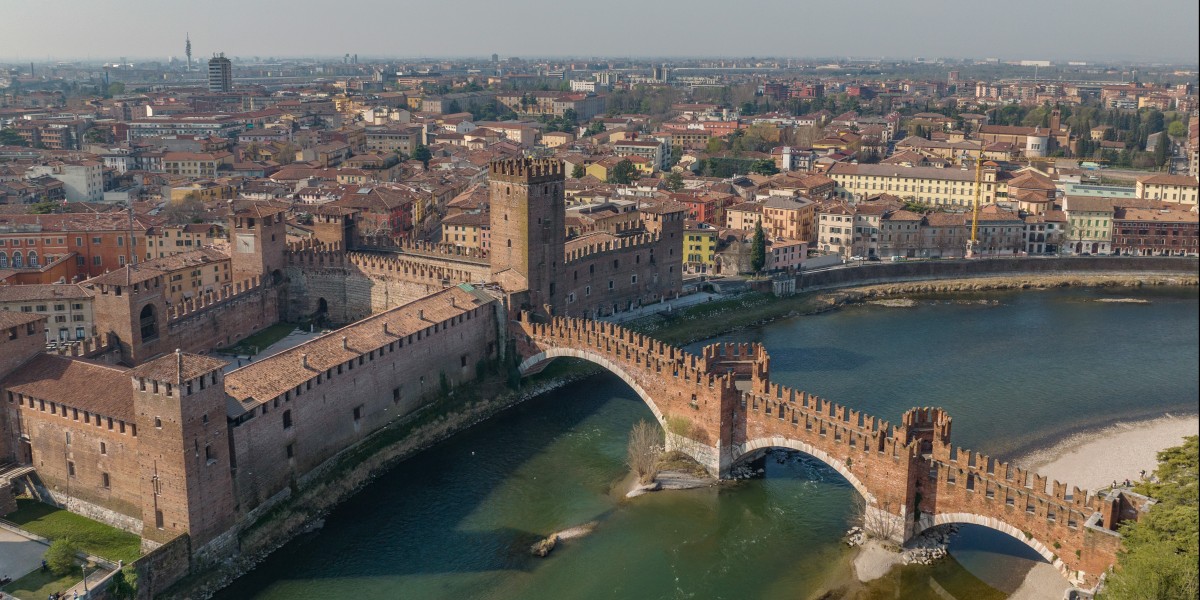
Castelvecchio squats on the riverbank and feels very much like a working fortress, even though it now houses a museum. Inside, stone staircases, wooden walkways and courtyards give you that exploratory feeling.
Ponte Scaligero extends from the castle, almost like a defensive arm stretching across the Adige. Walking along the bridge, you are cocooned between high walls, with little lookout points where the parapet drops and the river opens up in front of you.
Torre dei Lamberti and Castel San Pietro
Torre dei Lamberti rises straight out of the tight tangle of streets, with its bells and clock faces peering over the rooftops. Inside, the climb mixes stone stairs with lift access, and at the top, you step out onto a walkway that wraps around the tower.
Across the river, San Pietro Castle crowns the hillside, more of a terrace and viewpoint than a single building you visit inside. Reaching it, either by grinding up the steps or nipping up on the funicular, you come out onto a broad platform that feels like a balcony over the whole city.
Ponte Pietra and Verona’s Roman Theatre
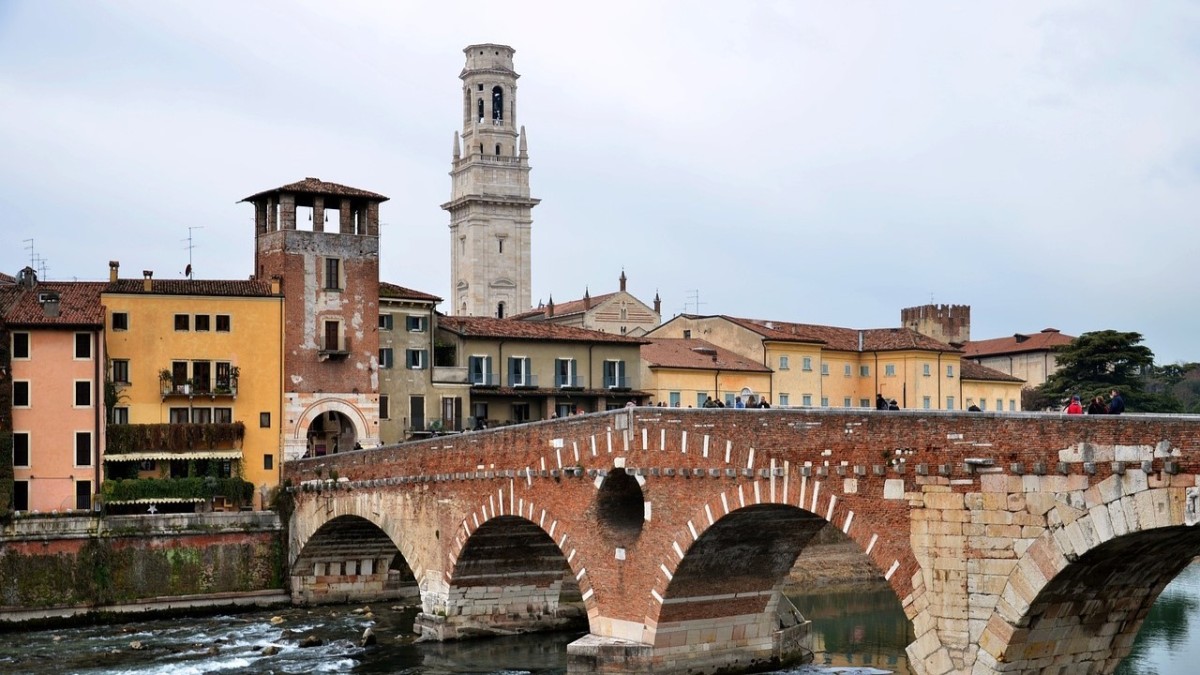
Ponte Pietra feels older and more weathered than most of Verona’s bridges. It's a patchwork of pale stone and brick that tells its own story of floods, wars and rebuilds.
Just across the water, the Roman Theatre crouches into the slope, its semi-circular tiers looking down towards the stage and the river beyond. Trees and shrubs poke between the stones, softening the structure and blurring the line between ruin and landscape.
- Use this as your starting point for a climb or funicular ride up to San Pietro Castle, which sits just above and gives you that sweeping city panorama.
Basilica di San Zeno
Basilica di San Zeno sits slightly outside the tourist core in a broad, calm square that feels very neighbourhood-y. The church itself has a grounded, solid presence, with its striped stone façade, rose window and distinctive tower rising above lower houses. The bronze doors, carved with narrative panels, are a full-on artwork in themselves, and the cloister next door adds a further, almost monastic calm.

Stay inspired for your travels in Italy —get our weekly newsletter for the latest travel, legal, and lifestyle news.