As evening settles in, a ribbon of light stretches along the Adriatic coast for more than 15 kilometres. Along this shoreline, one Italian city reveals its truest character: a continuous waterfront that shifts subtly with every step. You'll stumble across medieval walls, elegant Art Nouveau façades, working fishing piers and open stretches of urban beach.
At any hour, locals use it for an unhurried stroll, an early-morning run or a quiet pause at sunset. Here’s what to look out for along Europe’s longest seafront.
The main features of the longest seafront
Located in Bari, the longest seafront unfolds in five distinct sections, each with its own character and atmosphere. Walking along it means moving between churches, theatres, museums and the narrow alleyways of the historic centre, with the Adriatic always in view.

Emperor Augustus Promenade
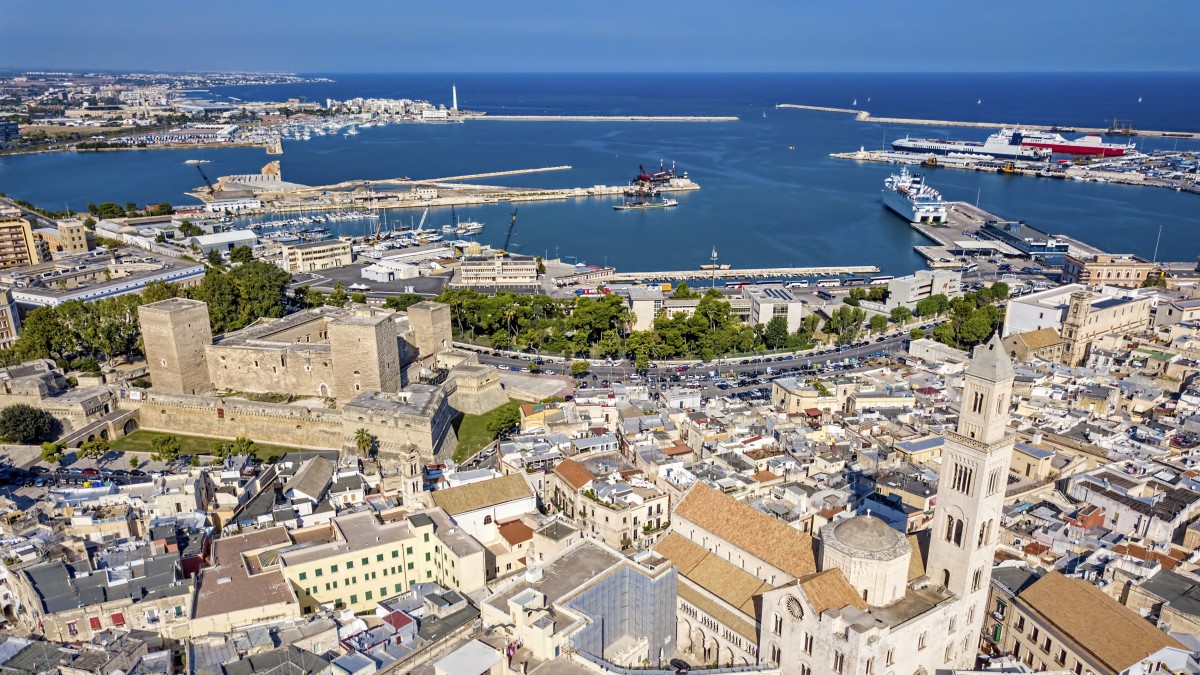
This is the most scenic stretch, running along the base of the fortifications of Bari Vecchia.
- Between the city walls and the Fortino di Sant’Antonio, the route leads in just a few minutes to the Norman-Swabian Castle.
- A little further on stands the Basilica of San Nicola, an important pilgrimage site for both Catholic and Orthodox faithful.
Herald of Crollalanza Promenade
The Art Nouveau period takes centre stage. Decorative façades, wrought-iron balconies and refined architectural details line the waterfront.
- Overlooking this section are the Kursaal Santalucia Theatre, the Provincial Palace with its clock tower, and the Corrado Giaquinto Art Gallery.
- Just off the shore, the Margherita Theatre appears to rise directly from the sea.
Nazario Sauro Seafront
In this stretch, the view opens onto a broad curve of coastline.
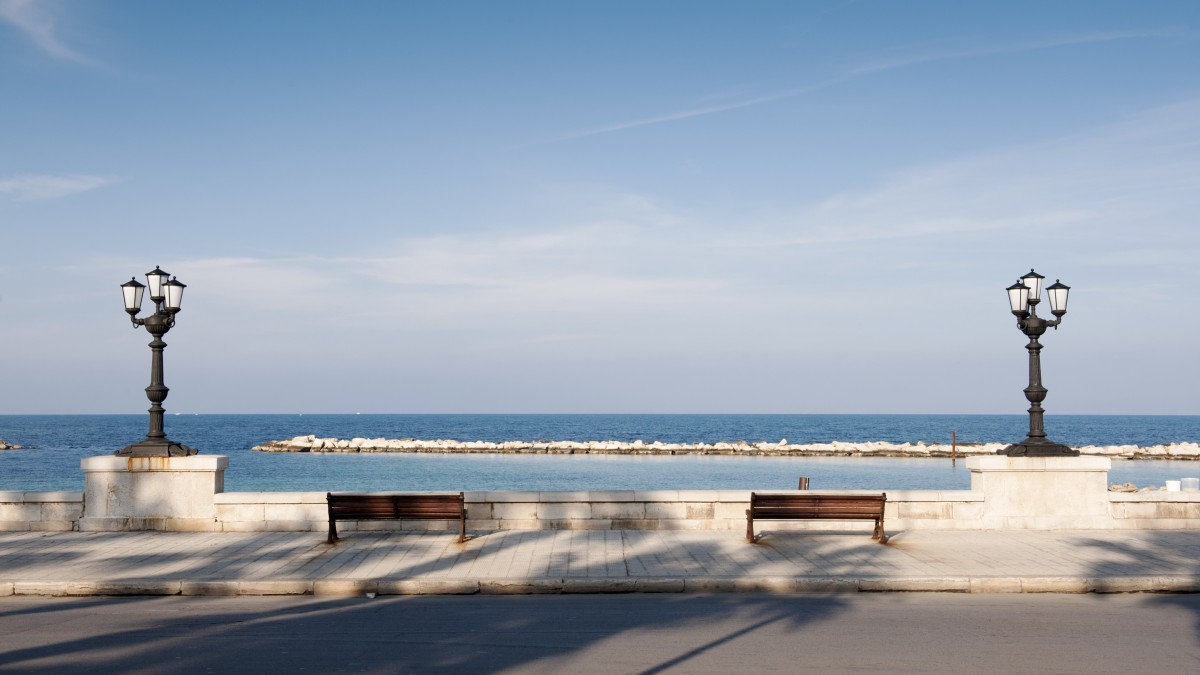
- Wide pavements run alongside the water, with waves breaking against the parapet below.
- In the distance are the urban beaches that lead towards Pane e Pomodoro, a popular summer spot for swimming and spending time by the sea.
Starita Promenade
This section is home to the Fiera del Levante and the 19th-century San Cataldo Lighthouse. It also includes cultural and educational venues such as the Apulia Film House and the Planetarium.
Along the docks, several restaurants face the water, providing the chance to eat with the sea just a few metres away.
Perotti Promenade
Greener and quieter in feel, this stretch includes Perotti Park and cycle paths that continue along the coast. It is also the main access point to Pane e Pomodoro beach.
Beach kiosks and bars line the area, drawing runners and cyclists who stop for an aperitivo after time outdoors.
Theatres, museums, and squares: where to take a detour
Along the promenade, there is a succession of cultural institutions and iconic sites.
- The Teatro Margherita now hosts major exhibitions.
- The Teatro Petruzzelli is one of Italy's most important stages, hosting opera, dance, and concert seasons.
- The Corrado Giaquinto Art Gallery houses works from the Middle Ages to the twentieth century, with a special focus on nineteenth-century Italian artists.
The central squares— Mercantile and Ferrarese —combine the waterfront and historic city, offering bars and clubs that stay lively until late.
With kids: where to stop and what to alternate
For those travelling with family, the coastline offers suitable spaces for frequent breaks. In addition to the city beach, convenient for a quick dip, Parco 2 Giugno offers a great green alternative with lakes and play areas.
In the warmer months, a day at one of the water parks on the outskirts of the city allows you to alternate between slides, wave pools, and children's areas, before returning to the seafront for sunset.
Panoramic points to mark
Those who appreciate expansive views will find several lookouts along the route, each best visited at a specific time of day. In particular:
- San Cataldo Lighthouse: in the northern area, it dominates the port peninsula: perfect at dusk, with the lights turning on one after the other.
- Walls and Fortino di Sant'Antonio: from here you can enjoy a double view: the rooftops of Bari Vecchia on one side, the Adriatic on the other, with the outline of the streetlamps on summer evenings.
- Pane e Pomodoro: a view of the city from the shoreline: you can admire the capital while swimming or enjoying an aperitif on the beach.

Living in Bari
Bari is a city where everything is within easy reach, and getting around is quick and easy. The centre is compact and easily explored on foot, while public transportation connects the main neighbourhoods well.
The cost of living is generally affordable compared to many large Italian cities, especially when it comes to rent and food. Shopping is convenient thanks to the local markets and supermarkets spread throughout the area, with fresh local produce readily available.
The mild climate in Bari throughout most of the year allows for outdoor living, with the waterfront becoming a daily space for strolling, playing sports, or meeting people. Even essential services —schools, universities, offices, and healthcare facilities—are conveniently located.
Stay inspired for your travels in Italy —get our weekly newsletter for the latest travel, legal, and lifestyle news.