How many times have you looked for a parking spot by the sea and, after half an hour, your day is already ruined? In Italy, beachgoers exceed tens of millions in just a few weeks, while public stretches of coastline are dwindling.
Yet quiet beaches still exist in Italy: they're not invisible, they're just less comfortable. They require sneakers, a few minutes of walking on a path, perhaps a sunrise departure or a kayak landing.
Here are 20 destinations where the crowds remain far away, with clear information on access, services, and the best times to visit.
- (Almost) 20 deserted beaches to visit
- Sardinia: granite coves and wild gulfs
- Ionian Calabria: free beaches and cobalt sea
- Western Sicily and the Agrigento area: white rocks and cold waters
- Gargano and the Apulian Ionian Sea: pine forest trails and coastal towers
- Central Italy, the Adriatic and Tyrrhenian Seas: reserves, cliffs and silver
- Pontine Islands and Campania: natural pools and sheltered bays
- Ionian Basilicata: dunes, pine forests, and loggerhead sea turtle nests
(Almost) 20 deserted beaches to visit
Here's a selection of places to go to the seaside in Italy, on uncrowded beaches. In many cases, there are no bars or beach clubs. So it's a good idea to bring water, food, and a garbage bag. Closed-toe shoes are recommended almost everywhere, and in some coves, the path requires caution.
Sardinia: granite coves and wild gulfs
In northern and central-eastern Sardinia, the less accessible bays retain waters of rare clarity. These rocky or pebbly stretches can be reached on foot or by sea. These very logistics discourage crowds and help preserve the landscape.
- Cala Tinnari (Costa Paradiso, Olbia-Tempio): a 30-40 minute walk down a path that isn't always marked, or you can reach it by taxi boat from the marina. Grey and pink pebbles, no amenities, and colours ranging from turquoise to deep blue.
- Corbezzoli Beach (Cannigione, Olbia-Tempio): a tiny, unmarked cove along the SP13 road towards Palau. The sand is pink, the water clear, and cormorants are present on the shore; there are no facilities.
- Cala Sisine (Baunei, Nuoro): the most challenging in the Gulf of Orosei if you opt for the trails; alternatively, boats from Cala Gonone or Santa Maria Navarrese. It features white pebbles, a rapidly deep seabed, and a backdrop of limestone cliffs.

Ionian Calabria: free beaches and cobalt sea
Along the Ionian coast of Calabria, long stretches of open water remain, with barren landscapes behind them. Tourists are less common than in the Tyrrhenian tourist areas. There are beaches suitable for families with children, with shallow, clear waters.
- Caminia Beach (Stalettì, Catanzaro): large, mostly free, with a few kiosks; paid parking is available in season. Late afternoon is recommended for the shade of the hills and longer swims.
- Ferruzzano Beach (Ferruzzano Marina, Reggio Calabria): a long, golden beach with almost no buildings. Few essential services and a very quiet setting, also popular with campers.

Western Sicily and the Agrigento area: white rocks and cold waters
The west of the island is dominated by rocky coves without facilities. In some bays, cold underwater springs emerge, lowering the water temperature even just a few meters from shore.
- Punta Bianca (Agrigento): limestone outcrop and small sandy coves. Final access on foot along a path (about 10 minutes). There are no services; it's recommended to bring water and suitable footwear.
- Cala Buguto (Custonaci, Trapani): in Cornino Bay, beyond the sandy stretch towards Monte Cofano. The seabed is rocky and the water crystal clear. At a depth of 13 metres, the statue of the Madonna of Custonaci is located, a popular destination for freedivers and scuba divers.

Gargano and the Apulian Ionian Sea: pine forest trails and coastal towers
Between Vieste and Peschici, the less crowded beaches can be reached on foot through holm oaks and pine forests, while along the Ionian Sea near Taranto, there are still stretches without beach resorts. The varied seabed requires caution where rocks emerge.
- Sospetto Beach - Murgia della Madonna (Vico del Gargano, Foggia): a sandy-pebble bay accessible by continuing from 100 Scalini Beach or by sea from Calenelle.
- Cala della Sanguinara (Vieste, Foggia): accessible via a path through the pine forest, the cove is small, sheltered, and has no facilities, so water and hiking boots are essential.
- Zaiana Beach (Peschici, Foggia): a short descent through holm oaks from the SP52. Coarse sand, no beach facilities, and a sandy central seabed suitable for children; rocks and sea urchins on the eastern side.
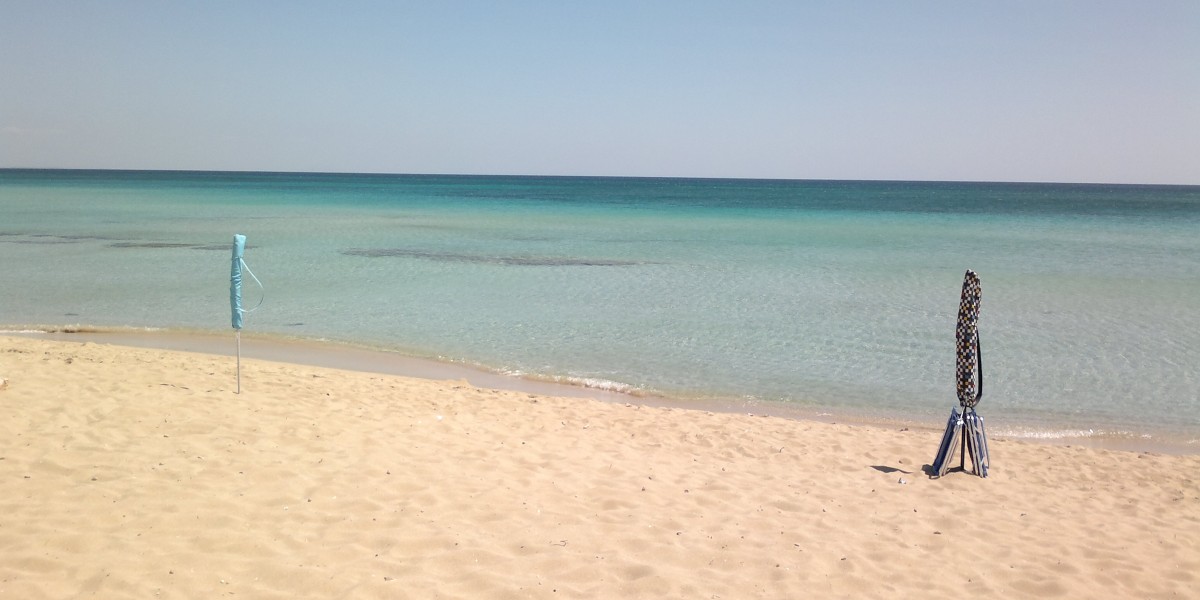
- Torre Borraco (San Pietro in Bevagna, Taranto): light sand, turquoise water, and no beach. At the mouth of the stream, the currents create unique patterns and colours.
Central Italy, the Adriatic and Tyrrhenian Seas: reserves, cliffs and silver
Far from the concreted seafronts, some stretches of the central coast retain dunes, scrub, and low cliffs. Access often requires steep descents, rewarded by unusually clear waters for these latitudes.
- Punta Aderci (Vasto, Abruzzo): a nature reserve with two pebble beaches separated by the promontory. Flat trails, unspoiled scenery, and frequent seabird sightings.
- Cala Grande (Monte Argentario, Grosseto): three small white pebble beaches on the eastern slope. The path is steep from the Porto Santo Stefano Panoramica road; there are no services; there are fewer boats in the early morning and at sunset.
- Mezzavalle (Riviera del Conero, Ancona): A long, free beach at the foot of the cliff, accessible via a steep 20-minute walk or by sea. There's only one bar and free showers, and shade arrives early after 5:00 p.m.
- Punta Crena (Varigotti, Savona): a cove at the base of the promontory between Varigotti and Baia dei Saraceni. Access is by swimming, kayaking, or following a very technical trail with a rope section.

Pontine Islands and Campania: natural pools and sheltered bays
The limited capacity of the Pontine Islands and the paths of the Sorrento Peninsula act as a natural filter. In Cilento, the protected coves can be reached almost exclusively by sea.
- Cala Battaglia (Ventotene, Latina): dark sand beach accessible only by sea. The island is small, and crowds are limited, even in high season.
- Cala Feola (Ponza, Latina): natural pools carved into the white rock, among the most beautiful beaches on Ponza. It's a 15-minute walk from Le Forna.
- Cala Bianca (Palinuro Promontory, Salerno): bright pebbles and clear water in the Costa degli Infreschi and Masseta Marine Protected Area. Access is primarily by kayak or small boat.
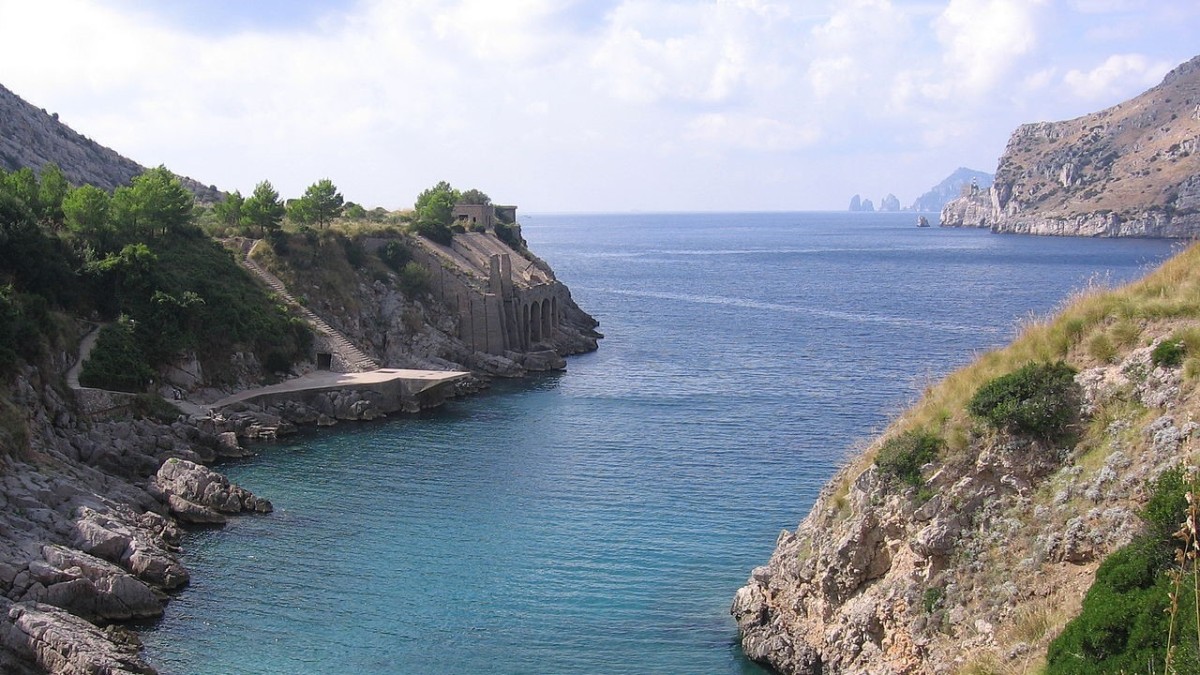
- Ieranto Bay (Massa Lubrense, Naples): FAI trail from Nerano (about 45 minutes) to a pebble bay overlooking the Faraglioni of Capri. No services; the area is in excellent condition.
Ionian Basilicata: dunes, pine forests, and loggerhead sea turtle nests
Between Scanzano and Policoro, the coastline is wide and open, with dune habitats still present. The proximity to protected areas favours close encounters with birdlife and, in some stretches, turtle nesting.
- Terzo Cavone Beach (Scanzano Jonico, Matera): a sprawling beach of golden sand with a pine forest behind it and easy access from the SS106. Popular area for birdwatching; possible sightings of loggerhead sea turtles during their nesting season.
Stay inspired for your travels in Italy —get our weekly newsletter for the latest travel, legal, and lifestyle news.