Italy has more than 30,000 documented caves, but only a relatively small number are open to the public as organised “show caves”. These are some of the best caves in Italy that you can genuinely visit without specialist training. They’re suitable for travellers, families with older children, and anyone curious about Italy beyond piazzas and pasta.
Frasassi Caves
Discovered in 1971, Grotte di Frasassi is relatively recent in tourism terms, but geologically ancient. The star of the show is the Abisso Ancona, a cavern so vast it could swallow Milan Cathedral with room to spare.
The standard guided route is well laid out, though there are stairs, and the sheer scale of the chambers makes this one of the most impressive underground attractions in Italy.
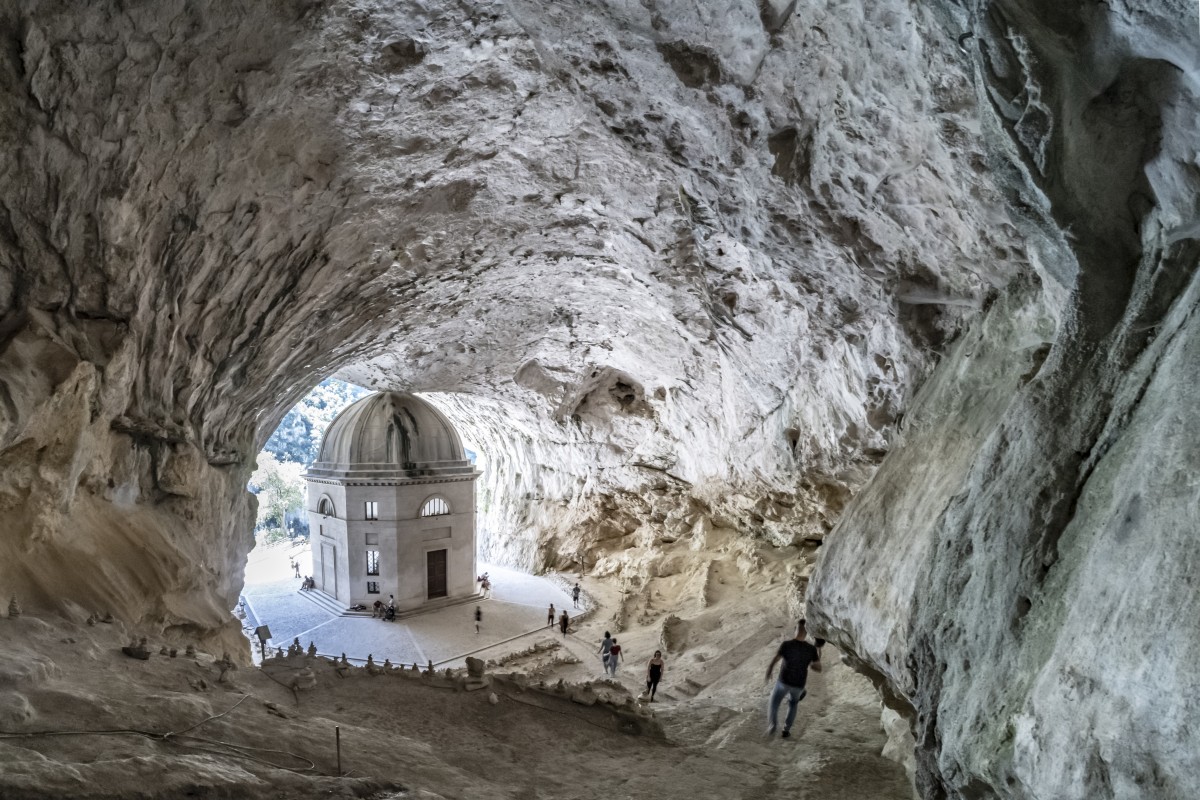
Best feature: Tempietto del Valadier, a small Neoclassical marble temple that was built in 1828 inside a vast natural cavern called the Grotta del Mezzogiorno
Practical info: nearest airport is Ancona; booking is strongly recommended in high season; tickets generally range from around €18–€25.
Grotta Gigante
Just outside Trieste, Grotta Gigante sits in the limestone plateau of the Carso. It holds a place in the Guinness World Records as one of the largest tourist-accessible cave chambers in the world.
Visitors walk down around 500 steps to reach the main, immense chamber floor. Unlike many caves, this one also houses scientific instruments used to study seismic activity and earth movements.
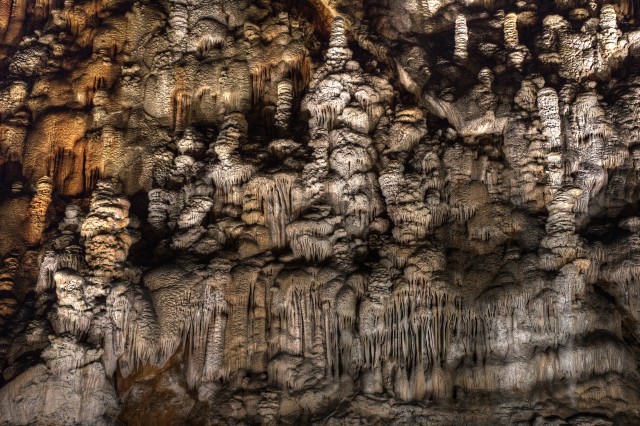
Best feature: the single enormous chamber, recognised globally for its scale.
Practical info: expect a guided tour of about 1 hour; moderate physical effort due to stairs; booking advisable in summer.
Toirano Caves
Near the Ligurian coast, the Grotte di Toirano are as much about prehistory as geology. The cave system includes over 150 cavities, but the guided route focuses on the most significant sections.
What sets Toirano apart are the prehistoric human footprints preserved in clay and the remains of cave bears. Walking through the so-called “Hall of Mysteries”, you’re not just looking at rock formations but at traces of real people who passed through thousands of years ago.
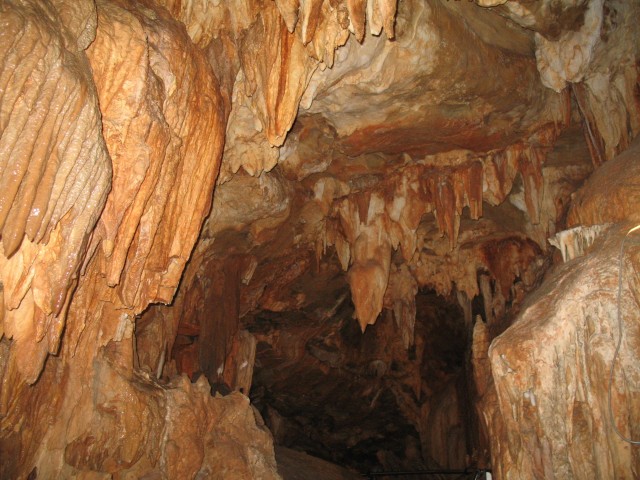
Best feature: preserved prehistoric footprints and cave bear remains.
Practical info: nearest airports are Genoa or Nice, and guided tours last about 70 minutes
Cave of the Wind
Hidden in the Garfagnana area of northern Tuscany, Grotta del Vento offers a slightly wilder feel. The cave takes its name from the strong air currents that move through its chambers, caused by differences in temperature.
What makes this one stand out is the choice of three different tour routes.
- The first is relatively easy and showcases classic stalactites and stalagmites.
- The second goes deeper, including a 75-metre descent and an underground stream.
- The third is more adventurous, featuring a vertical well and canyon sections.
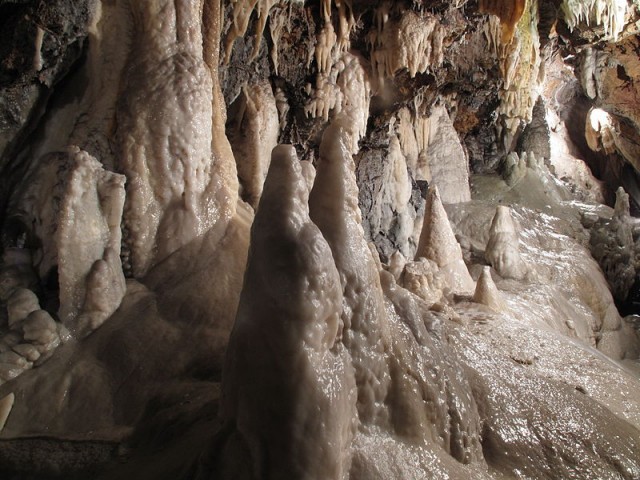
Best feature: the variety of tour routes, including one that follows an underground river.
Practical info: nearest airports are Pisa or Florence; tours vary in length and difficulty; advance booking is sensible in summer.
Castellana Caves
Grotte di Castellana's 3 km karst system is one of the most famous caves in southern Italy. Discovered in 1938, the caves quickly became one of Puglia’s most visited natural attractions.
The tour takes you deep underground through vast chambers, narrow passages and cathedral-like spaces shaped over millions of years, ending in the dazzling Grotta Bianca (white cave).
In summer, parts of the cave are used for cultural events and performances, which gives you a sense of how important the site is locally.
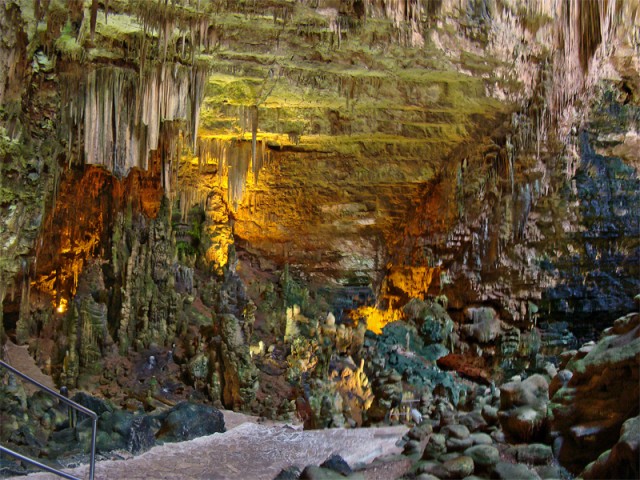
Best feature: the Grotta Bianca, widely considered one of the most beautiful cave chambers in Italy.
Practical info: nearest airport is Bari; short and long tour options available; booking recommended in peak months; tickets typically start from around €16–€20.
Visiting caves in Italy
What is the biggest cave in Italy?
The Frasassi cave system is often cited as the largest and most spectacular in Italy in terms of scale and chamber size, particularly the Abisso Ancona. Grotta Gigante, however, holds a world record for the size of its accessible chamber.
Are caves in Italy open all year?
Many of the major show caves in Italy are open year-round, though opening days and times vary by season. Winter schedules are usually reduced, and some sites close on certain weekdays.
Do you need to book cave tours in advance?
In high season, especially July and August, booking ahead is strongly recommended for the most famous caves in Italy. Outside peak months, you can often buy tickets on arrival, but English-language tours may have fixed times and limited places.
Stay inspired for your travels in Italy —get our weekly newsletter for the latest travel, legal, and lifestyle news.