The branded residences market – luxury homes created in partnership with global brands, largely from the hospitality sector – is experiencing unprecedented growth. According to the Global Branded Residence Survey 2025, the number of projects has surged from 169 in 2011 to 611 today, with forecasts predicting over 1,000 active schemes by 2030. In terms of housing units, the increase is even more remarkable: from just over 27,000 in 2011 to a projected 162,000 by 2030.
This expansion is being fuelled by the appetite of developers and the growing demand among international high-net-worth individuals (HNWIs), who see these branded homes as the ideal blend of investment, lifestyle, and prestige.
The global landscape: from North America to the Middle East
North America remains the stronghold of branded residences, accounting for around a third of all existing projects. However, its share is expected to fall to 26% in future pipelines. The Middle East is now experiencing explosive growth, rising from 15.9% of current schemes to 26.7% of those under development – driven largely by Dubai and Saudi Arabia.
In the Asia-Pacific region, Thailand and India continue to be vibrant markets, although their overall share is likely to shrink slightly. The global centre of gravity for branded residences is clearly shifting eastward – and southward – following the trajectory of new global wealth.
Hotel brands still dominate – but the model is evolving
While fashion, automotive, and design brands are increasingly entering the sector, hotel groups still account for around 83% of branded residences worldwide. Interestingly, although more than 80% of these projects are currently integrated with a hotel, that figure is expected to drop to around 70% in the future.
More often, major hospitality players are launching standalone branded residences, particularly in North America and the Middle East, offering the prestige and service standards of a luxury hotel – without the hotel itself.
Global wealth driving demand
The boom in branded residences is closely linked to the rise in global wealth. The United States continues to lead wealth creation, hosting 39% of the world’s HNWIs and over 40% of individuals with assets exceeding 100 million dollars. In 2024, the US HNWI population grew by 5.2%, fuelling demand in markets such as Miami, Palm Beach, and Austin.
Asia-Pacific followed with a 5% increase in HNWIs, with Seoul, Manila, and Tokyo among the fastest-growing cities. In the Middle East, growth was more moderate (+2.7%), though Dubai still dominates the ultra-prime segment, followed by the rising markets of Riyadh and Jeddah.
Madrid joins the luxury map
Alongside Italy and France, Madrid has rapidly emerged as one of Europe’s most attractive destinations for global wealth. Safety, quality of life and a dynamic cultural scene have turned the Spanish capital into a magnet for Latin American, US, and European buyers.
Since the 2020 opening of the Four Seasons Hotel and Residences at Centro Canalejas, Madrid has consolidated its position as a global hub. Today, international buyers account for 45% of prime purchases – up from 30% just two years ago.
The latest developments are increasingly ambitious: from the Banyan Tree Residences in Salamanca (€18,000/m², with concierge and wellness facilities) to the SLS Residences featuring a panoramic pool and private cinema (€14,000–15,000/m²), and the El Viso Residences (around €15,000/m²). The city’s luxury residential market has truly arrived on the global stage.
Beyond the capitals: Comporta and the Swiss Alps
The trend is no longer confined to major cities. In Portugal, Comporta – south of Lisbon – has become synonymous with “barefoot luxury”, with beachfront residences selling for €15,000–20,000 per square metre and attracting global investors.
In Switzerland, demand is being driven by added lifestyle amenities: around Lake Geneva and in alpine destinations such as Verbier, Crans-Montana and Villars, luxury homes now combine privacy with spa facilities, clubhouses, and concierge services. Entry prices for top-tier properties range from €5 to €10 million.
Italy: the new epicentre of branded luxury living
Italy has firmly established itself on the global map of branded residences, combining timeless architecture, lifestyle, and world-renowned hospitality.
- In Sardinia, demand along the Costa Smeralda continues to grow, expanding beyond Porto Cervo to up-and-coming areas such as Porto Rafael and Portisco, where global hospitality brands like Belmond are strengthening their presence.
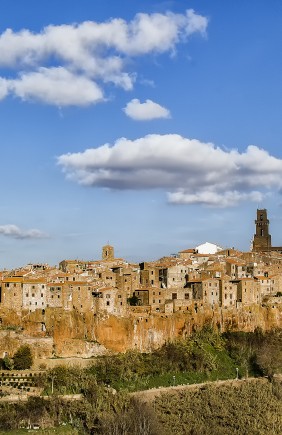
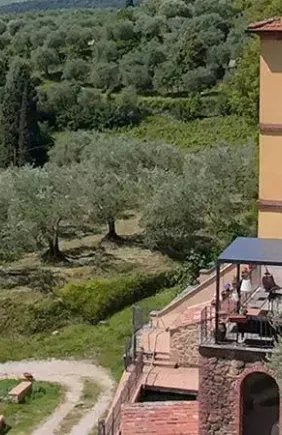
- In Tuscany, exclusive projects are blending villas with vineyards and five-star amenities – offering private wine and olive oil production alongside concierge and wellness services. The Maremma, Umbria, and Puglia are quickly becoming sought-after hotspots for international buyers seeking privacy, heritage, and lifestyle.
- And then there is Milan – increasingly cosmopolitan and ready to take its place alongside Paris and London as one of Europe’s key hubs for branded residences. Projects such as Casa Cipriani Milano are setting new benchmarks, and a growing pipeline of branded developments confirms the city’s position at the forefront of Europe’s luxury living market.
As Knight Frank notes:
“Global families today are seeking not just space, but services and a sense of community. Milan is now ready to offer both.”