Some people build a house not to live in it, but to block a neighbour’s light. Others have their home moved brick by brick rather than give in to pressure from the authorities. These are not plots dreamed up for the cinema, but real stories from Italy and elsewhere in the world.
Spite houses, as they are called in English, are buildings born out of personal conflicts, inheritance disputes, neighbourly rows and disagreements with public institutions.
In Sicily, Bergamo and Beirut, some have become tourist sights, while others have found their way into architectural history books. All of them reveal something deeply human: the determination of people unwilling to back down.
What are spite houses, and why are they so fascinating?
A spite house does not begin with a practical housing plan, but with an unresolved conflict. The builder’s intention is not to create a functional home, but to cause real inconvenience to somebody else: blocking a view, obstructing a right of way, taking light away from a window, or simply declaring a silent war on someone they no longer wish to see or hear.
What makes these buildings so compelling is not only their odd shape — often extremely narrow, irregular or deliberately obstructive — but the story attached to them. Over time, their combative origins become a cultural curiosity. Visitors photograph them, local tours point them out, and the media retells their stories.
The most famous spite houses in Italy
Italy has several striking examples of this architectural phenomenon, spread across the country and each with its own unusual backstory.
Casa du Currivu in Petralia Sottana, Palermo
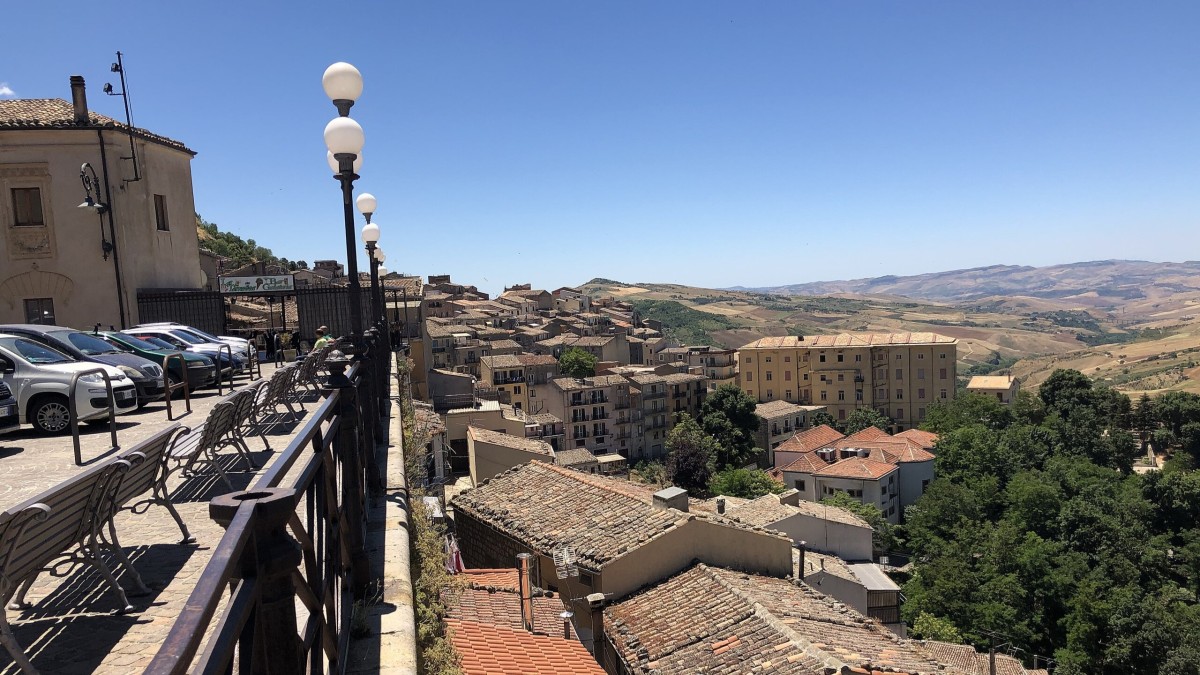
In the Madonie mountains in the province of Palermo, the village of Petralia Sottana is home to what is considered Sicily’s spite house par excellence, as well as one of the narrowest buildings in the world.
The Casa du Currivu translates literally from Sicilian as “the house of spite” or “the house of anger”.
The story dates back to the 1950s.
A resident wanted to add another storey to his house to create more space. At the time, this required the consent of his neighbour, as the two properties shared a wall. The neighbour, possibly even a relative, refused because the extension would ruin a prized view.
The owner approached the Comune, the local council, which confirmed that construction could not go ahead without the neighbour’s approval unless the minimum distances required by law were respected. The remaining gap between the plot and the neighbour’s house was too narrow to build a liveable home, but large enough for a structure that could completely block the view the neighbour had fought to preserve.
The result was a building just one metre wide and entirely uninhabitable. It did, however, have a balcony facing outwards — another act of defiance — while the inner façade, which faced the neighbour’s windows, was painted completely black. One insult added to another.
- Property for sale in Petralia Sottana
- Long-term rentals in Petralia Sottana
- Holiday rentals in Petralia Sottana
Casa Scarabocchio in Turin
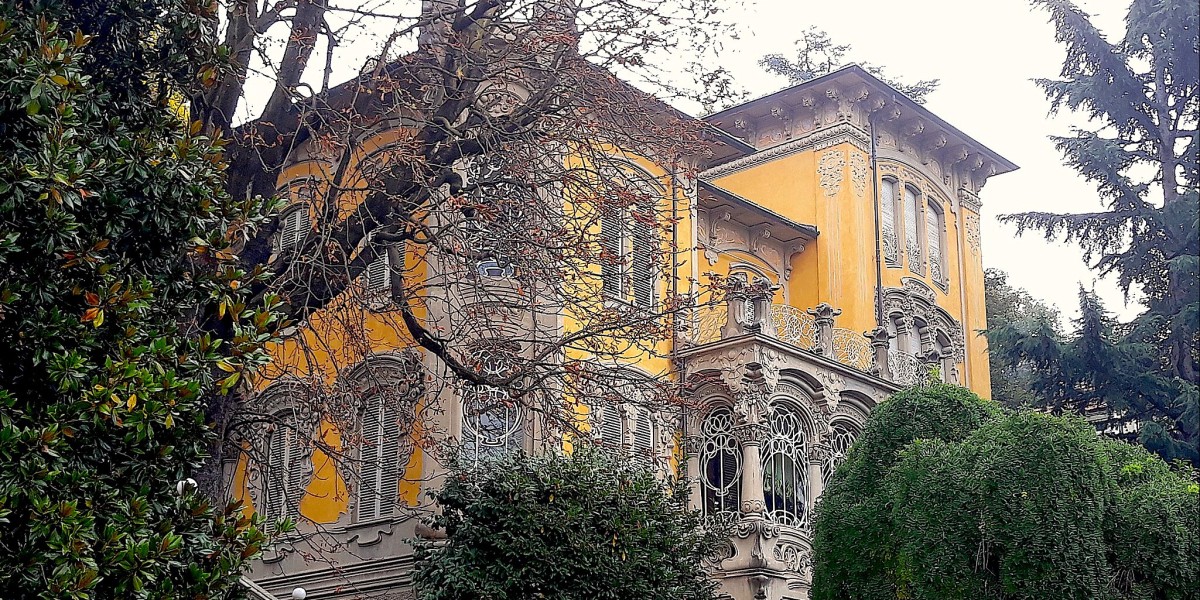
In Turin’s San Donato district stands one of the city’s most unusual Liberty-style buildings: Casa Scarabocchio, designed by architect Pietro Fenoglio in the early 20th century. Its façade is covered in floral decoration, sweeping lines and elaborate ornamental details that make it resemble a scarabocchio, or scribble.
According to an unconfirmed local story, the client supposedly wanted an intentionally extravagant façade to mock the restraint of the neighbouring building, which he considered too anonymous and lacking in character. Although no archival documents support the tale, it has helped create an enduring reputation for architectural spite around the building.
The house with bricked-up windows in Bergamo Alta
In Città Alta, Bergamo’s historic upper town, a small square can be reached by a staircase near the Basilica di Santa Maria Maggiore. Here stands a building that houses the Local Police Headquarters.
At first glance, it appears perfectly symmetrical. Look more closely, though, and the windows along one entire side wall are permanently and mysteriously shut. The reason is that they are false windows, built to give the façade a uniform appearance. Behind the false wall, however, are real windows belonging to older flats which once overlooked the inner courtyard.
When the church that occupied the courtyard was demolished around 1839–1840, this blind wall was built less than a metre away from the neighbouring homes, depriving residents of light and any outward view.

Stay inspired for your adventures in Italy —get our weekly newsletter for the latest travel, legal, and lifestyle news.