Falling asleep thousands of metres above sea level, with the stars seemingly close enough to touch and dawn turning the surrounding peaks pink, is possible. Italy’s highest mountain refuges provide a full immersion in high-altitude terrain, among glaciers, rocky faces and extraordinary views.
But which shelters hold the altitude records in Italy? Here are the country’s five highest refuges, their stories and the key details for reaching them.
- Capanna Regina Margherita: Europe’s highest at 4,554 metres
- Rifugio Città di Mantova: on Monte Rosa at 3,498 metres
- Capanna Punta Penia: the highest refuge in the Dolomites at 3,340 metres
- Rifugio Gianni Casati: at 3,269 metres in the Ortles-Cevedale range
- Rifugio Pagarì: sustainability at 2,650 metres
- Other high-altitude refuges in Europe
- Is it safe to sleep at 2,000 metres above sea level?
Capanna Regina Margherita: Europe’s highest at 4,554 metres
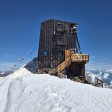
At 4,554 metres above sea level, Capanna Regina Margherita is Europe’s highest Alpine refuge. It stands on Punta Gnifetti, in the Monte Rosa massif, on the border between Italy and Switzerland, in Piedmont.
Its history goes back to 14 July 1889, when members of the Turin section of the Italian Alpine Club (Club Alpino Italiano, or CAI) approved plans to build a refuge above 4,500 metres. The building was inaugurated on 18 August 1893 in the presence of Queen Margherita of Savoy, an exceptional occasion that led to the refuge being named after her.
Following its renovation in 1980, when the original hut was replaced with a modern building, the refuge now has:
- 70 beds in rooms with bunk beds
- a bar and restaurant area
- shared bathrooms and electric lighting
- internet access
- a small library
Reaching this refuge is a genuine mountaineering ascent. It is not a straightforward hike: glacier equipment is required, including crampons, an ice axe and a harness, along with experience. Less experienced climbers need to be accompanied by a UIAGM-certified mountain guide.

Rifugio Città di Mantova: on Monte Rosa at 3,498 metres
Just over 1,000 metres below Capanna Margherita, Rifugio Città di Mantova sits at 3,498 metres on the Garstelet Glacier, in the heart of Monte Rosa.
In May 1978, four young mountaineers from Mantua lost their lives during an excursion on Monte Rosa. In gratitude to the Gressoney mountain guides who coordinated the recovery operation, the victims’ families donated the funds to build a new refuge. Construction lasted six years, and in 1984 the building was inaugurated and dedicated to the city of Mantua.
Extended in 2009, Rifugio Città di Mantova is now owned by the Gressoney Alpine Guides and serves as an important base for mountaineers. It has:
- 120 beds in heated rooms and dormitories
- a large dining room seating around 100 people
- wide views across the massif
Facilities include showers, a changing room for climbing equipment and toilets.
Capanna Punta Penia: the highest refuge in the Dolomites at 3,340 metres
Marmolada is the Queen of the Dolomites, and on its summit stands Capanna Punta Penia, at 3,340 metres above sea level. It is the highest refuge in the entire Dolomites, within the municipality of Canazei.
In the late 1940s, Giovanni Brunner, a mountain guide from Alba di Canazei, converted the remains of an Austro-Hungarian First World War military post into a small shelter.
Punta Penia is more of an equipped bivouac shelter than a conventional refuge. It is unheated, has just nine beds, a small kitchen with a wood-burning stove and a basic dining area.
Its location is what makes it particularly remarkable. Secured to the rock with steel cables, it looks directly onto Marmolada’s sheer southern face, dropping around 800 metres below. The refuge is generally open between 20 June and 20 September.
Rifugio Gianni Casati: at 3,269 metres in the Ortles-Cevedale range
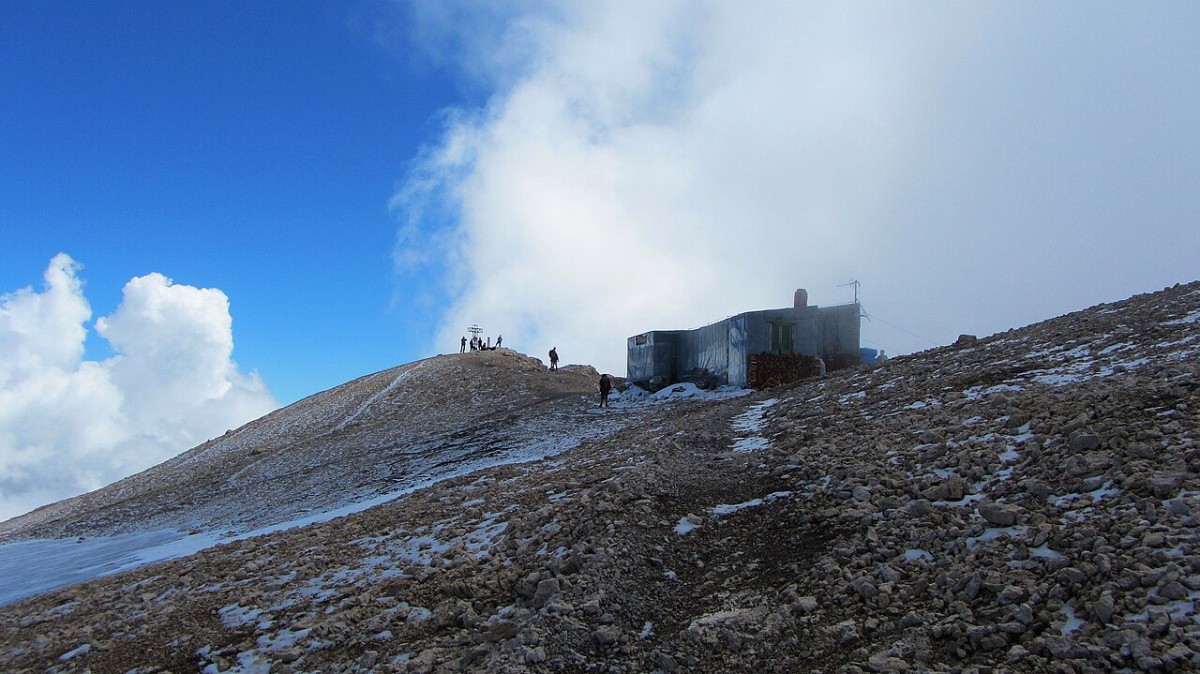
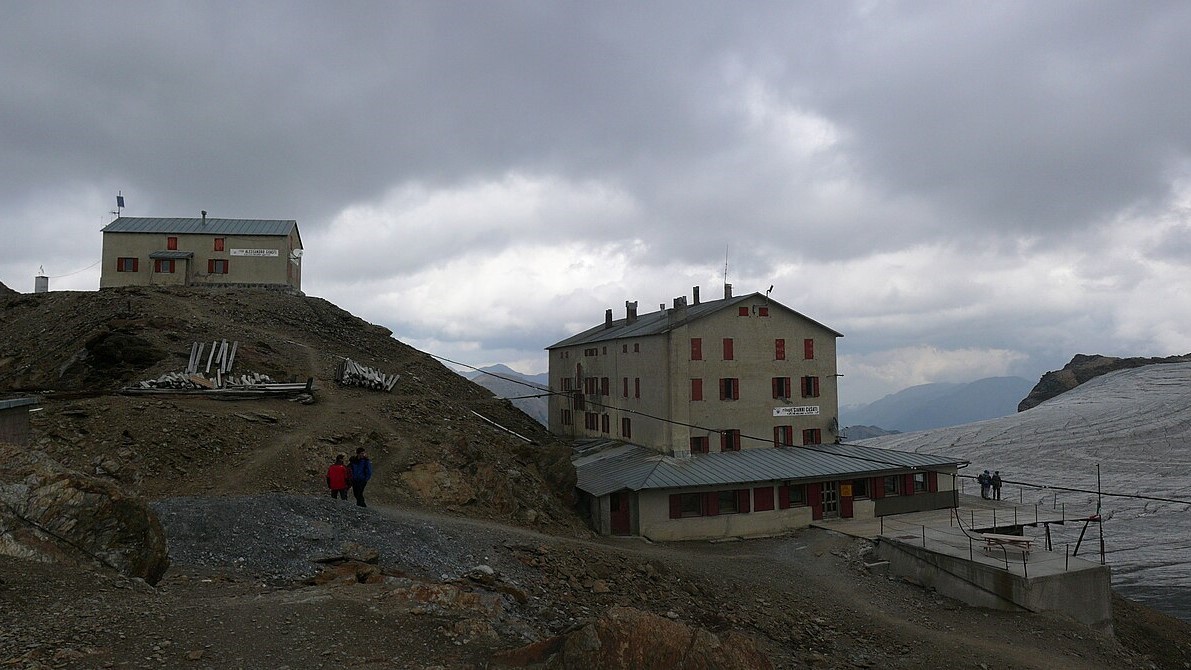
Rifugio Gianni Casati stands in Stelvio National Park, at the Cevedale Pass, 3,269 metres above sea level. It is named after Gianni Casati, a young member of the Milan CAI section and second lieutenant in the Italian army, who was killed in Gorizia on 12 August 1916 during the First World War. Opened in 1923, it was fully renovated in 1985.
The refuge has rooms sleeping two, four or six people, bathrooms with showers, and a restaurant area serving traditional dishes made with local products.
Nearby are three First World War cannons, a historical attraction around 20 minutes away on foot.
Rifugio Pagarì: sustainability at 2,650 metres
Compared with the glacial giants of Monte Rosa and Ortles, Rifugio Federici-Marchesini al Pagarì is very different. It stands in Valle Gesso, within the Maritime Alps Natural Park, at 2,650 metres, and has made sustainability central to its identity.
Built in 1912 and opened in June 1913, Pagarì is one of the Maritime Alps’ longest-standing refuges. The original wooden structure was joined in 1937 by two masonry rooms that are still in place. After suffering damage during the Second World War, it was restored from 1949 with funding from the Federici-Marchesini family.
Today, its manager has turned the refuge into a genuine high-altitude sustainability project. It has 24 beds across three dormitory-style rooms, toilets, the possibility of a hot shower, and an atmosphere that combines mountain hospitality with environmental education.
Unlike the previous refuges, Pagarì can be reached on a hike of around four hours along trail M13 from San Giacomo di Entracque, without the need for mountaineering equipment. It is generally open between 15 June and 15 September.
Other high-altitude refuges in Europe
Italy holds the European record thanks to Capanna Regina Margherita, though there are other striking refuges across the Alps:
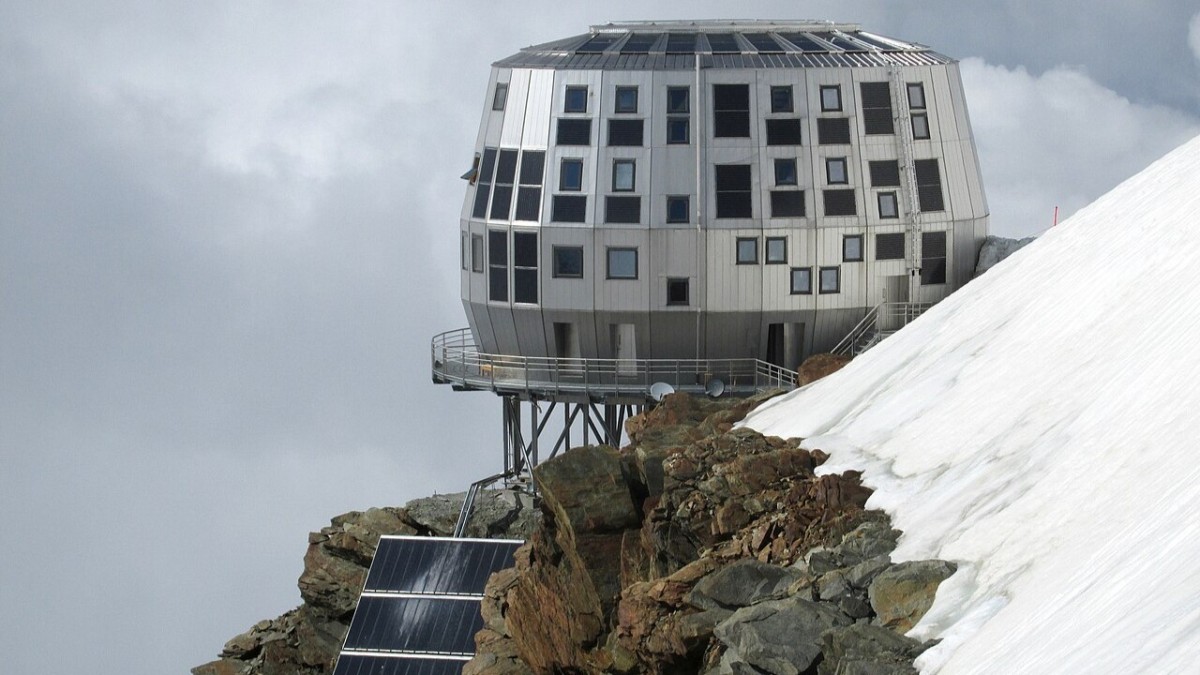
- Refuge du Goûter — 3,835 m, France. It stands on the Aiguille du Goûter, along the standard French route up Mont Blanc. The current structure, opened in 2013, is a noteworthy example of sustainable architecture.
- Refuge des Cosmiques — 3,613 m, France. Located in the Mont Blanc massif at Chamonix, Refuge des Cosmiques can be reached via the Aiguille du Midi cable car.
- Cabane des Vignettes — 3,160 m, Switzerland. On the well-known Haute Route between Chamonix and Zermatt, at the foot of Pigne d’Arolla, this Swiss refuge has 120 beds in a high-altitude glacial setting.
Is it safe to sleep at 2,000 metres above sea level?
Sleeping at 2,000 metres is generally safe for most people in good health. However, atmospheric pressure decreases as altitude rises, reducing the amount of oxygen available with each breath. The human body can adapt to these conditions, but it needs time.
Acute mountain sickness can generally occur above 2,000–2,500 metres, especially when ascending quickly. The most common symptoms include headaches, nausea, tiredness, dizziness and insomnia.
Stay inspired for your adventures in Italy —get our weekly newsletter for the latest travel, legal, and lifestyle news.