Among the most fascinating and ancient underground funerary complexes in the capital are undoubtedly the Catacombs of Priscilla. Located along the Via Salaria, they preserve centuries of Christian history, extraordinary frescoes, and unique testimonies of early Christian Rome.
The history of the Catacombs
The Catacombs of Priscilla date back to the 2nd century AD and are one of the most important Christian cemeteries in Rome. They extend for approximately 13 kilometres of underground tunnels, spread across multiple levels, dug into the tuff along the Via Salaria.
The site began as a private burial area belonging to a noble Roman family, likely converted to Christianity. Over time, the space became a true Christian community cemetery, welcoming martyrs and faithful in the centuries that followed.
Several popes from the early centuries were also buried here, and some of the oldest depictions of the Virgin Mary are found here.

Who was Priscilla, founder of the catacombs?
Priscilla was likely a Roman noblewoman belonging to the gens Acilia family and lived between the 1st and 2nd centuries AD.
According to historical sources, she was the owner of the land on which the catacombs were built. Some scholars also believe she was a woman who converted to Christianity and made her possessions available to the Christian community. However, even today, her biography remains full of gaps.
What they are and what there is to see
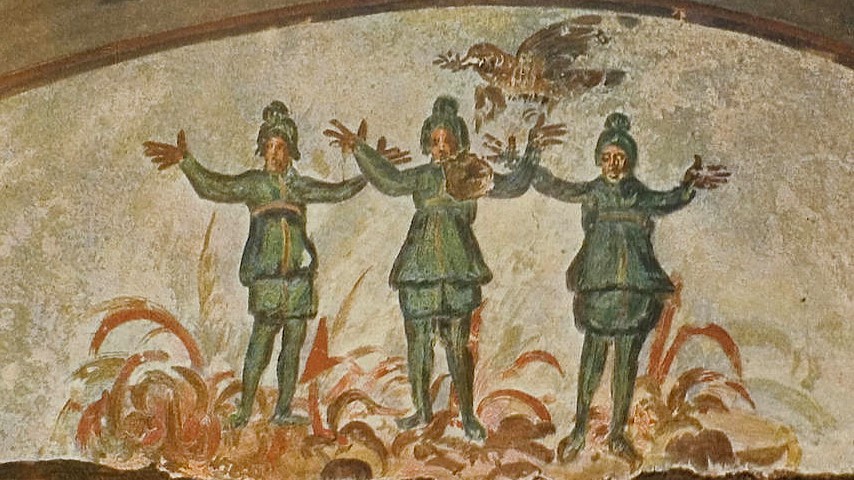
Specifically, the Catacombs of Priscilla are a vast complex of underground tunnels with burial niches, arcosolia (arched tombs), decorated chapels, and, of course, the first papal crypts. The true treasure, however, is the early Christian frescoes. Among the things to see:
- The Greek Chapel: one of the most famous rooms in the complex. It contains frescoes dating back to the 3rd century, including biblical scenes and one of the earliest depictions of the Last Supper.
- The oldest image of the Madonna: a 3rd-century fresco depicts the Virgin with Child and a prophet.
- The tombs of the popes: several pontiffs of the first centuries were buried here, such as Marcellus I, Sylvester I, and Liberius.
How long does a visit to the Catacombs last?
A guided tour of the Catacombs of Priscilla is essential for exploring the site and lasts approximately 45 minutes to 1 hour. Access is permitted only with an official guide, included in the ticket price.
Tickets and visiting hours
The catacombs are open every day except Monday: visiting hours are Tuesday through Sunday, 9:30 am to 1 pm and 2 pm to 5 pm. There are also closures during the year for holidays and the summer months. Regular tickets cost 10 euros, while reduced tickets cost 7 euros. Some categories of visitors are admitted free of charge.
Where are the Catacombs, and how do I get there?
The Catacombs of Priscilla are located at Via Salaria 430, Rome, in the Trieste neighbourhood. Those without a car can easily get there by public transportation, specifically:
- Bus: lines 63, 83, 310, and 92 from the Termini area or the city centre.
- Metro: Line B to Piazza Bologna, then take the bus.

Living in Rome
Rome not only boasts an immense historical, religious, and architectural heritage, but is also a vibrant city. The city has an extensive public transportation network connecting the city centre and suburbs, as well as train stations and international airports such as Fiumicino and Ciampino.
Rome also guarantees access to top-quality hospitals, specialised clinics, and private facilities, along with a wide range of doctors and community services. There is no shortage of public and private schools, and prestigious universities such as La Sapienza, Roma Tre, and LUISS.
Added to this are shopping centres, local markets, supermarkets open late, digital services, coworking, and a wide range of easily accessible sports and cultural activities. If you're thinking of living in Rome, discover the latest listings for homes for sale or rent with idealista and find the perfect solution for you:
Stay in the know about living in Italy as a foreigner—get our weekly newsletter for the latest travel, legal, and lifestyle news.