A triangular island in the middle of Lake Bolsena, crowned by a white dome rising above holm oaks and hiding a subterranean chamber linked to Dante, has reopened to visitors.
This privately owned island in Italy is not simply a scenic lake excursion. At its core lies an underground chamber once associated with eternal punishment and later used as a prison for clerics accused of heresy.
The Malta of the Popes: Dante’s myth and a prison beneath the rock
Beneath the Chapel of Mount Tabor lies the most unsettling site on Bisentina Island. Entry is through an opening carved into the tuff, leading into a narrow tunnel. At the end stands a subterranean chamber, only a few metres wide, with a vertical shaft at its centre topped by a circular opening that filters down a thin column of light.
Its mention in Dante’s Paradise (Canto IX) as a place of perpetual punishment cemented its reputation. For centuries, the Malta of the Popes was imagined as a space of spiritual damnation, suspended between earth and the divine.
A 1.5 km loop through Holm Oak woods
The visit begins at a small dock, where a guided circular route of around 1.5 kilometres unfolds across the island. The walk threads through holm oak woodland and across paths carved directly into the volcanic tuff.
Steps are cut into the rock, and the ground shifts between level stretches and gentle inclines. Clearings open onto sudden views of Lake Bolsena, with water flashing between tree trunks.
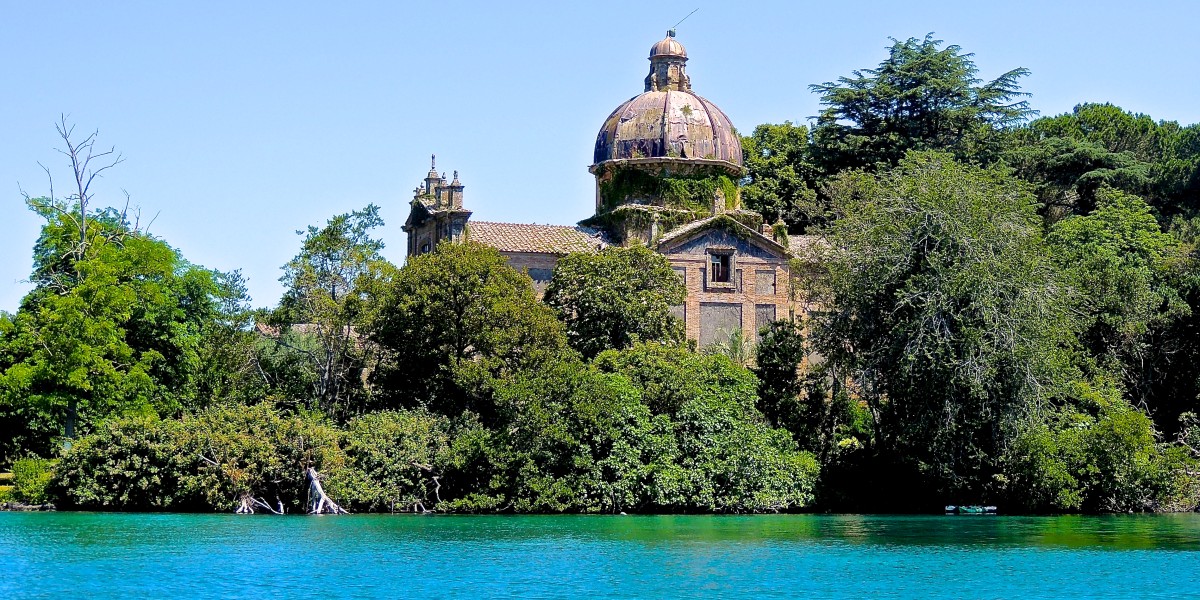
The white dome and chapels overlooking the water
Rising above the trees, the white dome of the Church of Saints James and Christopher is the island’s most recognisable landmark. It was commissioned by the Farnese family, a powerful Renaissance dynasty that controlled the area for centuries.
The church also served as a burial place for members of the Farnese family and once displayed paintings by Annibale Carracci. Scattered around it are small chapels built between the 15th and 16th centuries by Franciscan friars, laid out as a symbolic pilgrimage route inspired by the seven churches of Rome.
What to see along the perimeter
Three of the original seven chapels are currently accessible, with others gradually reopening.
- The most dramatic is the Chapel of Saint Catherine, octagonal in plan and attributed to Antonio da Sangallo the Younger. It stands on a rocky spur more than twenty metres above the lake.
- Further along lies the Chapel of the Crucifix, also known as Mount Calvary, with fresco cycles attributed to the circle of Benozzo Gozzoli.
- At the island’s highest point, the Chapel of Mount Tabor marks the culmination of the spiritual ascent. Directly beneath it lies the Malta of the Popes, binding Renaissance devotion to darker undercurrents.
A vast history within 17 hectares
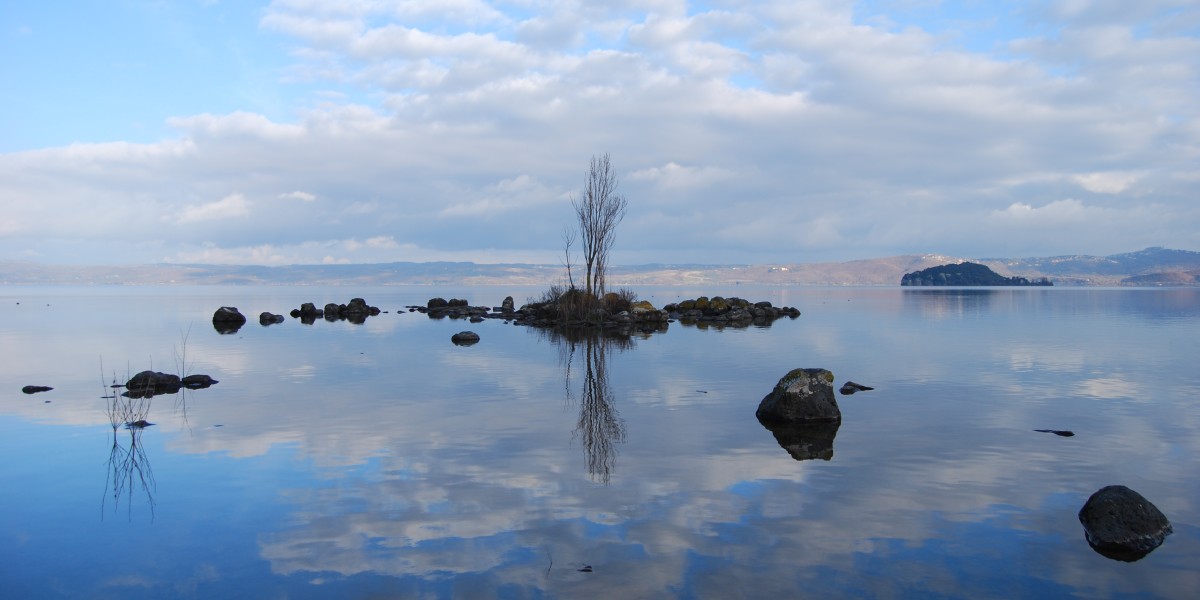
Bisentina Island may cover just 17 hectares, yet its timeline stretches back to the Bronze Age. A dugout canoe discovered near Punta Calcino confirms early navigation on Lake Bolsena, while Etruscan tombs and Roman artefacts point to prolonged settlement.
- In the 9th century, during Saracen raids along the Tyrrhenian coast, the island became a natural refuge, and occupation stabilised.
- By the late 14th century, control had passed to the Farnese family.
- In 1431, Pope Eugene IV entrusted the island to the Friars Minor Observant, who established a convent, church and chapels.
How to organise a visit to Bisentina Island
Bisentina Island is accessible only by boat and exclusively on designated dates, reflecting its status as private property with restricted entry.
Boats depart from the piers of Capodimonte and Bolsena, crossing Lake Bolsena in a short journey that frames the island’s rugged shoreline and white dome rising above the trees. Tickets generally include both boat transport and a guided tour, which is essential for accessing the Malta of the Popes and understanding its layered history.
Original Italian article seen on The Wom Travel.
Stay inspired for your travels in Italy —get our weekly newsletter for the latest travel, legal, and lifestyle news.