Rome is not one uniform city. Daily life can feel very different in the historic centre, a family-focused district near a large park, or a residential area close to a Metro line. Choosing where to live in Rome usually comes down to budget, commute, noise levels and the sort of neighbourhood routine that feels manageable year-round.
For many newcomers to Rome, it pays to prioritise reliable transport and everyday services over a postcard address. The historic centre is practical for some, but local markets, schools, supermarkets and green space can matter far more once the initial novelty wears off.
- Best areas to live in Rome
- Centro Storico for living close to Rome’s landmarks
- Prati for an organised, well-connected base
- Trastevere for nightlife and older streets
- Testaccio for food, markets and a local feel
- Aventino and San Saba for calm streets near the centre
- Monteverde for green space and family life
- EUR for modern apartments and a business-district commute
- Parioli for space, schools and a residential setting
- Renting and buying in Rome in 2026
- Where do foreigners live in Rome?
Best areas to live in Rome
Centro Storico for living close to Rome’s landmarks

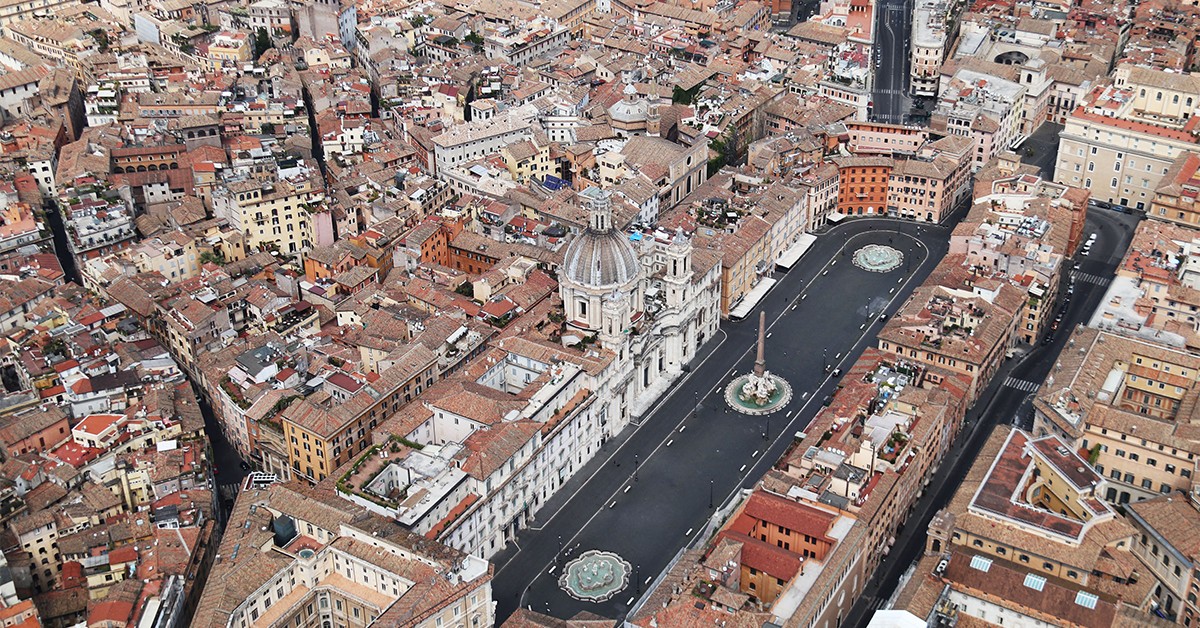
The Centro Storico puts places such as the Pantheon, Piazza Navona and the Trevi Fountain within walking distance. It suits people who want to be in the middle of Rome’s historic core and do not mind tourists, limited parking or higher housing costs.
Day-to-day life can be less straightforward here. Larger supermarkets, outdoor space and quiet streets are harder to come by, while older buildings may have no lift or modern insulation. It tends to work better for professionals, second-home owners and people who value walking everywhere over having more space.
It is unsurprisingly the most expensive area to buy property in Rome, with average property prices in September 2025 at €7,805 m2.
Prati for an organised, well-connected base
Prati, next to Vatican City, has broad streets, smart apartment blocks, shops and straightforward access to Metro line A. It has a more residential rhythm than the historic centre, while still being close to central Rome.
The neighbourhood works well for international residents, professionals and households that want local services on the doorstep. The trade-off is that demand is high, particularly around Lepanto and Ottaviano, and rents are usually well above the city average.
Trastevere for nightlife and older streets
Trastevere remains one of Rome’s most sought-after neighbourhoods, with narrow lanes, independent shops, trattorie and a busy evening scene. It has a strong sense of place and is easy to reach on foot from several central districts.
It is worth viewing properties at different times of day. Parts of Trastevere can be noisy late into the night, especially near Piazza di Santa Maria in Trastevere. Public transport is mainly by tram and bus rather than Metro, which may not suit an early commute across the city.
Testaccio for food, markets and a local feel
Testaccio has a lived-in atmosphere, excellent food shops and the long-standing Mercato di Testaccio. Its industrial past remains visible around the former slaughterhouse, now home to cultural spaces connected with Mattatoio.
It is a good middle ground for those who want central access without living in the tourist-heavy streets. The area has become increasingly popular, so availability can be limited, but it still feels more everyday Rome than some central alternatives.
Aventino and San Saba for calm streets near the centre
Aventino and neighbouring San Saba are quieter residential pockets with period homes, greenery and quick access to the centre. Giardino degli Aranci and the Basilica di Santa Sabina are close by, although daily life here is notably calmer than around the major sights.
These areas suit people looking for a more peaceful setting without a long commute. Housing supply is limited, and prices tend to reflect the location, privacy and low traffic.
Monteverde for green space and family life
Monteverde sits west of the Tiber and is popular with families, long-term residents and anyone wanting more space. Villa Doria Pamphilj, Rome’s largest landscaped public park, is a major plus for walking, running and time outdoors.
The district is split between older streets around Monteverde Vecchio and more modern parts of Monteverde Nuovo. It is well served by buses and trams, though the lack of a Metro station can make some cross-city journeys slower.
EUR for modern apartments and a business-district commute
EUR has wide roads, rationalist-era buildings, offices and larger flats than many central districts. It was developed under Fascism for the 1942 world exposition that never took place, a history that needs to be recognised alongside its current role as a business and residential district.
Metro line B makes EUR useful for people working in the south of Rome or travelling towards Termini, while parks and Laghetto dell’EUR provide space rarely found in the centre. It can feel quieter in the evenings and less spontaneous than Rome’s older neighbourhoods.
Parioli for space, schools and a residential setting
Parioli is an established residential area north of the centre, with larger homes, embassies, private clinics and access to Villa Borghese. International schools and a quieter pace make it a consideration for some families.
It is not the most convenient district for the Metro, and housing is generally expensive. The area suits those whose work, school or lifestyle is already centred in this part of Rome.
Renting and buying in Rome in 2026
Rome’s housing market varies sharply by district, property condition and proximity to a Metro station. Central historic areas, Prati, Aventino, Parioli and parts of Trastevere generally sit at the higher end of the market. Outer neighbourhoods can provide more square metres for the budget, though commute times need checking carefully.
As of September 2026, property prices in Rome averaged €3,810 per m². Rent prices in Rome averaged €19.2 per m², putting an 80 m² flat at roughly €1,536 per month, before bills and any agency fees. Actual costs can differ considerably between neighbourhoods and according to a property’s condition, size and connections.
Average property prices in Rome
This table compares September 2026 asking prices across key Rome neighbourhoods.
Area | Average property price, September 2026 |
|---|---|
Centro Storico / Centro | €7,805 per m² |
Borgo Pio | €7,704 per m² |
Trastevere | €7,461 per m² |
Prati | €6,900 per m² |
Testaccio | €6,805 per m² |
Prati–Mazzini | €6,416 per m² |
Termini–Castro Pretorio | €5,817 per m² |
Gianicolense–Monteverde Vecchio | €5,200 per m² |
EUR | €5,217 per m² |
EUR Torrino–Tor di Valle | €4,432 per m² |
Monteverde Nuovo | €4,154 per m² |
Aventino–San Saba and Parioli are among Rome’s higher-priced residential areas, but no September 2026 figures for these individual zones were included in the available data. They should therefore not be represented using the citywide average.
Where do foreigners live in Rome?
International residents are spread across the city rather than concentrated in one expat enclave. Prati, Trastevere, Testaccio, Monteverde, Parioli and parts of the Centro Storico often appeal for different reasons: access to work, schools, transport, space or nightlife.
A local routine makes a bigger difference than living near English speakers. Basic Italian is useful for dealing with landlords, building managers, schools, tradespeople and public offices. A neighbourhood with a nearby mercato rionale — a daily local market — and reliable transport can make the move far easier.
Current prices and rents should be verified by neighbourhood before signing a contract, as advertised figures can shift quickly and older homes may involve higher utility or maintenance costs.
Stay in the know about living in Italy as a foreigner—get our weekly newsletter for the latest travel, legal, and lifestyle news.