Sardinia is often reduced to its beaches, yet the island’s smaller towns are where the detail lives: medieval lanes, fishing harbours, local wine, island ferries and archaeological sites sitting a short drive from the coast.
The best villages to visit in Sardinia are spread widely, so it pays to group stops by region rather than zigzagging across the island. A car makes most of these places far easier to reach, plus ferries are essential for some.
- Best villages to visit in Sardinia in a nutshell
- Castelsardo: a medieval old town on Sardinia’s north coast
- La Maddalena: an island town for beaches and boat trips
- Bosa: colourful riverside streets and a castle above the town
- Posada: a historic village close to Sardinia’s east-coast beaches
- Carloforte: Tunisian heritage on San Pietro Island
- Sant’Antioco: an island town with archaeology and beach access
- Pula: a small town near Nora and southern Sardinia’s coast
Best villages to visit in Sardinia in a nutshell
Village or small town | Area | Best for | Practical note |
|---|---|---|---|
Castelsardo | North coast | Medieval streets and sea views | Steep lanes and limited historic-centre parking |
La Maddalena | North-east archipelago | Beaches, boat trips and island scenery | Ferry required from Palau |
Posada | North-east coast | Castle views and beaches nearby | Car useful for the coast |
Bosa | West coast | Riverside old town and local wine | A good stop between Alghero and Oristano |
Carloforte | San Pietro Island, south-west | Harbour life and Tabarchine food | Ferry required |
Sant’Antioco | South-west | Archaeology and island beaches | Reached by causeway, no ferry needed |
Pula | South coast | Nora archaeological site and beach access | Handy for Cagliari airport |
These are some of the best small towns in Sardinia for travellers who want more than a quick beach stop. Each has a different rhythm, and a few work better as an overnight base than a rushed day trip.
Castelsardo: a medieval old town on Sardinia’s north coast
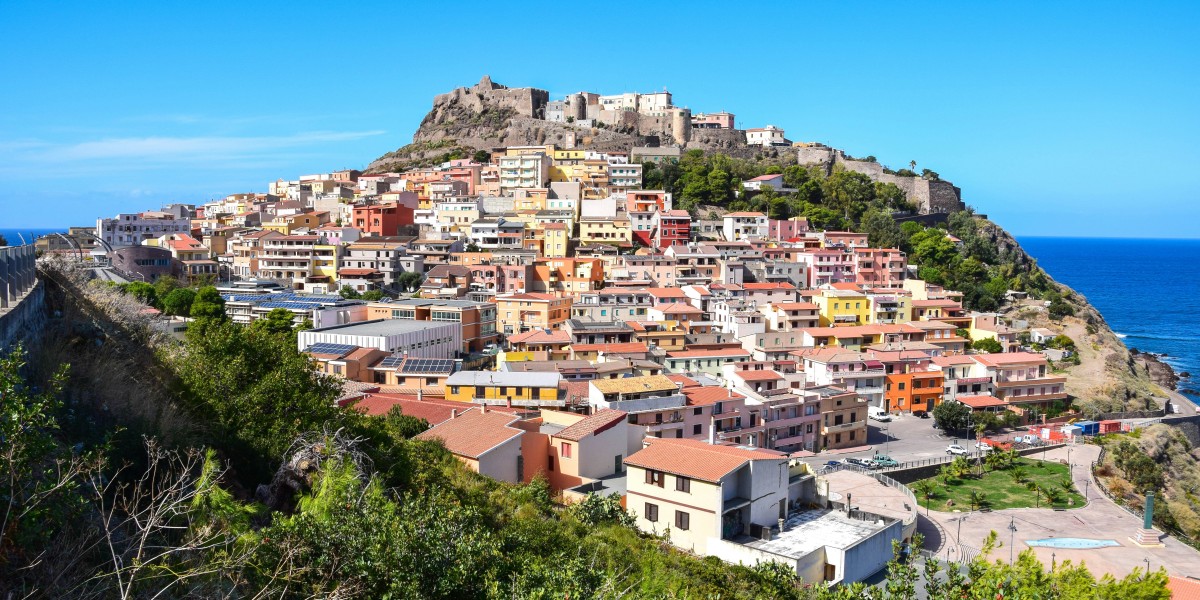
Castelsardo sits on a rocky headland above the Gulf of Asinara, with a compact old town gathered around Doria Castle. Its main draw is the setting rather than its size: stone houses climb the slope, little lanes twist uphill, and the sea appears at the end of almost every gap between buildings.
La Maddalena: an island town for beaches and boat trips
La Maddalena is the main town of the archipelago of the same name, reached by regular ferry from Palau in northern Sardinia. The islands form the La Maddalena Archipelago National Park, a protected marine area where clear water and granite coves are the big pull.
The town itself is a proper working harbour rather than just a launch point for boat trips. Its centre has shops, cafés and restaurants around Piazza Umberto I, while the panoramic road around the island gives access to coves and viewpoints by car, bike or scooter.
Bosa: colourful riverside streets and a castle above the town
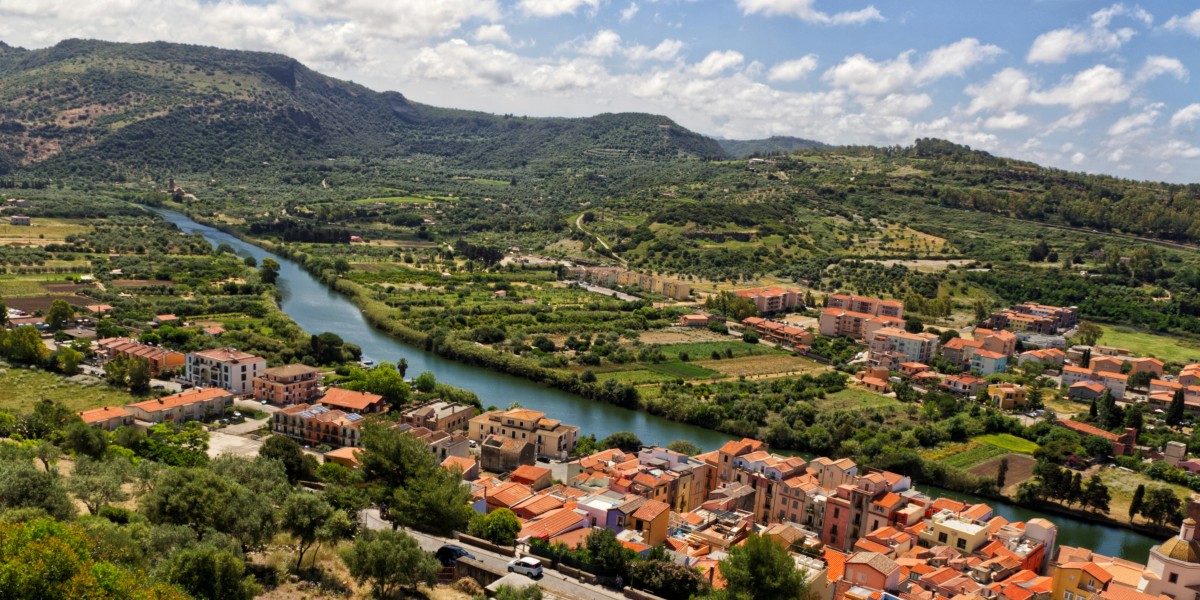
On Sardinia’s west coast, Bosa spreads along the River Temo beneath Castello Malaspina. The oldest part of town, Sa Costa, is a tangle of narrow streets and houses painted in faded pinks, yellows and blues. It is one of the island’s most photogenic townscapes, although it is still very much a lived-in place rather than an open-air museum.
The river is a big part of Bosa’s character. It separates the historic centre from the newer areas and leads towards Bosa Marina, where the town’s beach sits a few kilometres away from the old centre.
Food and wine are another good reason to stop. Malvasia di Bosa is a local fortified-style wine made from the Malvasia grape, traditionally served with Sardinian sweets.
Posada: a historic village close to Sardinia’s east-coast beaches
Posada has one of the most recognisable silhouettes on the east coast: a medieval village rising above a flat coastal plain, with Castello della Fava at the top.
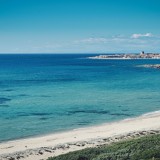
The old centre is quieter than larger beach towns nearby. Down on the coast, the area around Posada has long sandy stretches, dunes and wetlands that form part of a landscape linked to the Tepilora Regional Natural Park.
Carloforte: Tunisian heritage on San Pietro Island
Carloforte is on San Pietro Island, off Sardinia’s south-west coast. It is reached by ferry from Calasetta on Sant’Antioco Island or Portovesme on the mainland. The town’s culture is distinct: many residents trace their roots to Ligurian communities who had previously lived on the Tunisian town of Tabarka.
That history is still present in the local Tabarchino language, a Ligurian variety, and in the food. Tuna has long been central to Carloforte’s cuisine, though visitors should treat it as one part of the local food culture rather than the whole story.
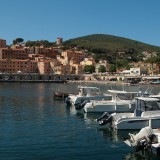
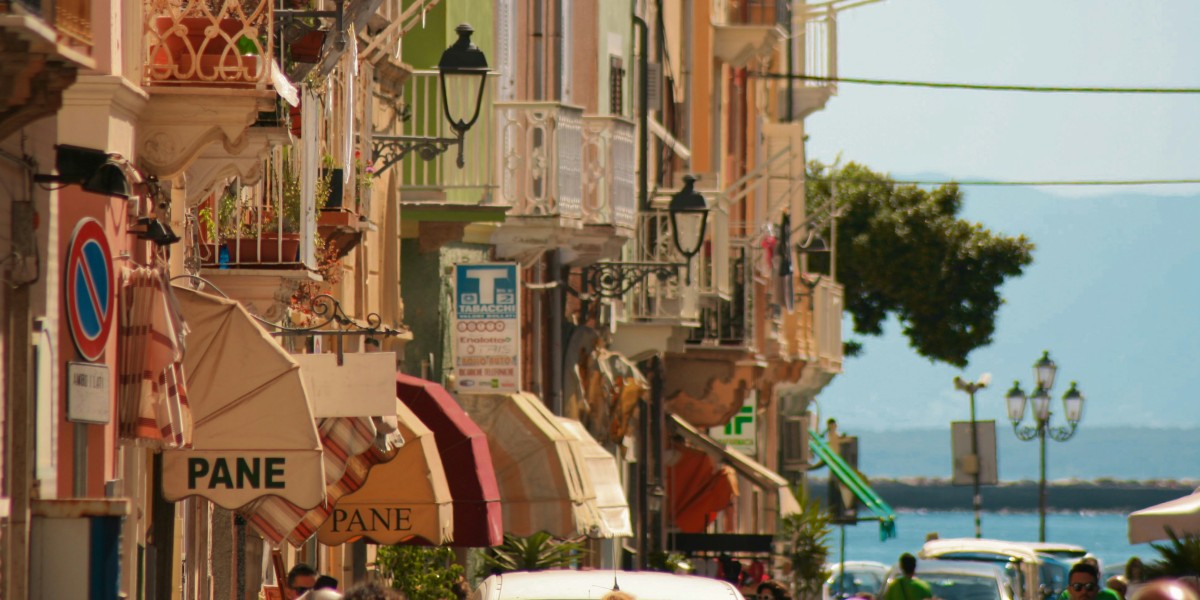
The harbour is the heart of town, with waterfront restaurants, boats and pastel-coloured buildings. Away from the centre, the island has beaches, rocky inlets and exposed cliffs. La Bobba is one of the better-known beaches, while the western side of the island feels wilder and more wind-exposed.
Sant’Antioco: an island town with archaeology and beach access
Sant’Antioco is a town on the island of the same name, joined to Sardinia by a causeway. Unlike Carloforte, it does not involve a ferry crossing, which makes it easier to include on a south-west road trip.
Its appeal is a mix of archaeology, everyday island life and access to beaches around the coast. The town has Phoenician, Punic and Roman layers, with sites including the Tophet sanctuary area and the Hypogeum Village, where rooms cut into rock were used in different ways over the centuries.
Pula: a small town near Nora and southern Sardinia’s coast
Pula is a small south-coast town around 35 kilometres from Cagliari. It is not a tiny hill village, but it earns its place for the nearby archaeological site of Nora, one of the most important historical stops in southern Sardinia.
Nora contains Phoenician, Punic and Roman remains beside the sea, including streets, baths, mosaics and a theatre. The coastal setting gives the site a very different feel from an inland archaeological park, though shade can be limited on hot days.
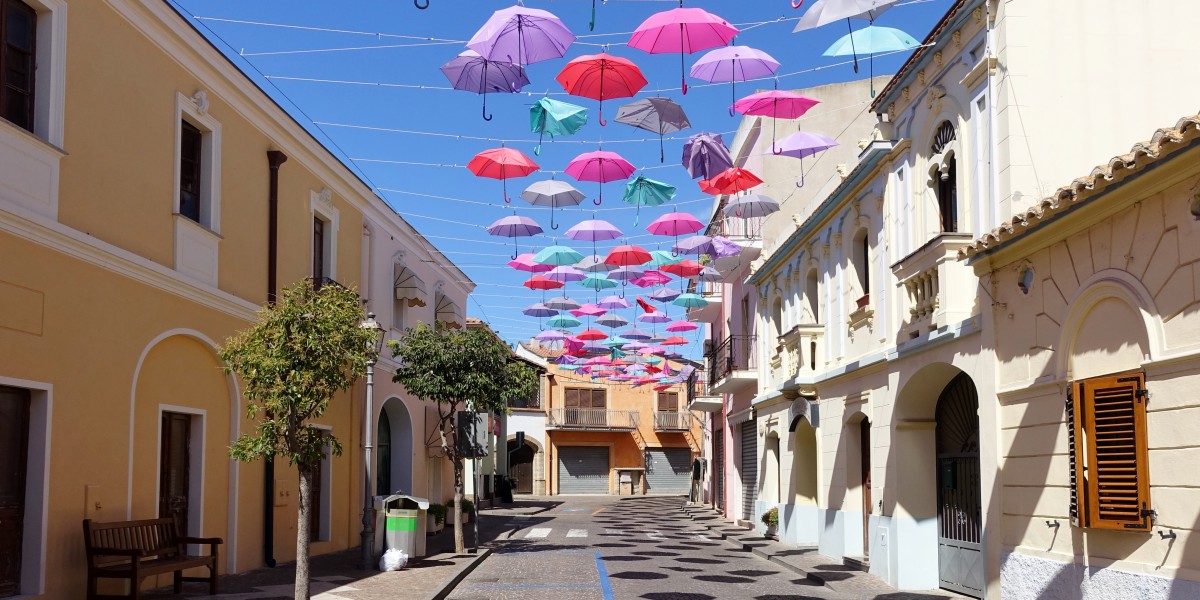
Pula’s centre is straightforward and sociable in the evening, with restaurants and useful services. It works well for travellers who want access to beaches and southern Sardinia’s cultural sites without committing to a stay in Cagliari.