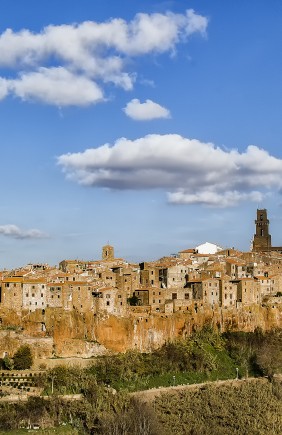
Almost three thousand years of history have not settled one of literature’s most absorbing questions: where are the places of Odysseus and the Odyssey really located?
Over the centuries, Homer’s poem has served as a compass for geographers, philologists and sailors trying to overlay its map onto the Mediterranean, gathering evidence, clues and theories that can sometimes fit together surprisingly well. The result is an itinerary touching Sicily, Lazio, Campania, Tunisia, Greece and the waters around Malta.
- Where are Odysseus' places located? The geographical problem
- Stop by stop: the places on Odysseus' journey
- Ismarus, land of the Cicones: the only geographical certainty
- Djerba: the land of the Lotus-Eaters in Tunisia
- The land of the Cyclopes: Sicily and the Faraglioni of Aci Trezza
- Aeolus’ island of winds: Stromboli or Pantelleria?
- Monte Circeo: the island of the sorceress Circe
- Cumae and the entrance to the Underworld
- Capri’s Faraglioni and the song of the Sirens
- The Strait of Messina: Scylla and Charybdis
- Corfu and the Phaeacians: the return draws near
Where are Odysseus' places located? The geographical problem
Homer left no coordinates, and his “directions” are vague: days at sea, wind direction and descriptions of the landscape.
Even so, this has been enough to create a millennia-long tradition of interpretation, stretching from Herodotus and Thucydides to modern studies by philologists such as Victor Bérard. In the early 20th century, Bérard produced a major work identifying the Homeric locations.
Stop by stop: the places on Odysseus' journey
Odysseus's journey begins in Troy, in what is now northwestern Turkey, and ends in Ithaca, the Greek island in the Ionian Sea. Along the way, the hero visits distinct locations —some identified with certainty, others still a matter of debate.

Ismarus, land of the Cicones: the only geographical certainty
The journey begins shortly after leaving Troy. Odysseus and his men land at Ismarus, city of the Cicones, a people of southern Thrace allied with the Trojans and celebrated in the poem for their exceptional wine.
This is the only stop on the journey identified with unanimous certainty by scholars. It corresponds to ancient Maroneia, a Greek colony on the northern Aegean coast in present-day Greek Thrace. The site can still be visited and has remains dating back to the Classical and Hellenistic periods.
Djerba: the land of the Lotus-Eaters in Tunisia
Driven by a violent storm beyond Cape Malea, the southernmost point of the Peloponnese, Odysseus’ men reach the land of the Lotus-Eaters, the lotus eaters.

The most widespread tradition, already found in Herodotus and systematically taken up by Bérard, identifies this place with the Tunisian island of Djerba, in the Gulf of Gabès. Its geographical position, just beyond Cape Malea along a wind-driven route, would be consistent with Homer’s description.
The land of the Cyclopes: Sicily and the Faraglioni of Aci Trezza
This is the best-known and most debated stop. Odysseus lands in the country of the Cyclopes, one-eyed giants who live in caves on the slopes of a smoking mountain, without laws or agriculture. Here he meets Polyphemus, son of Poseidon, who traps him in his cave and devours several of his companions.

As early as antiquity, Thucydides, Euripides and Pindar placed the Cyclopes in Sicily, at the foot of Mount Etna. The area around Aci Trezza, in the province of Catania, with its imposing lava sea stacks, is the most evocative and deeply rooted identification. According to legend, the blinded Polyphemus hurled the rocks into the sea.
Aeolus’ island of winds: Stromboli or Pantelleria?
After escaping the Cyclopes, Odysseus arrives on the island of Aeolus, ruler of the winds. The king welcomes him generously for a month, then gives him an ox-hide bag containing all storm winds, leaving only Zephyrus free to carry him towards Ithaca. His companions believe the bag contains treasure and open it while Odysseus sleeps. The winds are unleashed and send the fleet back.
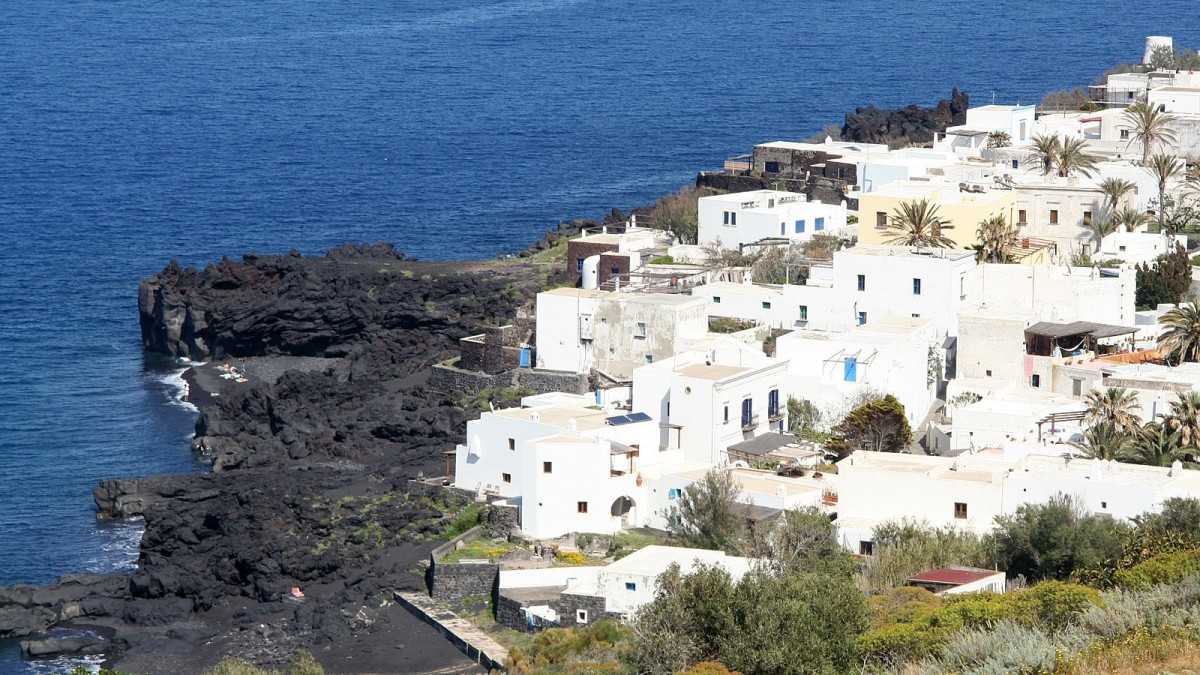
The traditional identification points to Stromboli, the volcanic island in the Aeolian Islands. Its unmistakable outline, visible from afar because of its plume of smoke and the night-time glow of eruptions, fits an island recognisable at sea. Some modern philologists, however, prefer Pantelleria, which better fits a westward route.
Monte Circeo: the island of the sorceress Circe
After the disaster involving the Laestrygonians, Odysseus arrives on the island of Aeaea, realm of the sorceress Circe. Here, she turns his companions into pigs with a magical potion. Odysseus resists the spell and forces Circe to release his men.
The geographical match with the Circeo Promontory, in southern Lazio, is one of the poem’s strongest. In pre-Roman times, Monte Circeo was separated from the mainland by the waters of the Pontine Marshes, so it really did appear as an island. It now sits within a national park.
- Property for sale in San Felice Circeo
- Long-term rentals in San Felice Circeo
- Holiday rentals in San Felice Circeo
Cumae and the entrance to the Underworld
Following Circe’s instructions, Odysseus travels to the edge of the known world, to the land of the Cimmerians, a people shrouded in perpetual mist, to summon the souls of the dead and consult the seer Tiresias. This is the Nekyia, the descent into the Underworld, one of the most powerful and widely imitated episodes in Western literature.

The most widely accepted location is Cumae in Campania, now within the Campi Flegrei area. Even in antiquity, it was considered a threshold to the underworld.
The Cave of the Cumaean Sibyl, with its tunnels cut into tuff, and the volcanic lakes of the Phlegraean Fields, including Lake Avernus, historically associated with Hades, made Cumae a fitting setting for the boundary between the living and the dead.
Capri’s Faraglioni and the song of the Sirens
Having returned from the Underworld, Odysseus faces the Sirens, creatures whose supernatural voices draw sailors to their deaths. He has himself tied to the ship’s mast and orders his companions to block their ears with wax.
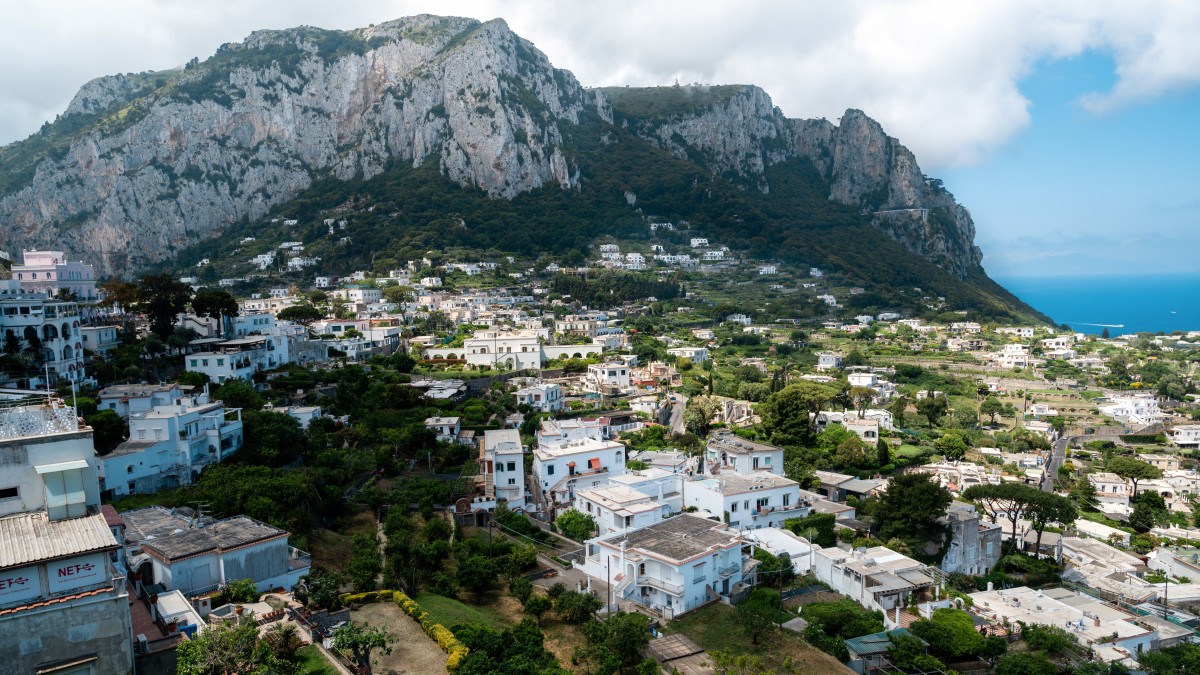
Tradition places this episode among the rocks off Capri, particularly near the Faraglioni. In any case, the geographical setting is the southern Tyrrhenian Sea, which is consistent with the hero’s route.
The Strait of Messina: Scylla and Charybdis
Of all the identifications in the Odyssey, that of Scylla and Charybdis with the Strait of Messina is the most widely accepted by ancient and modern scholars. Homer’s description is precise: on one side, a tall cliff plunging into the sea, where the monster Scylla lurks; on the other, a devouring whirlpool that swallows and regurgitates water three times a day.

The currents of the Strait of Messina, caused by the differing levels of the Tyrrhenian and Ionian seas and the narrowing between Sicily and Calabria, have sustained the legend of a dangerous and unpredictable passage for millennia.
Corfu and the Phaeacians: the return draws near
The last stop before returning to Ithaca is the land of the Phaeacians, a people of remarkable sailors ruled by King Alcinous. Here, Odysseus is welcomed by the young princess Nausicaa, tells the story of all his adventures, and is finally sent home aboard a ship.
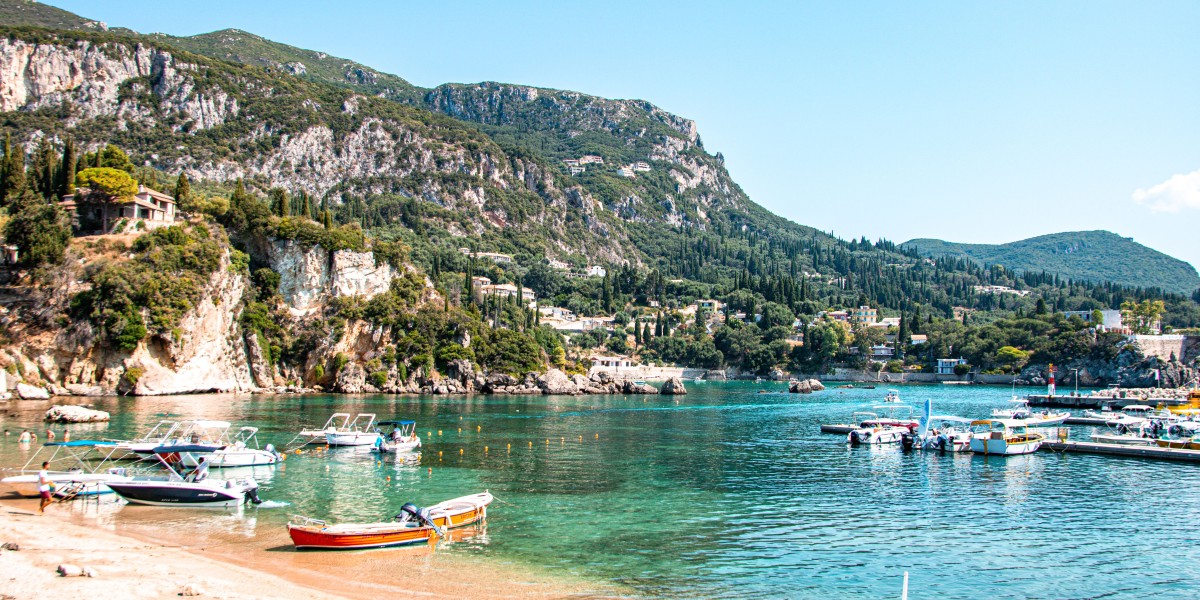
As early as classical antiquity, the land of the Phaeacians, called Scheria in the poem, was identified with Corfu, the Greek island in the Ionian Sea.
Stay inspired for your travels in Italy —get our weekly newsletter for the latest travel, legal, and lifestyle news.