Autumn is one of the best seasons for stargazing in Italy. Nights grow longer, the air becomes drier and clearer, and light pollution has less impact in more remote areas. Between the Alpine arc and the islands, Italy has observatories, astronomy parks and high plateaus where the Milky Way becomes visible to the naked eye again.
Here are some of the best places for stargazing in Italy during autumn.
Where to enjoy astronomy tourism in Italy
Astrotourism is steadily growing. More travellers are choosing holidays based on the quality of the night sky, and Italy has options for different kinds of visitors, including guided visits with professional astronomers and solitary observation in high-altitude meadows.
Lignan
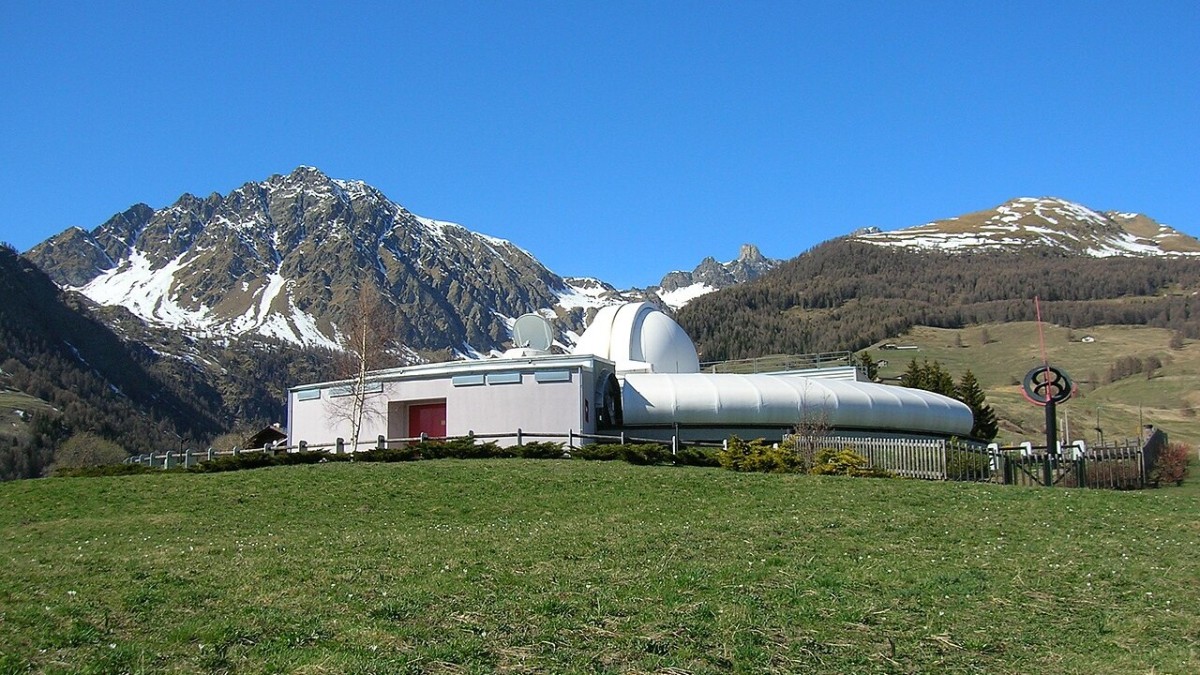
At more than 1,600 metres above sea level in the heart of the Aosta Valley, the small hamlet of Lignan is home to the Astronomical Observatory of the Autonomous Region of Valle d’Aosta (OAVdA) and the Lignan Planetarium, both run by the Clément Fillietroz Foundation.
The Saint-Barthélemy valley, where the facilities are located, is certified as a Starlight Stellar Park. It is the first, and so far the only, site in Italy to receive UNESCO recognition for the quality of its night sky.
Opened in 2003, the observatory is not only an educational centre but also an active research hub. Public night-time guided tours last around an hour and a half and are led by experienced staff. There is also the Theatre of the Stars, where the sky is observed with the naked eye using laser pointers.
The planetarium also runs immersive shows with 4K digital projection, independent of weather conditions.
Val d’Ega
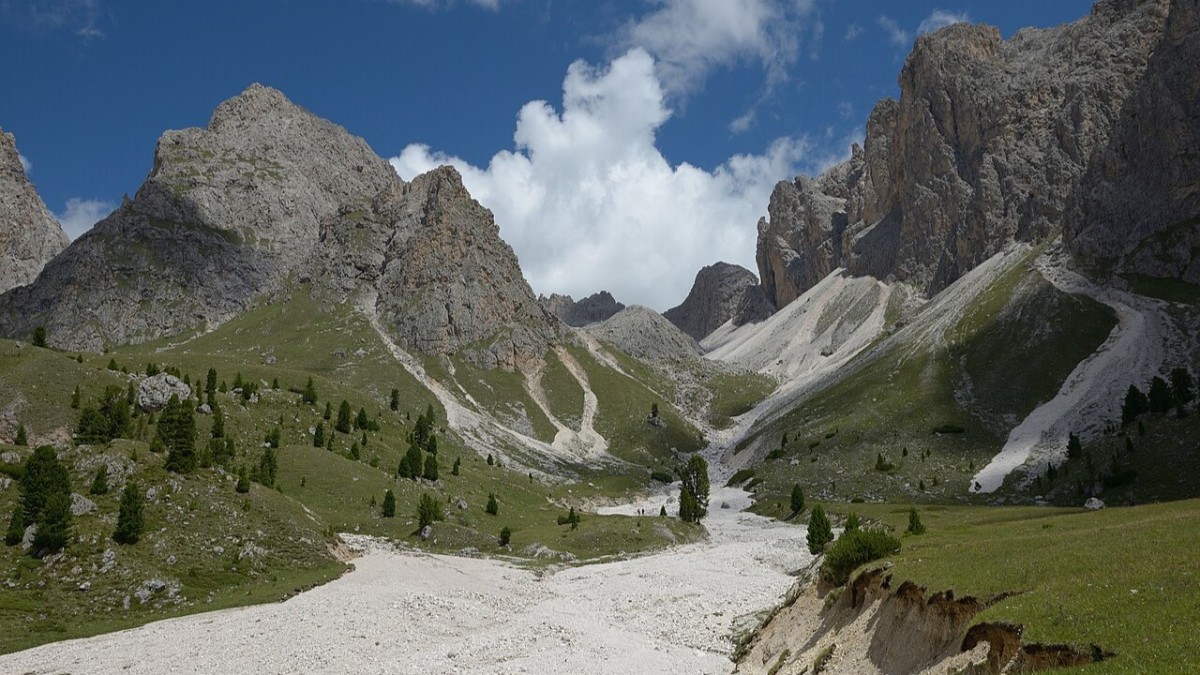
In the municipality of Cornedo all’Isarco, between the hamlets of San Valentino in Campo and Collepietra, Europe’s first astronomy village was established in 2012: Sternendorf Südtirol.
It is not a single observatory, but a network designed to bring visitors closer to the universe at every stage. The Max Valier Astronomical Observatory, South Tyrol’s only observatory, sits at 1,340 metres and has a Cassegrain reflecting telescope with an 80-centimetre mirror.
Next door is the Peter Anich Solar Observatory, dedicated to daytime observations of the sun. In the main square of San Valentino in Campo, the South Tyrol Planetarium seats up to 53 visitors in reclining chairs for a simulated journey through space.
The astronomy village’s standout feature is the Planet Trail, an 8.5-kilometre hiking route that recreates the real distances between the planets of the Solar System on a scale of 1:1 billion.
Asiago Plateau
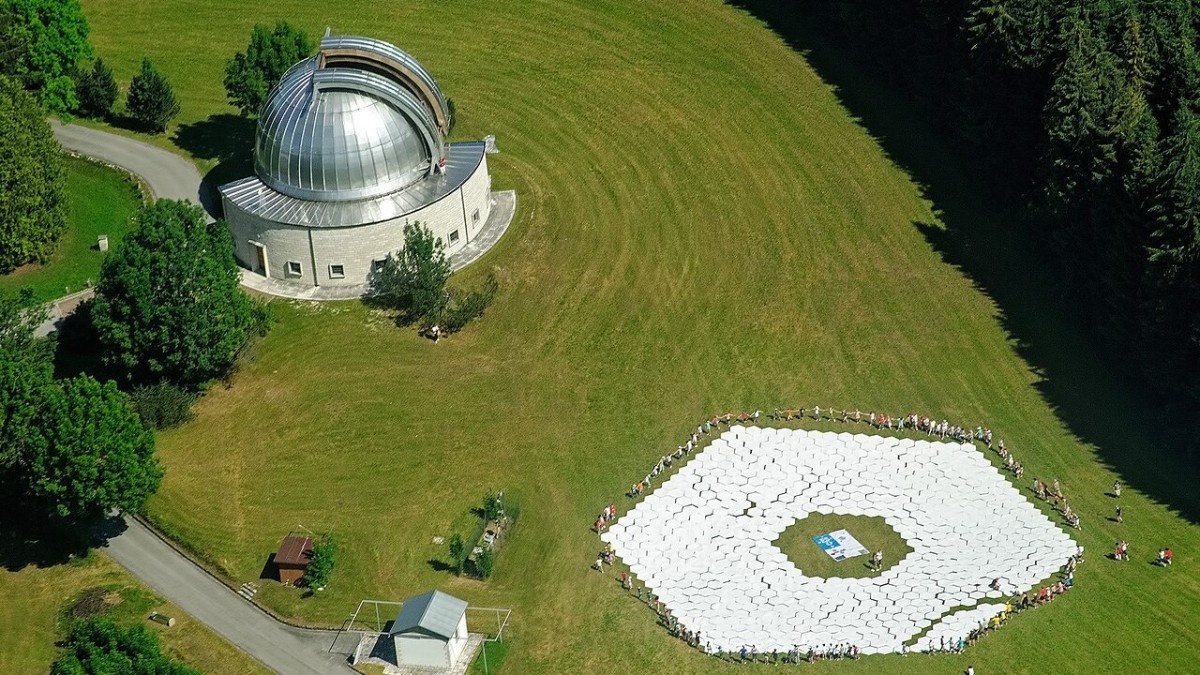
Today, the Plateau of the Seven Municipalities, in the province of Vicenza, is home to Italy’s most important centre for optical astronomy. Two observing stations and a museum form a hub that attracts researchers and enthusiasts alike.
At Pennar, around 1,050 metres above sea level, stands the Astrophysical Observatory of the University of Padua. The silver dome of the Galileo telescope rises among the fir trees.
Not far away, at Cima Ekar, is the Copernico telescope. With an aperture of 182 centimetres, it remains the largest optical instrument on Italian soil.
Monte Armidda
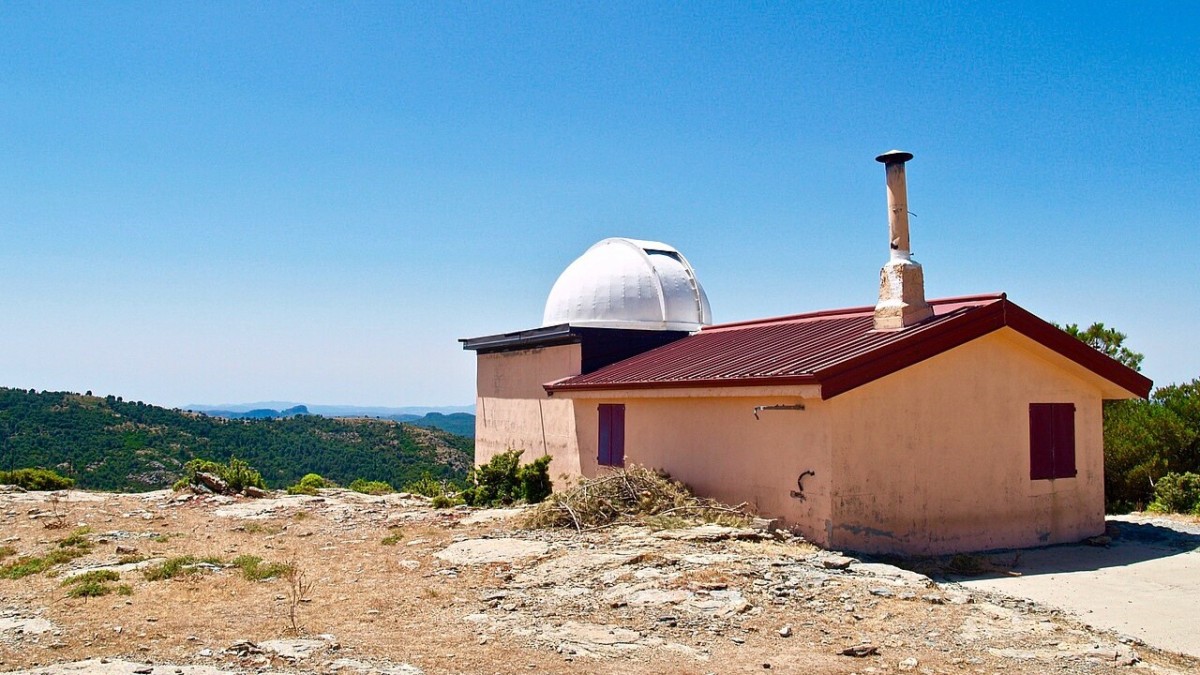
The astronomical observatory at Monte Armidda is located in the inland area of Ogliastra, around 10 kilometres from Lanusei, in one of the parts of the Mediterranean with the lowest levels of light pollution.
The Ferdinando Caliumi Ogliastra Astronomical Observatory is now run by enthusiastic volunteers. More than 2,000 people travel up each year to observe the sky, and visitors describe the experience as one that can change their perspective.
Gal Hassin Astronomy Park
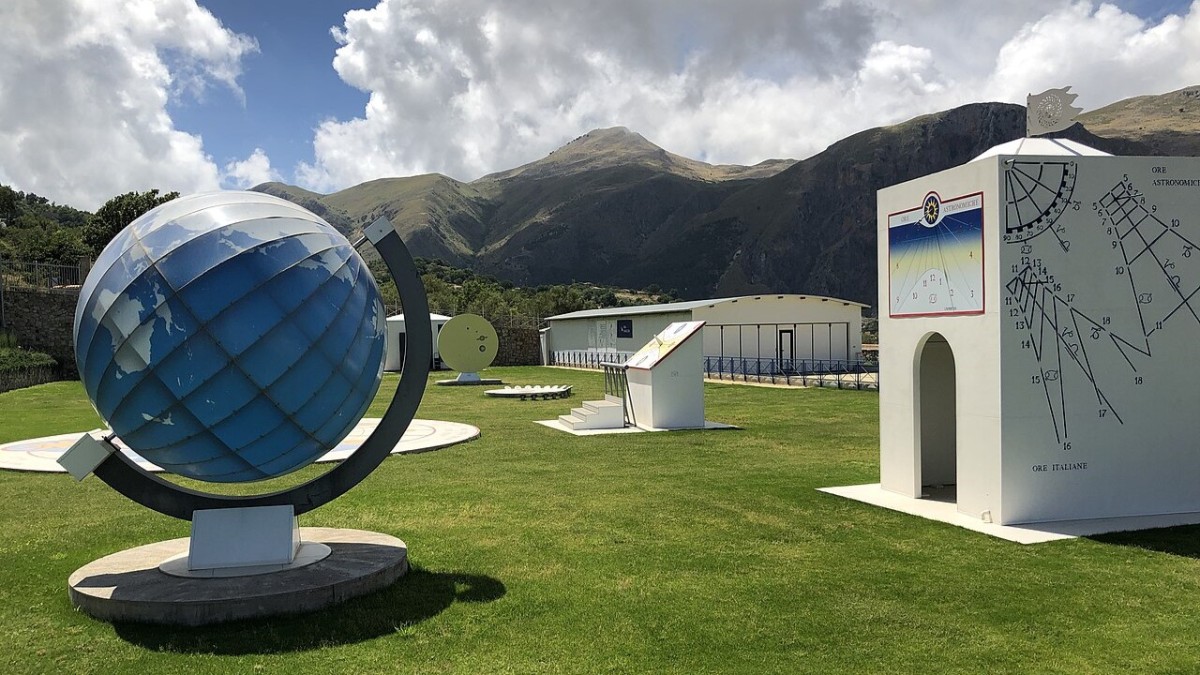
In the heart of Sicily’s Madonie Mountains, the small village of Isnello is home to the Gal Hassin Astronomy Park, southern Italy’s first major astronomy centre, opened in September 2016.
The observation station sits on Monte Mufara at Piano Battaglia, 1,865 metres above sea level: Italy’s highest astronomical observation point.
Lower down, in the Fontana Mitri district just outside Isnello, the complex open to the public includes a 75-seat planetarium, an observation terrace with telescopes and astronomical binoculars, educational workshops for children and a museum.
Campo Imperatore
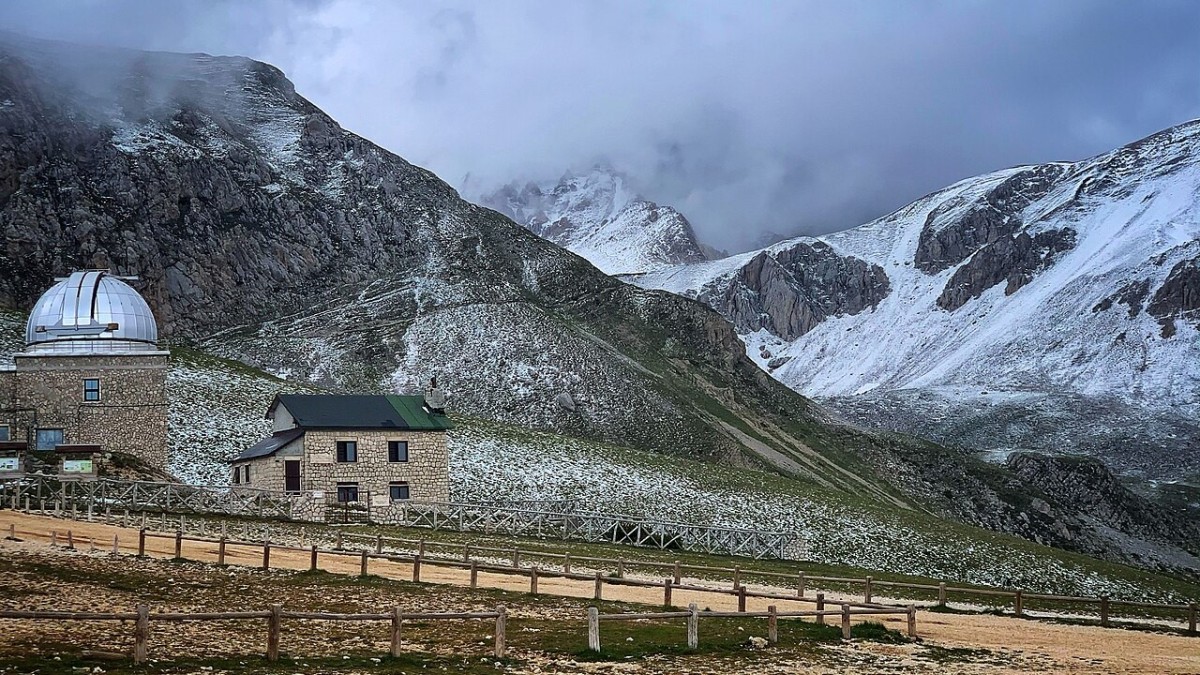
Campo Imperatore, nicknamed the “Little Tibet of Italy”, is a wide plateau at 2,150 metres in the heart of Gran Sasso and Monti della Laga National Park. The Campo Imperatore Observing Station, run by the INAF Astronomical Observatory of Abruzzo, is Italy’s highest professional observatory.
Public visits are possible at certain times of the year and are led by expert astrophysics guides. The observatory can be reached on the Gran Sasso d’Italia cable car from Fonte Cerreto in Assergi. In winter, this is the only way to reach it.
- Houses for sale in Campo Imperatore
- Houses for rent in Campo Imperatore
- Holiday homes in Campo Imperatore
Which constellations are visible in October?
At the beginning of the evening, the Summer Triangle — Vega, Altair and Deneb — is still visible in the west. To the south and east, the Great Square of Pegasus dominates. It points towards Andromeda and its celebrated M31 galaxy, which can also be seen with binoculars.
Below Andromeda lies Perseus, with the striking Double Cluster. In the north, Cassiopeia shines high in the sky in its familiar W shape. It is circumpolar, though at its highest point in autumn, and is a useful reference point for finding your bearings. Nearby, Cepheus is also easy to make out.
Along the zodiac band, Aquarius, Pisces and Aries stand out. They are faint constellations, but form an important background to the movement of the planets.
To the south, Fomalhaut shines on its own in Piscis Austrinus, and is easier to appreciate in central and southern Italy.
Finally, Cetus appears in the south-east. It contains Mira, a variable star that alternates between visible and invisible phases over around 11 months, a reminder that the sky is always changing.
Stay inspired for your adventures in Italy —get our weekly newsletter for the latest travel, legal, and lifestyle news.