Many people see monumental cemeteries as museums in their own right. Tree-lined avenues, marble sculptures and the tombs of notable figures tell the story, art and sensibilities of entire cities.
For anyone looking for an unusual cultural destination, Italy’s most beautiful monumental cemeteries include Staglieno in Genoa, Verano in Rome, and the Certosa in Bologna. Pick one and pay the cemetery a visit during Halloween.
Monumental Cemetery of Staglieno
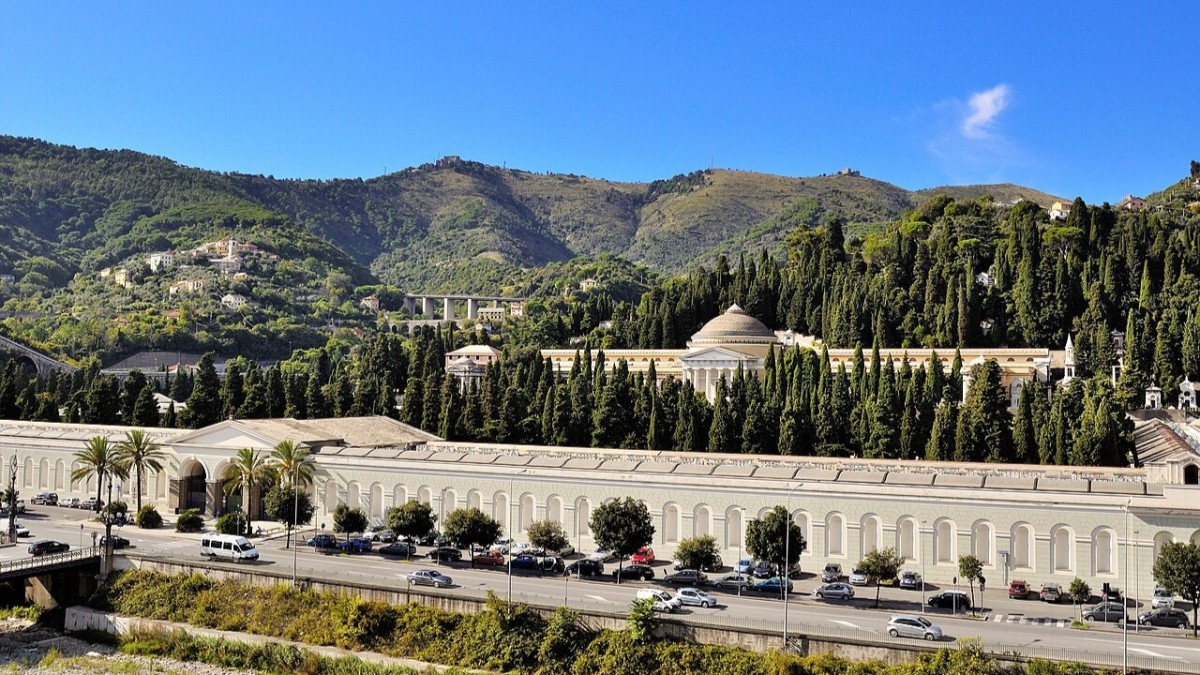
Staglieno, in the hills above Genoa, is regarded as one of Europe’s most important cemeteries for the quality of its funerary sculptures. The project was conceived by Carlo Barabino and completed by Giovanni Battista Resasco, with the cemetery officially opening in 1851.
Among its best-loved works is the tomb of Caterina Campodonico, a peanut seller who saved throughout her life to be portrayed in marble. Giuseppe Mazzini, Fabrizio De André and Constance Lloyd, Oscar Wilde’s wife, are also buried here.
Monumental Cemetery of Verano
Verano is the historic cemetery of Rome. It stands beside the Basilica of San Lorenzo fuori le Mura, one of the city’s finest Romanesque churches, and covers dozens of hectares, placing it among the country’s largest cemeteries.
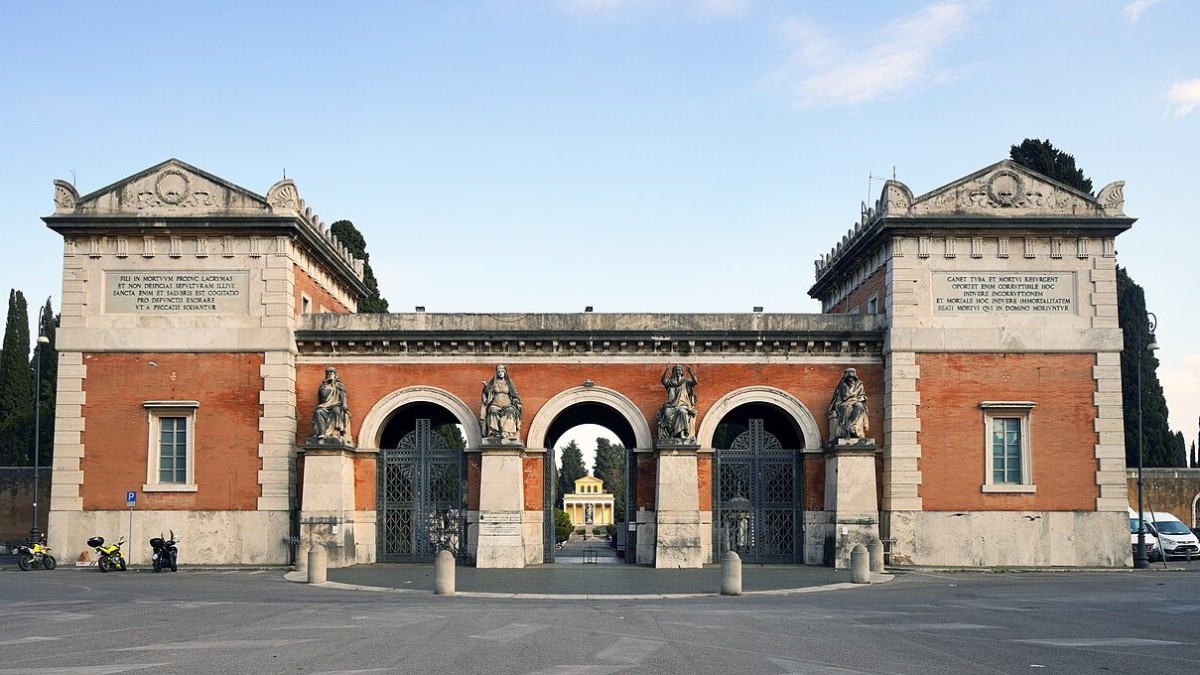
Its origins date back to the early 19th century, during the Napoleonic period, when burials were moved beyond built-up areas. The first layout was designed by Giuseppe Valadier, while Virginio Vespignani created the celebrated monumental entrance and four-sided portico. Its well-known names include Alberto Sordi, Marcello Mastroianni and Alberto Moravia.
Certosa Cemetery of Bologna
Bologna’s Certosa has a particularly distinctive atmosphere, bringing together three periods of history in a single place. Etruscan tombs were discovered beneath the cemetery, while its buildings once belonged to a Carthusian monastery founded in the 14th century.
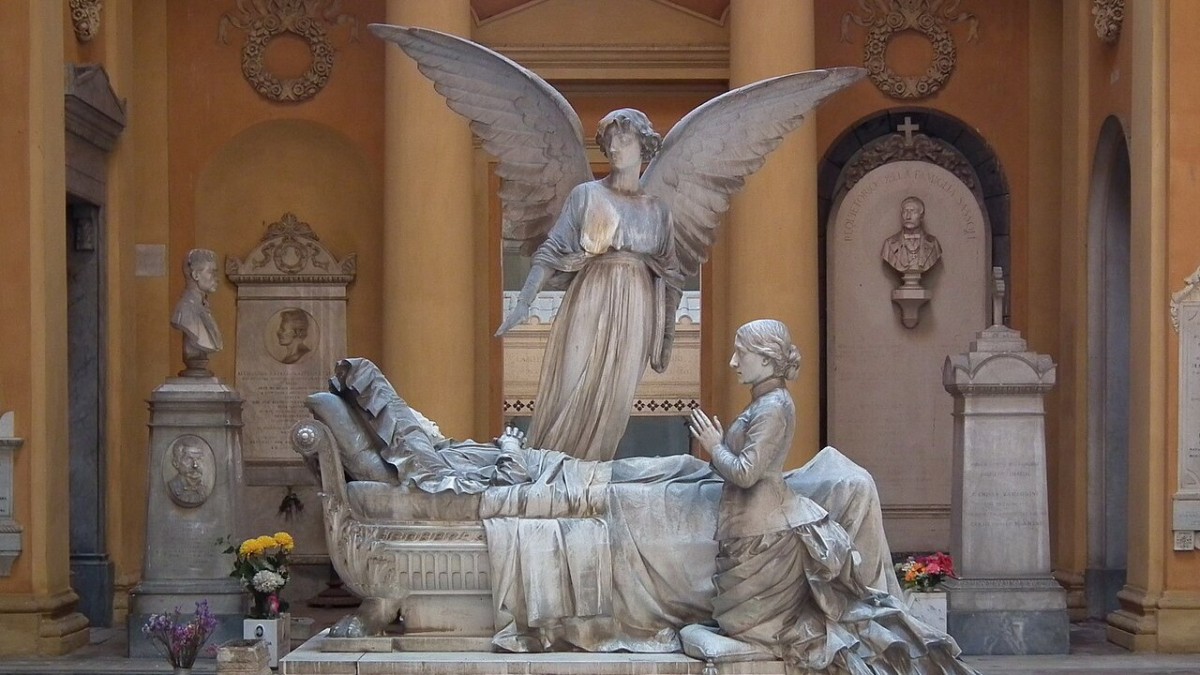
In 1801, after religious orders were suppressed, the complex became the municipal cemetery. Cloisters, loggias and porticoes gradually filled with monuments, creating an artistic route that spans Neoclassicism and Liberty, Italy’s Art Nouveau style. Among the most prominent graves are those of Giosuè Carducci, Giorgio Morandi, Ottorino Respighi and Lucio Dalla.
Non-Catholic Cemetery of Rome
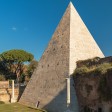
Tucked between the Aurelian Walls and the Pyramid of Cestius in the Testaccio district, the Non-Catholic Cemetery is one of Rome’s most poetic corners. Since the 18th century, it has welcomed people who did not belong to the Catholic faith: Protestants, Orthodox Christians, Jews, atheists and foreigners of every background.
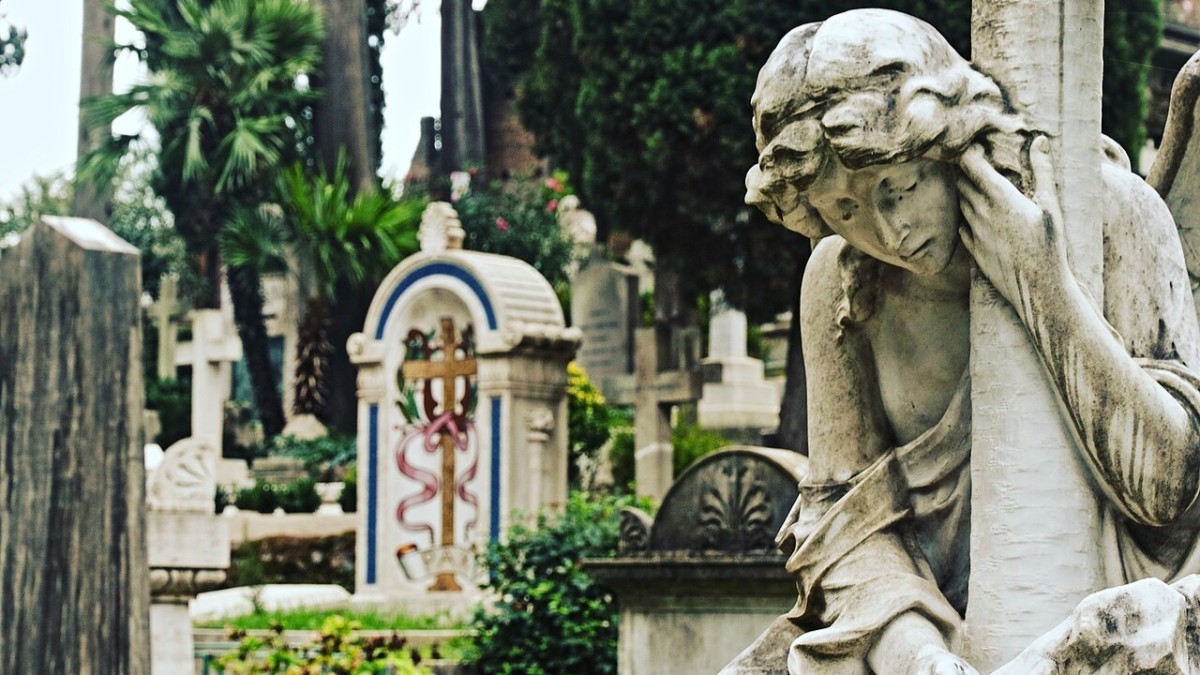
Many visitors come to pay their respects to the English poets John Keats and Percy Bysshe Shelley. Antonio Gramsci, Beat poet Gregory Corso and writer Andrea Camilleri are buried nearby. The Angel of Grief, a sculpture by William Wetmore Story that has become an icon of funerary art, is another notable feature.
Porte Sante Cemetery in Florence
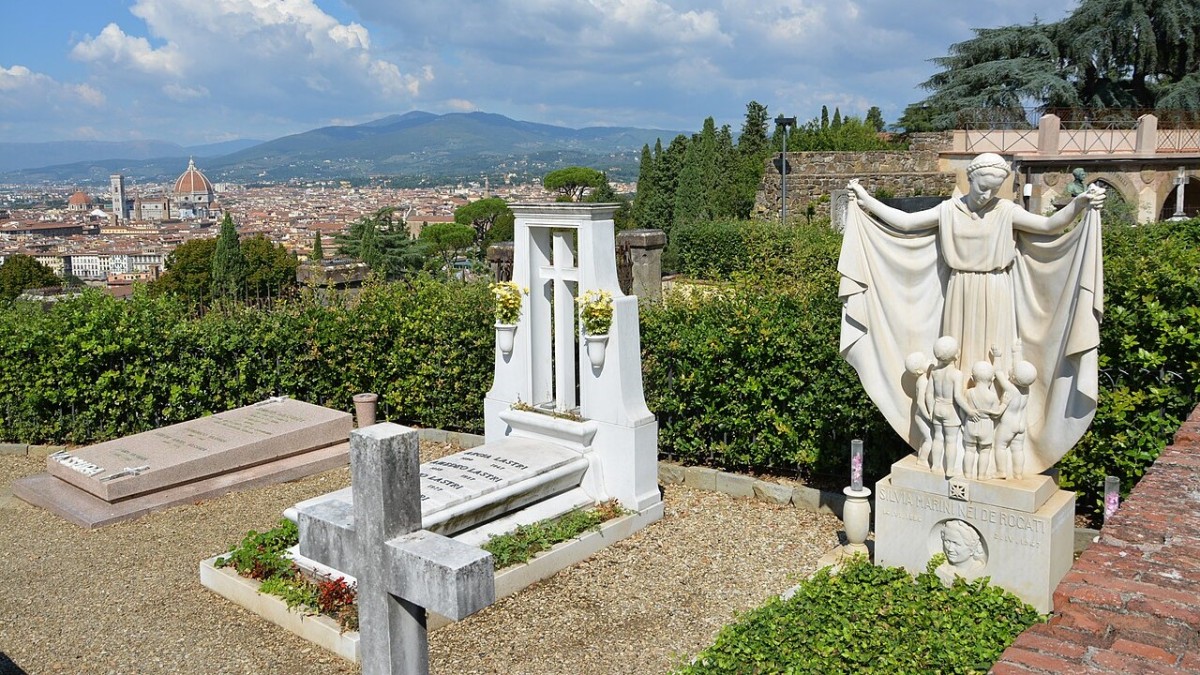
Few cemeteries anywhere in the world have a view like this. The Porte Sante Cemetery stands beside the Basilica of San Miniato al Monte, within the bastions Michelangelo designed to defend Florence during the siege of 1529–1530.
The list of notable figures buried here is equally striking. The Porte Sante is the resting place of Carlo Collodi, the creator of Pinocchio; food writer Pellegrino Artusi; writer Vasco Pratolini; statesman Giovanni Spadolini; and director Franco Zeffirelli.
Monumental Cemetery of Turin
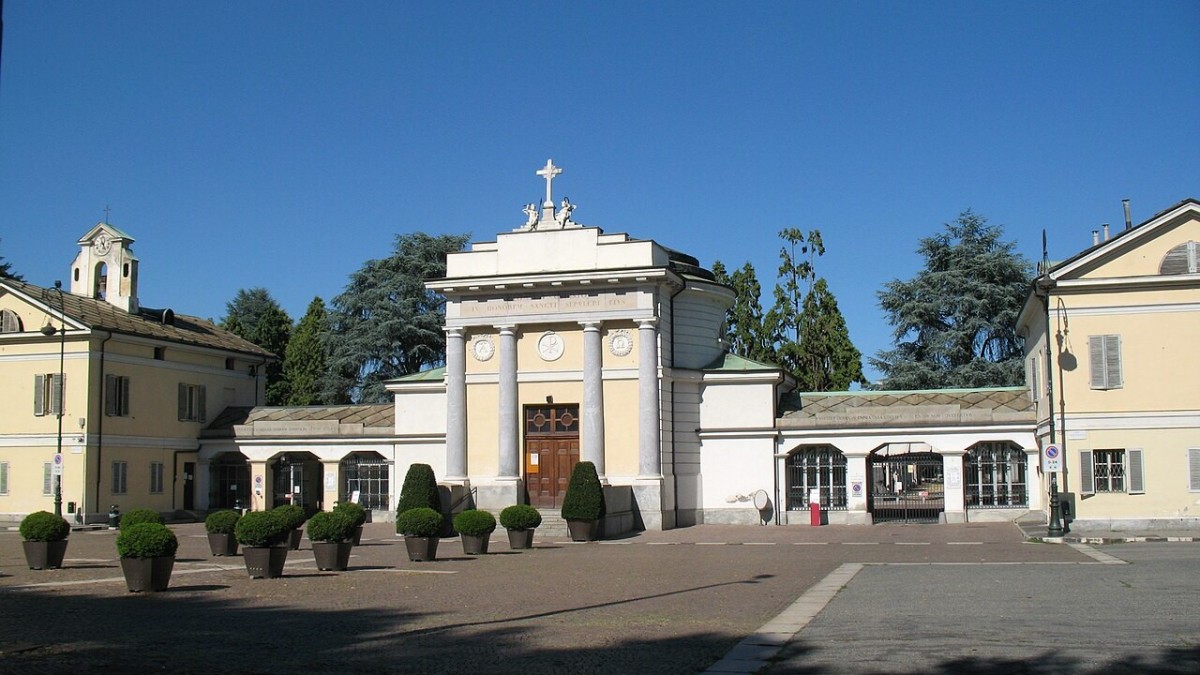
Opened in 1829 as the General Cemetery, Turin’s Monumental Cemetery is one of Italy’s largest. It was expanded several times during the 19th and 20th centuries, with each extension leaving a different stylistic mark.
It is particularly suited to those with an interest in Liberty and Symbolist sculpture. Leonardo Bistolfi, one of the leading figures of Italian Liberty, left several of his most powerful funerary works here.
Among the most visited graves are those of Edmondo De Amicis, author of Heart, and Primo Levi. The cemetery is also home to Fred Buscaglione and numerous figures from the Risorgimento, Italy’s 19th-century unification movement, as well as Turin’s industrial history.
Fontanelle Cemetery
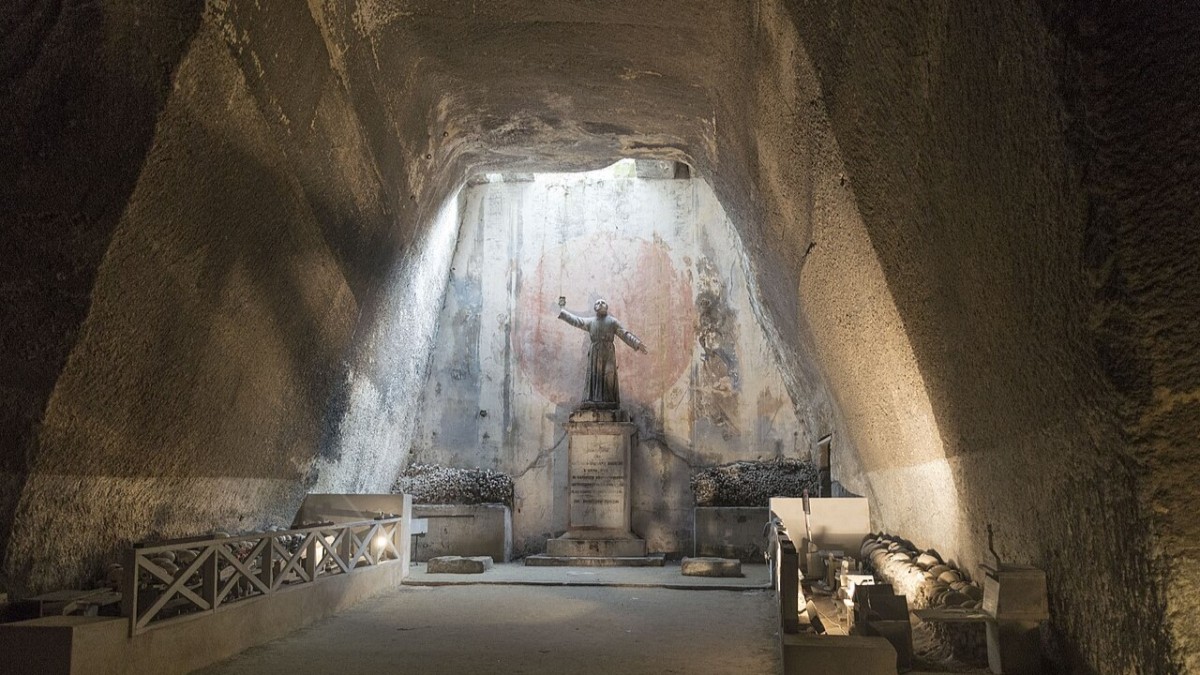
The Fontanelle Cemetery, in Naples’ Rione Sanità, has neither statues nor chapels. It is a vast ossuary carved into a tuff quarry. It holds the remains of thousands of people, largely victims of the plague of 1656 and 19th-century cholera outbreaks. At the end of the 19th century, the priest Gaetano Barbati had the bones arranged, and a distinctive popular cult emerged.
Neapolitans began to “adopt” the skulls, known as capuzzelle, which belonged to the anime pezzentelle, or abandoned souls. They cleaned them, brought them flowers, and, in return, asked for favours and protection.
Stay inspired for your adventures in Italy —get our weekly newsletter for the latest travel, legal, and lifestyle news.