Winter in the Dolomites feels like stepping into a snow-dusted film set: sharp limestone peaks, pine forests heavy with snow, and villages that look almost too pretty to be real.
This corner of northern Italy is only going to be more in the spotlight thanks to the Winter Olympics this year, having already been counted among the world’s best travel destinations for 2026.
Why visit the Dolomites in winter
The Dolomites sit in the far north-east of Italy, stretching across Trentino–Alto Adige and Veneto, and they’re recognised by UNESCO for their dramatic, pale rock formations. In winter, those towering cliffs turn into a natural amphitheatre for skiing, snowboarding, winter hiking and cosy evenings in wood-panelled restaurants.
Winter in 2026 will be an especially lively season around Cortina d’Ampezzo thanks to the upcoming Winter Olympics, which means improved facilities but also busier slopes and higher prices in the most famous resorts. If you prefer quieter corners, smaller towns and nearby cities such as Trento and Bolzano give you a base with more “normal life” going on alongside the winter magic.
Best places to stay in the Dolomites in winter
Acknowledged as one of the best winter holiday destinations in Italy, the region is also unusual culturally. In South Tyrol, Italian, German, and Ladin mingle on menus and street signs, which makes it feel a bit like Italy and Austria had a beautiful, snow-covered baby. For English-speaking visitors, it’s a fairly easy part of Italy to navigate, with good tourism infrastructure, reliable winter transport on main routes, and plenty of locals who speak at least some English.
Choosing where to stay in the Dolomites can be surprisingly tricky because the mountains are spread over a wide area and the character changes a lot from valley to valley. Some places are classic resort towns where almost everyone is on holiday, while others are proper cities with museums, universities and commuters in puffer jackets.
Cortina d’Ampezzo
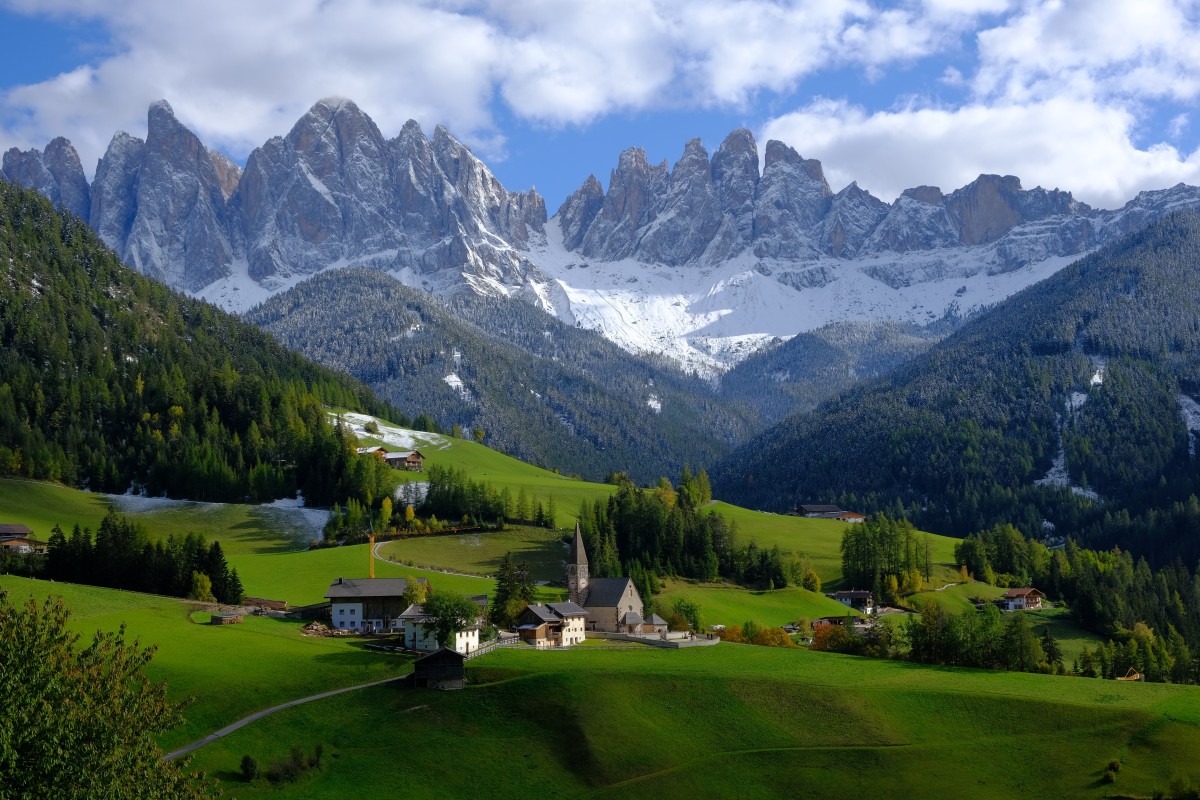
Cortina d’Ampezzo is the sleek, snow-dusted face of the Dolomites, with sharp peaks all around. It has long been recognised as one of the top Italian ski resorts, increasingly popular for second-home buyers seeking a bit of luxury. However, the area has seen property prices soar recently, thanks to the 2026 Winter Olympics. Cortina feels very much like a classic Alpine resort town, where most people are either heading to the slopes or heading out for aperitivo.
Why use Cortina as your winter base
Cortina works well as a base if you want easy access to a big ski area, a wide choice of hotels and plenty of non-ski distractions in the evenings. You’re plugged into the vast Dolomiti Superski network, there are ski schools and guides for all levels, and transfers from Venice and Treviso are relatively straightforward.
Falcade
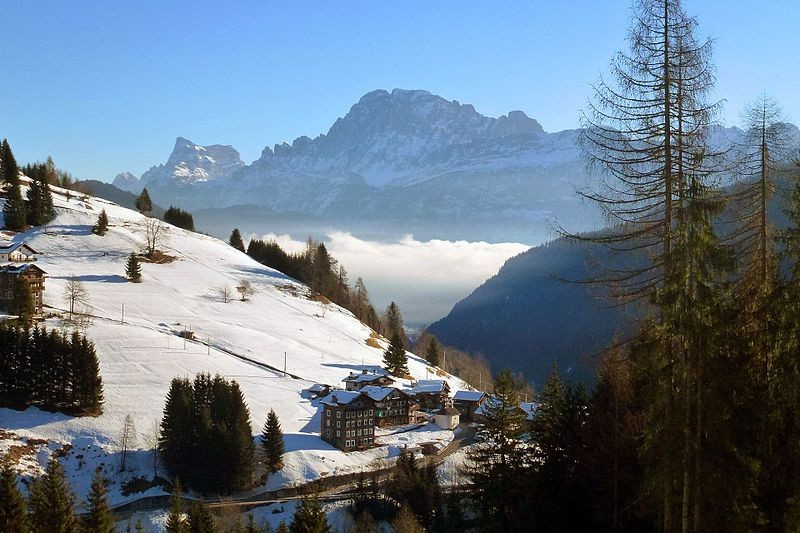
Falcade is a smaller, more low-key village surrounded by wooded slopes and jagged ridgelines. It has a church spire and a handful of traditional buildings at its core. The pace here is slower and more local than in the big-name resorts, and evenings tend to be about hearty food and early nights rather than nightlife.
Why use Falcade as your winter base
Falcade is a good choice if you want proper Dolomites scenery and access to Dolomiti Superski pistes without Cortina-level prices or crowds. It suits families and couples who’d rather stay somewhere peaceful and spend their days between skiing, snowshoeing and long lunches in mountain huts.
Trento
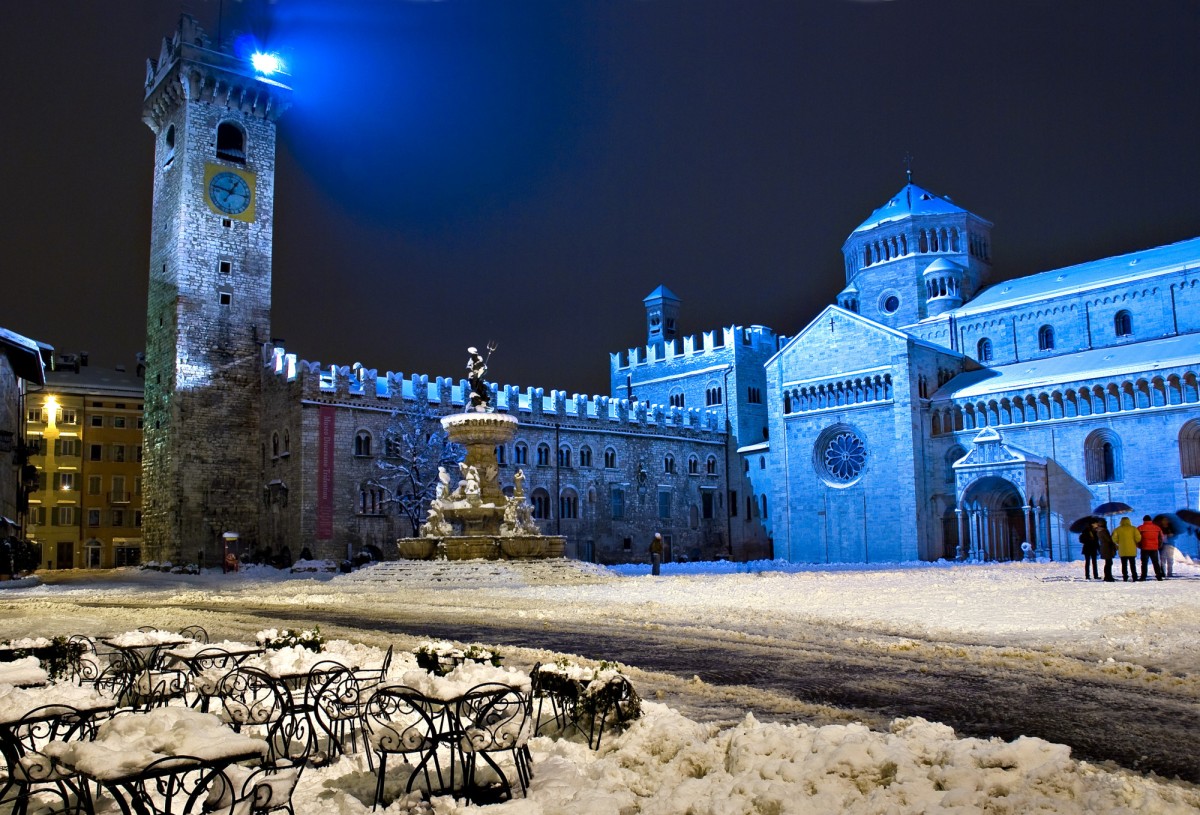
Trento sits in a valley at the foothills of the Dolomites and is recognised as having the best quality of life in Italy. It boasts castle towers, painted façades and a compact historic centre that feels cosy once the temperatures drop. It’s very much a lived-in city rather than a resort, so you’ll be sharing the streets with students, office workers and families as well as other visitors.
Why use Trento as your winter base
The underrated Italian city of Trento makes a smart base if you’d like a winter break with more culture than ski miles. Think museums, wine bars and day trips up to nearby ski areas instead of a week of nothing but lifts. You can reach slopes like Monte Bondone or Paganella in under an hour while keeping all the advantages of staying in a city.
Bolzano
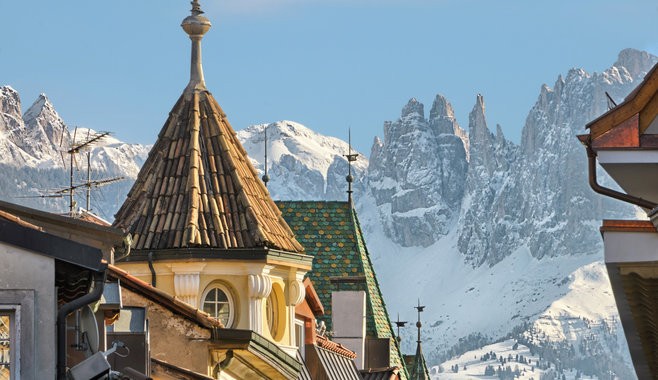
Bolzano is a compact alpine city where Italian and Austrian influences meet, with pastel buildings, arcaded streets and mountain views. In winter, it feels snug and animated, with people ducking into cafés and wine bars. On clear days, you can see snowy ridges rising just beyond the rooftops.
Why use Bolzano as your winter base
Bolzano is a strong base if you want a blend of city comforts and very easy access to high, open landscapes without having to drive. Several cable cars leave from or near the centre, taking you up to plateaus and villages where you can walk, toboggan or simply sit and stare at the view.
Weather in the Dolomites in winter
If you’re used to the damp greyness of a British winter, the brighter light and drier cold can actually feel easier to handle. In general, you can expect daytime winter temperatures in the Dolomites to hover somewhere between -5°C and 5°C at village and city level.
Cities like Trento and Bolzano often sit a couple of degrees warmer than higher-altitude resorts, while the mountains above stay firmly snow-covered. Snowfall is most common from December through to March, though artificial snowmaking on major pistes helps keep ski seasons running even if natural snowfall is patchy. The famous “inversion” days – with mist in the valleys and blazing sun on the ski slopes – are surprisingly frequent, so sunglasses are just as essential as gloves.
Christmas markets and winter atmosphere in the Dolomites
Even if you’re visiting after the Christmas markets have officially packed up, it’s useful to know how the festive season shapes the overall winter feel in the Dolomites.
In late November and December, the region’s cities and larger towns are merrily decorated, with festive lights and Christmas markets selling mulled wine, roasted chestnuts and local crafts. Bolzano’s Christmas market is one of the best-known in Italy, spreading across Waltherplatz with a mix of Tyrolean decorations, food stands and gift stalls.
Once Epiphany passes in early January, the markets close and the most overtly Christmassy elements fade, but the mountains themselves are still very much in winter mode. In practice, that means you can come later in the season, avoid the highest hotel prices and crowds, and still enjoy snowy streets, warm-lit restaurant interiors and the odd lingering string of lights.
Magical mountain villages to visit in the Dolomites
Smaller towns such as Ortisei in Val Gardena and Brunico (Bruneck) in the Puster Valley have a more intimate feel during winter, with central streets lit up and framed by steep, forested slopes.
Ortisei, one of the most beautiful snowy villages in Italy, often feels like it has been plucked straight from a postcard. Nearby places such as the Christmassy village of San Candido add even more fairytale charm to this corner of the Dolomites. These spots are great holiday destinations for a trip in January.
Stay inspired for your travels in Italy —get our weekly newsletter for the latest travel, legal, and lifestyle news.
For a taste of the high life, sign up for the monthly luxury market round-up.