On the small Italian island of Pantelleria, midway between Sicily and Tunisia, small stone constructions dot the landscape. They are a type of property unique to the island (though there are also some on nearby Lampedusa), traditional stone buildings that have stood for far longer than a millenium. These are the damusi, small homes that date back to when the island was part of the Arab Caliphate, and that remain standing to this day.
Essentially forgotten in the intervening centuries, the damusi have recently been rediscovered. Several wealthy or famous individuals have bought them to serve as holiday homes on the small, enchanting island of Pantelleria. And so, searches for dammusi for sale or for rent are constantly increasing. But before you go looking on idealista for them (and they are on the platform), lets learn a little about these interesting, and unique properties.
The history of the dammusi
Originally, the dammusi (which means "roof vault") were originally built as homes for peasant families who had to move between the different areas of the island of Pantelleria according to the season to follow the crops. They therefore needed houses that could only be built with the natural resources of the island itself.
For this reason, even today, the dammusi of Pantelleria are still considered incredible examples of eco-sustainable architecture that have allowed the inhabitants of the island, thanks to an extraordinary collaboration between man and nature, to live in the best way possible on an island that is not always the most hospitable.
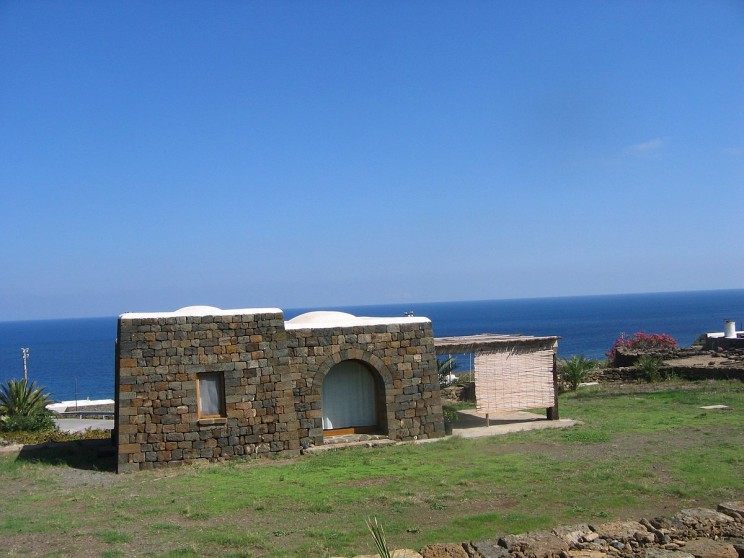
Originally, in the Classical Era, worked stones were used to build the dammusi, wedged together without using any other material to hold them in place. And with that precision building and the strength of gravity alone, they stood for centuries. Despite being ancient peasant buildings, they were innovative constructions for their time, containing walled up and covered underground cisterns, allowing for the collection of rainwater which was trapped on the roof.
The real turning point for the architecture of the dammusi, however, was the Arab colonization of 835 AD. The Arabs modified the construction of the housing structures from their original circular shape to become quadrangular, and introduced the technique of the angled walls.
The angled walls more effectively compact the worked blocks of stone together, strengthening the structure. The Arabs were also responsible for much of the local materials that are used in the construction of the dammusi. They saw the use in the different volcanic stones on the island as building materials. The angled walls also provoked a change in the design of the rooves, which the Arabs innovated on and perfected, into the style we can still see today.
What makes up a dammuso?
The dammuso is the traditional housing construction of Pantelleria and is characterized by its vocation for sharing and sociality. In fact, these buildings often arose close to each other and were positioned in such a way as to allow conversational exchange between the neighbors.
The actual structure of the dammuso itself provides spaces dedicated to socializing, known as the "passiature" and the "ducchena". The two elements are complementary, the first, a simple terrace outside the building, is bordered by the "ducchena", a wall structure that allows people to sit and relax.
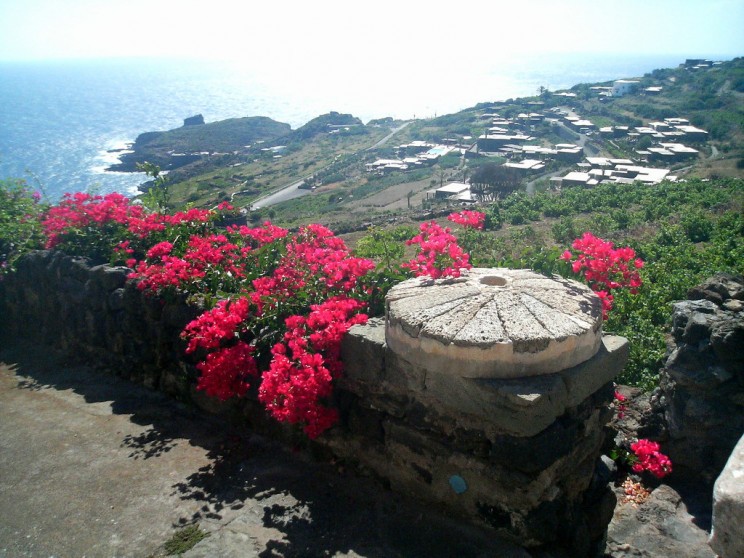
The "passiature" is laid out in a different way depending on the district in which the dammuso is built. In the south of Pantelleria it is often covered by arches that act as a screen for the sun and shelter from the humidity of the evening. The dammusi of the north of Pantelleria on the other hand, have a covered "passiature", created with trellises through which the vine climbs.
The dammusi in the southern part of Pantelleria are plastered with light colors, in many cases completely white; perhaps with a pink frame to highlight the fixtures and and emphasize the edges of the house, as well as preventing the stone structure from overheating in summer.
The shape is typically quadrangular; this made it easier to later expand an already built dammuso, unlike the original circular shapes. Inside, the space is often smaller than it appears from outside as the walls are incredibly thick, so as to support the heavy dome on the roof, and for insulation. The space is usually divided between the main room, and a smaller alcove, both of which would be decorated with ceramic tiles
The dammusi of Pantelleria's most unique features
One of the main architectural features of the dammusi of Pantelleria are the domed roofs, the number of which indicates the exact number of rooms in the property. The dome, usually 35 - 40 cm thick, is made of stone covered with a layer of earth, on which a mixture of volcanic pumice is spread as an insulator, and a layer of red tuff and lime milk is added, as a waterproofing agent.
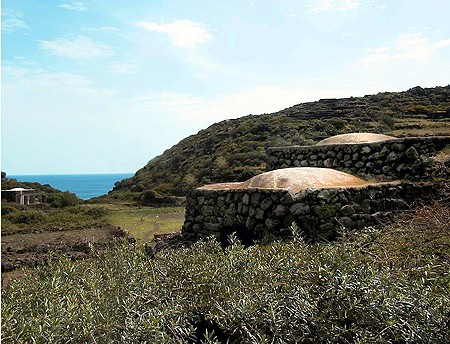
The domed roof of the dammusi of Pantelleria served several functions: it prevents humidity inside, in summer, exposed to the sun, it was used to dry local agricultural products such as raisins, figs and tomatoes, and, the raised sides of the roof around the dome also allow rainwater to flow through an open channel, called "cannalata", which directs it into a cistern, where the precious water reserve is stored.
The door of the dammusi of Pantelleria is almost always facing south, often flanked by two small windows of 40x50 cm size (which are usually the only ones in the house), in order to make the most of the heat and light in the interior.
These are stunning traditional properties, of a kind that can be found nowhere else. If you are interested in them, take a look on idealista for the dammuso of Pantelleria of your dreams!