When people search for Italy's most beautiful towns, they’re often talking about I Borghi più belli d’Italia — an official association that recognises small historic villages across the country. This isn’t a glossy travel ranking or a social media trend. It’s a formal designation awarded to places with serious architectural and cultural credentials.
What Is I Borghi più belli d’Italia?
I Borghi più belli d’Italia is an official association created to protect and promote Italy’s small historic centres. Villages apply for membership and are assessed on architectural integrity, heritage value and the overall quality of their urban fabric.
There are 382 villages on the list across northern, central and southern Italy. Unlike generic “prettiest small towns” round-ups, this is a formal, criteria-based designation with ongoing standards to uphold.
Admission criteria for Italy’s most beautiful towns
To qualify, a village must be genuinely small in population and have a well-preserved, architecturally coherent and culturally significant historic centre. Members are expected to maintain conservation standards and safeguard local traditions over time.
Italy’s most beautiful villages by region
Listing all the belli villaggi would take a small book, so here are a few official examples from each macro-region to give you a feel for the range.
Northern Italy’s most beautiful towns
Northern Italy’s borghi often sit between lakes, mountains and old trade routes. The architecture can feel solid and alpine, with stone arches and slate roofs built to handle proper winters.
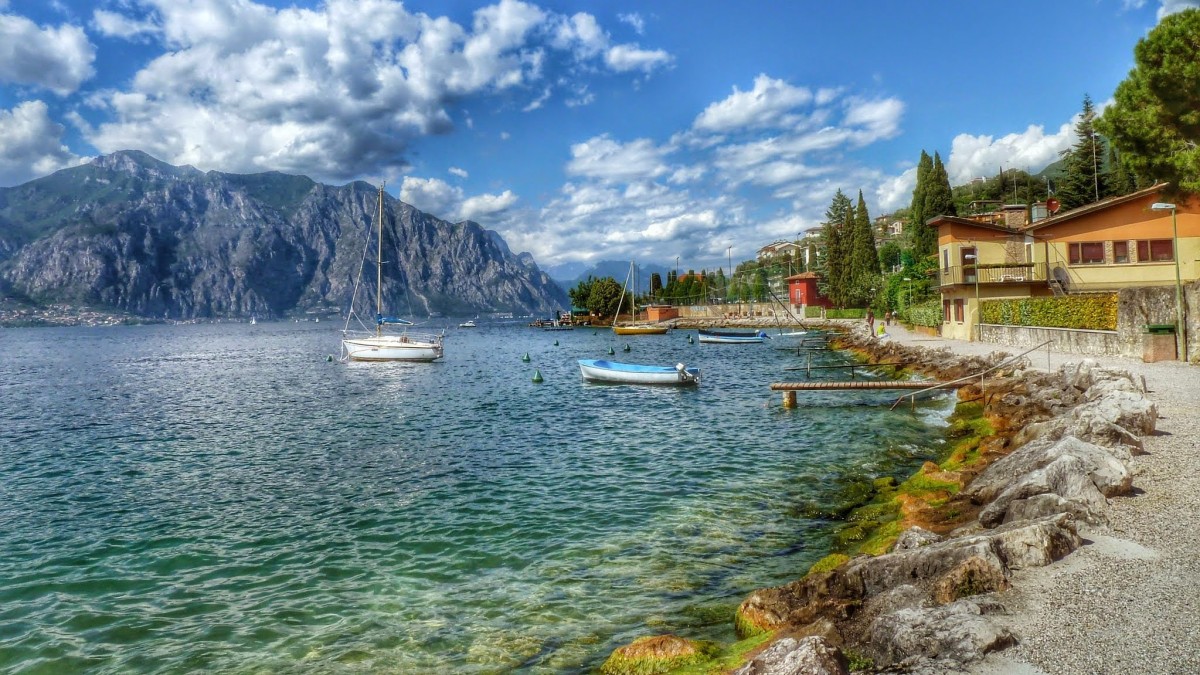
Malcesine (Veneto)
The lakeside village of Malcesine clings to the eastern shore of Lake Garda, with the Scaliger Castle rising sharply above the water. The old harbour is lined with fishing boats, and narrow cobbled lanes climb gently upwards towards little trattorie and shaded courtyards.
German writer Goethe passed through in the 18th century and wrote about it, which feels about right once you see the lake light shifting at dusk.
What makes it beautiful: the dramatic pairing of medieval castle and open lake framed by snow-dusted Monte Baldo behind.
Bellano (Lombardy)
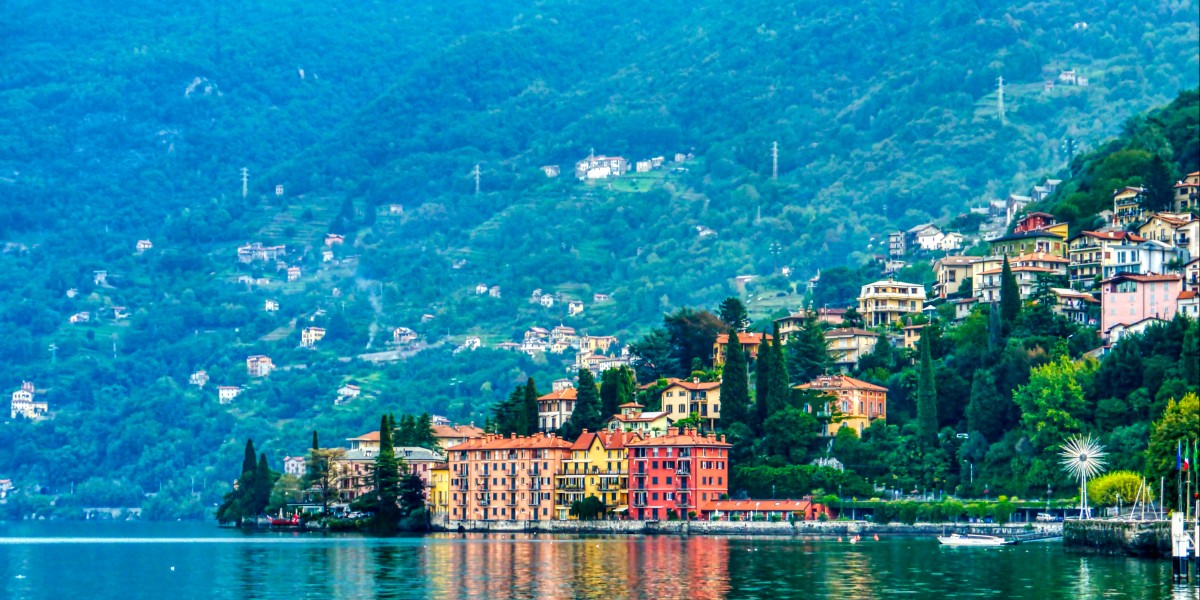
UN Best Tourism Village Bellano sits on the quieter eastern side of Lake Como, away from the polished villas further south. Its historic centre is compact and slightly scruffy in places, with pastel facades and steep lanes leading down to the water.
Just outside the village is the Orrido di Bellano, a narrow gorge carved by glacial waters, reached via walkways bolted into the rock.
What makes it beautiful: the contrast between calm lakeside life and the raw, untamed gorge slicing through the hillside.
Rango (Trentino-Alto Adige)
Rango feels entirely alpine — stone houses pressed close together, wooden balconies stacked with firewood, and vaulted passageways opening onto small courtyards.
It sits in the Giudicarie area, not far from the Dolomites, and still has a rural, lived-in atmosphere. In winter, it looks almost storybook under a layer of snow.
What makes it beautiful: its remarkably intact medieval layout and traditional mountain architecture that hasn’t been over-polished.
Central Italy’s most beautiful villages
Central Italy is dense with hilltop settlements, Roman traces and Renaissance churches. The light feels softer somehow, and many villages overlook olive groves and vineyards stretching towards the horizon.

Rasiglia (Umbria)
Rasiglia is often called the “village of streams”, and that’s not marketing spin. Water channels run openly through the settlement, flowing past stone houses and under tiny bridges.
It once powered textile mills, and the sound of running water is constant but soothing. It’s small, compact, and wonderfully atmospheric.
What makes it beautiful: the way water and stone architecture intertwine in a network of clear, glistening canals.
San Donato in Poggio (Tuscany)
Set between Florence and Siena in the Chianti hills, San Donato in Poggio is a walled village with Romanesque stone buildings and quiet lanes that curve gently around the hilltop.
There’s a solid, unshowy feel to it — less theatrical than the romantic San Gimignano, more local. Vineyards and cypress-lined roads surround it on all sides.
What makes it beautiful: the harmonious Tuscan proportions of its stone houses against rolling, sunbaked countryside.
Nemi (Lazio)
Perched above Lake Nemi in the Alban Hills, Nemi looks down over a perfectly round volcanic crater lake. The village itself is a cluster of stone houses and narrow streets with glimpses of water between buildings.
It has Roman roots and a long-standing reputation for wild strawberries, celebrated each summer with a local strawberry festival. Just an hour's drive from Rome, it's a great day trip from the capital.
What makes it beautiful: its elevated terrace views across the emerald-green lake framed by wooded crater walls.
Southern Italy’s most beautiful villages
Southern spots tend to feel more dramatic — perched on ridges, clinging to cliffs, or overlooking wide stretches of sea. History here runs deep, layered with Greek, Roman and Norman influence.

Maratea (Basilicata)
Maratea stretches along a rare sliver of Tyrrhenian coastline in Basilicata. The historic centre sits above the sea, while beaches and coves lie below.
Above everything towers the white statue of Christ the Redeemer on Monte San Biagio, watching over the gulf. It’s both coastal and mountainous at once.
What makes it beautiful: the meeting point of cliffside village, sweeping sea views and rugged mountain backdrop.
Gangi (Sicily)
Often cropping up on 1-euro houses in Sicily lists, Gangi rises in tiers across a hillside in the Madonie mountains of inland Sicily. From a distance, it looks like a cascade of pale stone houses tumbling downwards.
The historic centre is dense, with churches, staircases and narrow lanes that open suddenly onto panoramic viewpoints.
What makes it beautiful: the tightly packed hilltop skyline unfolding into vast, open Sicilian countryside.
Tropea (Calabria)
Tropea is perched on a cliff overlooking the Tyrrhenian Sea, with sandy beaches below and the Aeolian Islands visible on clear days.
The old town is full of balconies, small piazzas and Norman-era architecture. At sunset, the rock face beneath the village turns a warm, honeyed colour.
What makes it beautiful: the dramatic cliff-top setting with turquoise sea stretching endlessly beyond.
Newly added villages to Italy’s most beautiful villages list
The official I Borghi più belli d’Italia list isn’t static. It expands carefully, following formal evaluation. In December 2025, seven new villages were added:
- Limone sul Garda – Lombardy
- Pieve di Teco – Liguria
- Castelvetro di Modena – Emilia-Romagna
- Cusano Mutri – Campania
- Rivello – Basilicata
- Biella, Borgo il Piazzo – Guest Village
- Termoli, Borgo Vecchio – Guest Village
The “Guest Village” status is slightly different — often awarded to historic districts within larger towns rather than standalone small municipalities. It allows exceptional quarters to be recognised even if the wider urban area exceeds the usual population limits.
Stay inspired for your travels in Italy —get our weekly newsletter for the latest travel, legal, and lifestyle news.
For a taste of the high life, sign up for the monthly luxury market round-up.