Italy isn’t only about grand art cities and postcard-perfect villages. There’s another side to the country: a quieter geography of tiny settlements where the houses can be counted on one hand and daily life moves at an unhurried pace.
These are the smallest villages in Italy — places so compact that you can walk from one end to the other in just a few minutes. In these sparsely populated hamlets, every house tells a story, each narrow lane carries echoes of the past, and the oldest residents act as living archives of local traditions, dialects and folklore.
Tiny villages in Northern Italy between the Alps and the valleys
Northern Italy is home to a significant portion of Italy's smallest villages, especially in the Alpine and pre-Alpine areas of Lombardy and Piedmont. Here, decades of emigration to cities and abroad have emptied villages that once thrived on agriculture, livestock farming, and small businesses.
Morterone, the smallest municipality among mountains and woods
Often described as the smallest village in Italy, Morterone lies in the province of Lecco, surrounded by Alpine woodland and mountain pastures. Its population shifts slightly year by year, yet it consistently ranks as Italy’s least populated municipality.
Set at the foot of Mount Resegone, Morterone is reached by a winding panoramic road that climbs through forests and open grazing land. The “village” itself is not a compact historic centre but a scattering of small hamlets and stone houses spread across the mountainside, giving it an almost storybook feel.
Despite its size, Morterone is home to an open-air museum of contemporary art, with sculptures installed across meadows and rocky clearings.

Pedesina and rural life in the Bitto Valley
Tucked away in the province of Sondrio, in the narrow Bitto di Gerola Valley, this tiny mountain settlement seems almost suspended on the hillside. Its stone houses and slate roofs reflect a long rural history shaped by sheep farming and the production of the renowned Bitto cheese.
Footpaths and old mule tracks branch out directly from the village, linking alpine pastures, woodland and sweeping viewpoints across the Bitto Valley. In the parish church of Sant’Antonio, a 17th-century carved wooden icon quietly reminds visitors that even the smallest villages in Italy can hold unexpected pieces of sacred ar.
Moncenisio, Ingria, Cervatto, Rondanina: villages to discover
Alongside the better-known names, several other small villages in Northern Italy deserve attention. These places rarely make mainstream travel lists, yet they’re well regarded among hikers, history enthusiasts and anyone drawn to quieter corners far from busy tourist routes.
Moncenisio: Close to the French border, Moncenisio sits in a high-altitude setting shaped by historic mountain passes and ancient transit routes, including the Via Francigena.
A small local museum dedicated to traditional mountain crafts sheds light on the area’s past, when cross-border trade and seasonal migration played a central role in daily life.
Ingria: Tucked away in the Soana Valley, Ingria is defined by stone-built houses, slate roofs and scattered hamlets that cling to the mountainside.
It serves as a gateway to walking routes through a valley that remains largely untouched by mass tourism.
Cervatto: Perched at around 1,000 metres above sea level in the Mastallone Valley, Cervatto has a compact historic centre that still feels distinctly medieval.
Narrow lanes wind between traditional buildings, opening onto wide views across the valley below. Its elevated position and relative isolation have helped preserve its architectural character and tranquil atmosphere.
Rondanina: This tiny municipality lies within the Antola Regional Natural Park, surrounded by woodland and open meadows in the Ligurian Apennines.
A small local museum focuses on the flora and fauna of the park, offering insight into the biodiversity of this lesser-known stretch of Liguria.
Chamois and other car-free villages in Italy
Among the smallest towns in Italy, there’s a particularly distinctive group: car-free villages, reachable only on foot, by cable car or along mountain trails.
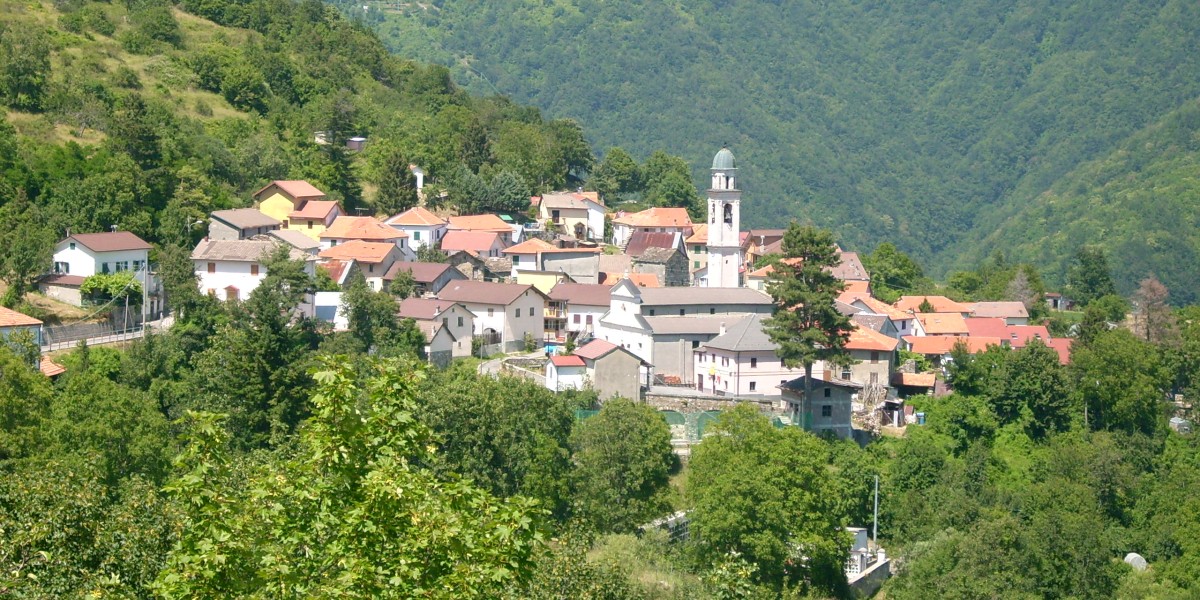
The best-known example is Chamois, in the Aosta Valley, a mountain village that has made its car-free status central to its identity. The only way up is by cable car from Buisson, or on foot via marked mountain paths. There is no direct road leading into the village, something increasingly rare in modern Italy.
Sitting at around 1,800 metres above sea level, Chamois is surrounded by meadows, woodland and wide mountain views. Its wooden chalets and stone houses give it the feel of an old Alpine settlement, largely untouched by heavy development.
Small villages in central Italy: history, cliffs and dramatic landscapes
In central Italy, many of the smallest villages in Italy are closely tied to medieval history and striking natural scenery. You’ll find towns balanced on tuff cliffs, settlements enclosed by ancient defensive walls, and tiny communities hidden among forests, ravines and rolling countryside.
Civita di Bagnoregio, the “dying city” with just a handful of residents
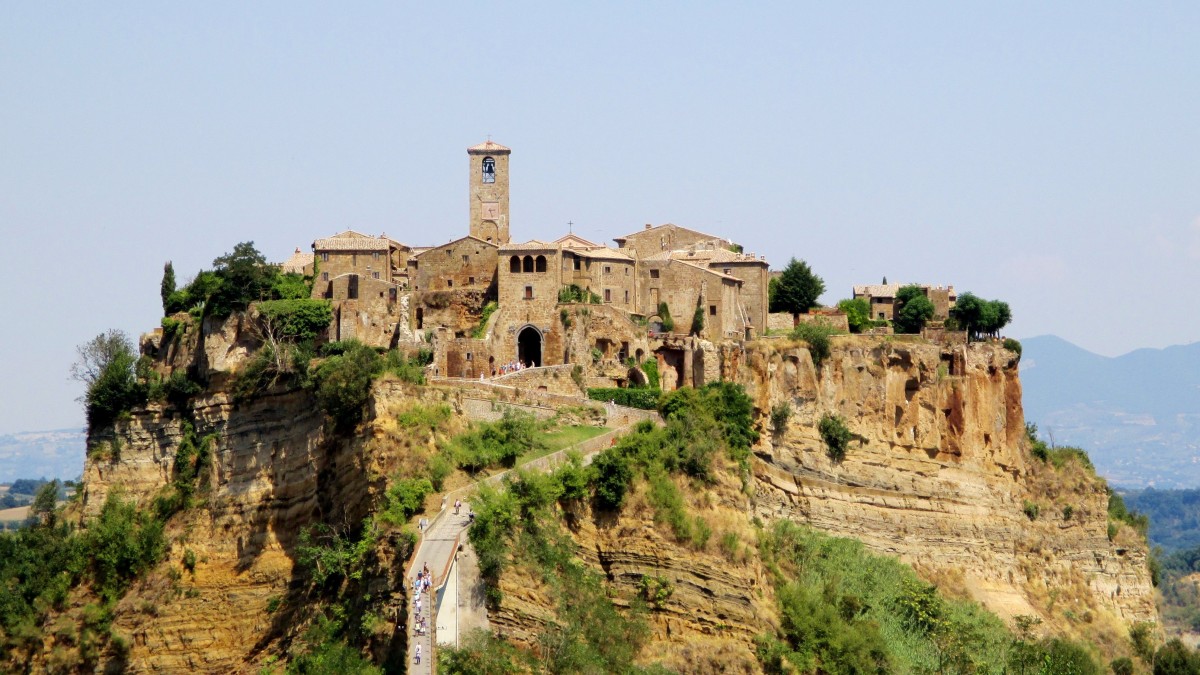
Civita di Bagnoregio is easily one of the most beautiful villages in Italy. What’s less widely known is that, despite its fame, it ranks among the smallest villages in Italy by permanent population. Only around 10 to 20 residents live here year-round, compared to the thousands of visitors who cross the bridge each year to explore its lanes and viewpoints.
The village stands on a fragile tuff cliff that is constantly affected by erosion, which explains its nickname, la città che muore — “the dying city”. What's more, Harry Styles reportedly bought a house in the village. Civita can only be reached on foot, via a long panoramic footbridge connecting it to the nearby town of Bagnoregio.
Montelapiano and other tiny villages in Abruzzo and Umbria
Between Abruzzo and Umbria, you’ll find some of the smallest villages in central Italy, tucked away from the main tourist routes. This stretch of the Apennines shifts between forests, deep gorges and high plateaus, dotted with tiny settlements that still feel distinctly rural and mountainous.
Montelapiano: Often listed among the least populated municipalities in central Italy, Montelapiano sits high above the Sangro Valley.
Like many villages in the area, it has experienced decades of depopulation, yet in recent years it has drawn interest from buyers searching for a quiet second home in the Abruzzo hills.
Santo Stefano di Sessanio: The village gained attention through the albergo diffuso model, where restored stone houses were converted into scattered guest accommodation integrated throughout the historic centre.
This approach has revived local buildings without altering the character of the village, allowing visitors to stay within the fabric of daily life rather than in a conventional hotel.
Poggiodomo: Among the least populated municipalities in Umbria, Poggiodomo lies in a relatively little-known area of woods and valleys on the edge of the Sibillini Mountains.
Its small cluster of houses and a parish church overlooking quiet countryside that feels far removed from busier Umbrian towns.

Smaller villages in Southern Italy and the islands
As you head further south, the landscape of small Italian villages to visit begins to shift in character. In parts of southern Italy and the islands, some of the country’s tiniest villages are also guardians of distinct linguistic and ethnic traditions that set them apart from their neighbours.
A village shaped by linguistic minorities
San Paolo Albanese, in Basilicata, is recognised for its strong linguistic minority identity. Founded in the 16th century by Albanian refugees fleeing the Ottoman advance in the Balkans, it remains one of the smallest communities in Italy.
The local population still speaks Arbëreshë, the Italo-Albanian language preserved over centuries alongside Italian. Many religious celebrations follow the Byzantine rite, with liturgies, traditional dress and iconography that distinguish village life from that of nearby towns shaped by Latin Catholic traditions.

Baradili and the micro-municipalities of the Italian islands
In Sardinia, the title of least populous municipality belongs to Baradili, a tiny settlement in the island’s interior.
Traditional houses are often built of stone and adobe, arranged around internal courtyards with simple wooden doorways that reflect the village’s rural past. All around, cultivated fields and rolling hills frame the settlement, forming a landscape that feels distinctly removed from Sardinia’s busy coastal resorts and summer tourism.
In Sicily, the least populous municipality is Roccafiorita, perched high in the Peloritani Mountains. Its compact centre is a maze of narrow lanes and closely built houses, opening onto wide views across the Ionian coast. One of its most distinctive landmarks is a panoramic grotto dedicated to the Virgin Mary, a place of quiet devotion overlooking the valley below.

Borgo Parrini, the smallest and most colourful village in Sicily
Originally founded as a rural settlement connected to the Jesuits, Borgo Parrini spent decades in near abandonment, its houses slowly falling into disrepair. Things changed when a local entrepreneur began restoring the buildings, gradually reshaping the hamlet into a small but striking enclave of colour and creativity.
Today, the façades are covered in majolica tiles, hand-painted murals and literary quotes, giving the entire village a playful, artistic character. The style, with its curved lines and vivid mosaics, is often compared to Gaudí’s work in Barcelona, which explains its nickname: “Little Barcelona”.
With around 20 permanent residents, Borgo Parrini still ranks among the smallest villages in Italy in terms of population. Yet its bold aesthetic and photogenic corners have brought it a level of visibility far beyond its size.

Stay inspired for your travels in Italy —get our weekly newsletter for the latest travel, legal, and lifestyle news.