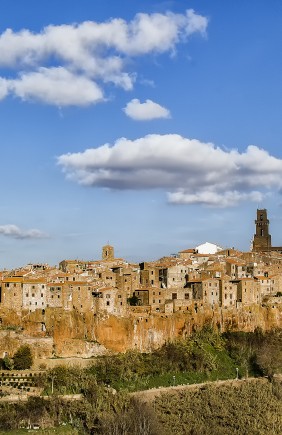
A car-free village reached only by cable car, a queen’s castle overlooking glaciers, a village reshaped around esoteric symbols, and crotti where cold air blows out from deep inside the rock. The Italian Alps hold small worlds with strong identities, where the setting is not merely a backdrop: it finds its way into homes, food and daily habits.
These 10 mountain villages each provide a different but genuine experience across the Alpine arc. There is plenty to consider when deciding when to visit, what each season brings and why each place is worth the journey.
When to go and what to expect
Every season brings a different pace, colour palette and set of activities. Time works differently in the mountains, and it makes sense to go along with it.
- In winter, snow softens the sounds, fireplaces get going, and villages become useful bases for skiing, cross-country skiing, snowshoeing and ski touring.
- In summer, those same lanes fill with walkers, bikes and outdoor tables, while meadows stretch up towards mountain huts.
Winter, summer and the shoulder seasons
Val Gardena, the Brenta Dolomites, Monte Rosa and the Biella Alps have trails for all abilities, including easy walks across meadows and multi-day treks. There are also major ski areas, with connections that make it possible to spend a full day on the slopes before returning in the evening through lanes lit by signs and scented with woodsmoke.
In summer, Alpine lakes such as Molveno and Lod bring swimming, rowing and relaxed time on the grass, while high-altitude refuges and malghe — traditional mountain farms and huts — serve hot dishes with glacier views. The shoulder seasons tend to make villages easier to enjoy, with fewer crowds and natural scenes that can shift by the hour.
The Dolomites and Trentino-Alto Adige: painted houses and turquoise lakes
Pale rock changes colour in the light, while well-kept villages create scenes that can still take you by surprise in any season. Seceda, Alpe di Siusi, the Brenta peaks and Lake Molveno are all accessible for a day out.
Ortisei, Val Gardena
Ortisei has colourful façades, flower-filled balconies and a pedestrian area that feels like a mountain sitting room. Local shops display wood carvings, ranging from religious pieces to contemporary design, a defining feature of the valley. Cable cars head towards Seceda and Alpe di Siusi, natural terraces over the Dolomites.
Winter brings access to the Val Gardena ski area, while summer means walks among pastures and mountain huts. At altitude, speck, local cheeses and Central European-style traditional desserts are served against views that change through the day.
Canazei, Val di Fassa
Canazei is steeped in Ladin language and symbols. Painted houses, local signs and churches speak of long-standing roots. Its location makes it a useful base for Sella, Marmolada and Sassolungo. During winter, the Sellaronda ski circuit is directly accessible, while the warmer months draw cyclists and motorcyclists to the Sella and Pordoi passes.
An iconic local landmark is Cesa la Floriana, a historic house covered in frescoes that reflects the area’s attention to detail. The Museo Ladino di Fassa gives further context on the way climate and migration have shaped the valley.
Molveno, Brenta Dolomites
Molveno sits closely between the lake of the same name and the Brenta Dolomites, with houses climbing the slope and water shifting between green and turquoise. During summer, the lakeside comes alive with grassy areas, canoes, stand-up paddleboards and electric boats.
Trails in the Adamello Brenta Nature Park begin just above the village. Walkers find waterfalls, mountain passes and refuges, while fitter visitors tackle historic vie ferrate, protected climbing routes that originated here. In winter, the nearby Paganella plateau allows for days on the slopes followed by quiet evenings beside the lake. Its mix of water and rock makes the destination particularly versatile.
Piedmont and Lombardy: crotti, Walser culture and Himalayan-scale rock faces
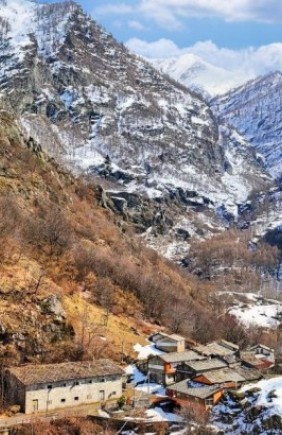
Further west, the palette changes to grey stone, larches, chestnut woods and stories of Alpine migration. Walser traces stand out at the foot of Monte Rosa, together with a Biella village rebuilt during the 19th century.
Chiavenna, Valchiavenna
Overlooking the River Mera, Chiavenna weaves together stone bridges, grand townhouses and lanes that remain cool even in summer. Its most curious feature is the crotti, natural cavities where a constant stream of cold air, the sorèl, blows out from the rock.
Many now contain tables laid with local gnocchi, cured meats and costine alla piota, ribs cooked on a hot stone. Just outside town, Palazzo Vertemate Franchi has frescoes, decorated wooden ceilings and an Italian-style Renaissance garden.
Alagna Valsesia, Piedmont
At the foot of Monte Rosa, Alagna displays Walser influences throughout: log-built houses, raised barns and frescoed chapels. In winter, it draws freeride enthusiasts for the long off-piste runs of Monterosa Ski, with striking glacial surroundings.
During the warmer months, access to the Alta Valsesia Nature Park opens up high-altitude walks and isolated valleys. The Walser Museum allows visitors to step inside a traditional home, with large stoves and wooden tools that show how people managed the cold months.
Macugnaga, Anzasca Valley
Macugnaga faces Monte Rosa’s eastern wall, a vast face of rock and ice with more than 2,600 metres of vertical rise, often compared with major Asian mountains. In the historic quarter, the Dorf, larch wood has darkened over time on the houses beside a 12th-century church and small cemetery. A centuries-old lime tree still stands nearby, once the meeting place for village assemblies.
Rosazza, Biella Alps
In Rosazza, everything points to an unusual 19th-century project. Bridges, roads, a castle and fountains were redesigned by Federico Rosazza Pistolet, a senator and prominent figure in Freemasonry.
Walking around, it is hard to miss roses, five-pointed stars, hourglasses and compasses carved into façades and railings. The castle, with its crenellated tower and visitable garden, is the visual centrepiece of this vision.
Aosta Valley: villages, castles and postcard-worthy views
Within a few kilometres are Walser villages, sunny plateaux, castles and a comune — municipality — without cars, reached by cable car. The Matterhorn and Monte Rosa form a natural backdrop, while the Via Francigena crosses villages with a strong sense of history. Mountain life moves easily between quiet contemplation and time outdoors.
Gignod, above Aosta
Set at almost 1,000 metres, Gignod overlooks Valpelline and Grand Combin and lies on the ancient route of the Via Francigena. A medieval tower stands out among the stone houses, recalling the area’s strategic role.
The fortified Caravex house is home to MAIN – Maison de l’Artisanat International, an exhibition space dedicated to crafts from the Aosta Valley and beyond, including woodwork, weaving, stone and iron. Paths towards Rifugio Chaligne run through conifer woodland and Alpine pastures, with broad views across the valley.
Chamois
Chamois lies at 1,815 metres and cannot be reached by car. A cable car runs up from Buisson, while mule tracks can be followed on foot or by bike. Once there, the roads become pedestrian paths winding past timber and stone houses, barns and chapels among the meadows. The Matterhorn occasionally appears through openings in the woodland, creating unexpected views.
Higher up, Lake Lod is close to the 2,000-metre mark and can be reached by chairlift or an easy walk. In summer it is a cool spot with clear water and outdoor tables; in winter it lies quiet beneath the snow.
Gressoney-Saint-Jean, Lys Valley
Gressoney-Saint-Jean brings together the elegance of a historic holiday resort with Walser roots that remain visible in its architecture. The Church of San Giovanni Battista rises in the centre, although the main landmark sits a little higher up: Castel Savoia, commissioned by Queen Margherita, with pointed towers and slate roofs.
An Alpine botanical garden surrounds it, with high-altitude species and views across the Lyskamm glacier. A short distance away, Lake Gover has a level walking path among larches and fir trees. Winter makes the village a solid base for cross-country skiing, snowshoeing and connections to Monterosa Ski. In summer, it becomes a gateway to mountain refuges and higher ground.
Article seen on The Wom Travel: Sembrano usciti da una fiaba: i 10 borghi di montagna più belli delle Alpi italiane da scoprire ora