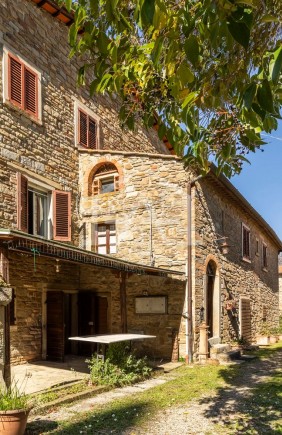
Italy is seeing a growing number of municipalities put abandoned homes up for sale at the symbolic price of €1 in an effort to counter population decline in historic villages. It is not simply a form of place marketing.
The €1 homes scheme in Abruzzo is one of the country’s more established and well-documented examples, centred on a town that has drawn interest from Italian and overseas buyers and become one of the most closely watched historic-village regeneration schemes.
The €1 homes scheme in Abruzzo
The €1 homes scheme works in a fairly straightforward way. Private owners make empty or abandoned properties available through a municipal call for applications, which sets out the procedure for sale at the symbolic price of €1. The initiative has two aims: to protect historic buildings from deterioration and attract new residents to areas that have experienced population decline for decades.
Abruzzo takes a broader approach than some other regions. It also provides grants for people moving their official residence to a mountain municipality, including a €2,500 bonus for new arrivals in Abruzzo.
This is a separate measure from the €1 homes scheme, but it can provide an additional incentive for moving to villages that may otherwise struggle to compete with larger cities in terms of services and job opportunities.
Buying at the symbolic price of €1 still involves genuine costs and clear obligations. A buyer cannot simply pay €1 and become the owner with no conditions attached. The new owner must renovate the property within the deadlines set by the call for applications, submit a renovation plan within the required period and begin work within a few months of obtaining the necessary permits.
Failure to meet these conditions can lead to financial penalties or, in more serious cases, the return of the property.
Where to find €1 homes in Abruzzo
Not every municipality in Abruzzo takes part in the €1 homes scheme, and the properties available can change regularly. The most direct way to identify current opportunities is through the official websites of participating municipalities, where calls for applications are published with property lists, photographs and land registry documents.
The region’s best-established and most widely recognised case is Pratola Peligna.

Pratola Peligna
Pratola Peligna is a comune, or municipality, in the Conca Peligna area of the province of L’Aquila, set between the Maiella and Morrone massifs. The first sale under the €1 homes scheme in Pratola Peligna took place in July 2021. In the years since, the initiative has continued, with further expressions of interest and property sales.
The process is straightforward. The municipality publishes an online showcase of the available properties, including photographs and land registry plans.
- Interested parties download a form from the official website and submit it.
- Priority is given according to the order in which applications arrive, but the prospective buyer then has two weeks to inspect the property and confirm their interest.
- After the deed is signed, there are six months to submit the renovation project and four years to complete the work.
Pratola Peligna is not simply a property opportunity, however. It is a village with a well-defined history and cultural identity. The historic centre contains:
- the 16th-century Sanctuary of Madonna della Libera
- the churches of Santa Maria delle Pietà and Madonna delle Grazie, both designated national monuments
- the Museum of Rural Life, housed in the former Mulino dei Celestini mill.
The village lies on the Pescara–Sulmona–Rome railway line and is served by the A25 motorway, which makes it more accessible than many inland towns in Abruzzo.
It also has an established food tradition, with dishes such as sagna riccia with ricotta and local beans, alongside a welcoming local community that has helped the scheme gain traction.

How to buy a €1 home
There are no income or asset requirements for taking part. Italian and overseas citizens may apply, provided they have an Italian tax code (codice fiscale), which can also be obtained abroad through a consular office. This document is essential for registering the deed and paying taxes.
The actual costs go well beyond the symbolic purchase price and may vary according to the municipality and the property itself. The main costs to take into account include:
- Renovation work, with a minimum estimated outlay of €20,000 to €25,000, to be completed within the scheme’s deadlines.
A surety bond, where required. Some municipalities request a bank or insurance guarantee to secure the buyer’s commitment to renovate within the specified time.
The amount depends on local rules and is generally released once the agreed work has been completed.
- Notary fees, covering registration, transfer of ownership and land registry matters, which often exceed €1,000.
Property taxes, payable regardless of the building’s condition.
Anyone who already owns a primary home in Italy will have the new property treated as a second home.
- Professional fees, such as an architect, surveyor and, where necessary, legal advice.
In Abruzzo, the Municipality of Pratola Peligna does not set restrictions on the intended use of the property. It can be used as a private residence or for commercial purposes, depending on the new owner’s plans.
Visiting the village in person before committing allows buyers to assess the building’s true condition, the quality of local services and the distance to larger towns.

Living in Abruzzo
Taking part in Abruzzo’s €1 homes scheme is only one route into the region. There are many other property options for people considering an investment or a move, with up-to-date listings available through idealista.
Stay in the know about living in Italy as a foreigner—get our weekly newsletter for the latest travel, legal, and lifestyle news.