Southern Italy tells its story through desserts too. Each region has recipes born in convents, rural kitchens or pastry shops, often handed down for centuries and linked to religious celebrations, weddings and calendar occasions.
Behind a crisp cannolo or a rum-soaked babà lie foreign rule, humble ingredients turned into masterpieces and legends that still fuel plenty of good-natured regional rivalry. These traditional desserts of Southern Italy say a great deal about the places that created them, across Sicily, Sardinia, Campania, Puglia, Abruzzo, Calabria, Molise and Basilicata.
- Sicilian cannoli, a classic dessert of Sicily
- Babà, a Campanian staple
- Puglian cartellate, a Christmas favourite
- Abruzzese ferratelle, plain or filled
- Sardinian seadas with honey and lemon
- Tartufo di Pizzo, Calabria’s signature dessert
- Molise cicerchiata, a Carnival sweet
- Iced sweet taralli from Basilicata
Sicilian cannoli, a classic dessert of Sicily
The cannolo is probably the best-known Sicilian dessert around the world, with roots in the period of Arab rule on the island. Food historians date its origins to between 827 and 1091 in the area around Caltanissetta, while several traditions credit cloistered nuns with establishing the recipe, particularly for Carnival.

The shell is made by frying a thin pastry wrapped around a cylinder, traditionally a cane tube, which gave the dessert its name. Its classic filling is made with sieved sheep’s ricotta mixed with sugar. Finishes vary between provinces and may include chocolate chips, chopped Bronte pistachios, candied orange peel or cherries.
There is one practical detail every pastry chef knows well: the shell should only be filled just before serving, so it stays crisp.
Babà, a Campanian staple
A symbol of Neapolitan pastry-making, the babà actually has foreign origins. Its invention is linked to Stanisław Leszczyński, King of Poland until 1736 and a keen lover of sweet things, who is said to have created a soft cake to soak to ease his struggle to chew drier desserts.
Via his daughter Maria, Queen of France, and the pastry chef Nicolas Stohrer, the recipe reached Paris and then Naples during the 19th century, where cooks in noble households learnt it and helped spread it.

Today, a babà is a risen dough, tall and mushroom-shaped, soaked in a rum-based syrup that gives it its characteristic soft, moist texture. Modern versions may be filled with custard, whipped cream or sour cherries, but the classic version remains simply soaked and glossy. This Neapolitan sweet can be made in individual portions or as a decorated cake.
Puglian cartellate, a Christmas favourite
Cartellate are Puglia’s quintessential Christmas sweet, especially common in the Bari area and Salento. They are made with a thin pastry of flour, oil and white wine, cut into ribbons that are pinched and rolled into roses or little crowns with scalloped edges. These are traditional Italian desserts that take a fair bit of handiwork at home.

After frying, cartellate are dipped in vincotto – a reduced syrup made with figs or grapes – or in honey, which fills their folds and leaves them glossy and fragrant. They keep for several days, which is precisely why they are a fixture on festive tables, often made in large batches in the days leading up to Christmas.
Abruzzese ferratelle, plain or filled
Ferratelle are sweet wafers typical of Abruzzo, also called pizzelle, neole or cancelle, depending on the area. Their name comes from the iron used to cook them: two hinged plates, often decorated with geometric patterns or a family’s initials, which press the distinctive diamond design into the surface. The batter is simple, made with eggs, flour, sugar, oil or butter, and a flavouring such as aniseed or lemon zest.
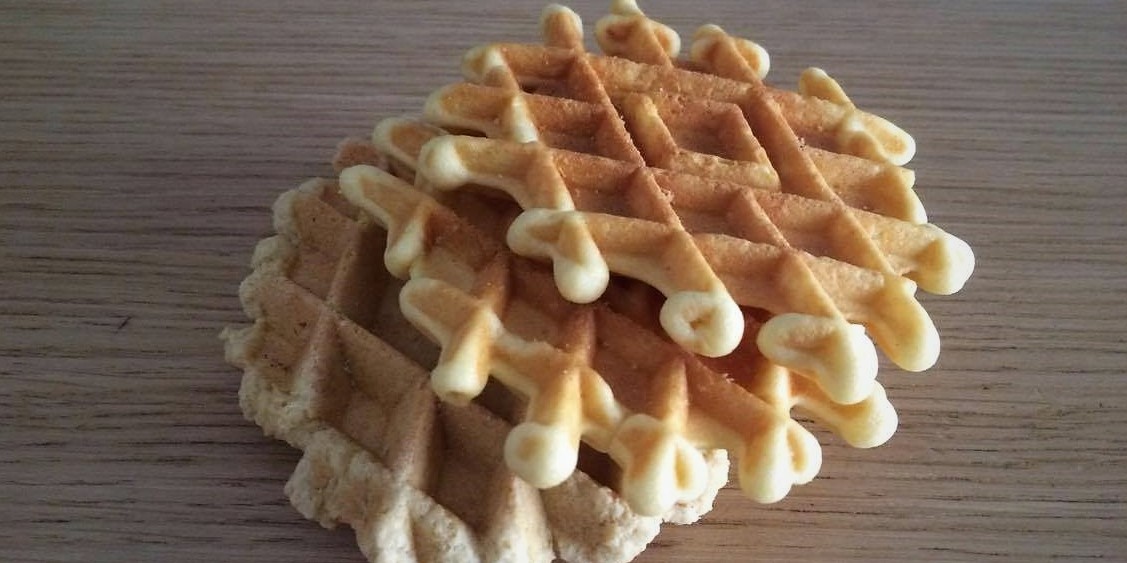
Depending on the cooking method and thickness of the plates, they can be thin and crisp or softer and thicker. They are served plain, dusted with icing sugar, or filled with cream, jam or honey. They are also associated with weddings and celebrations, when family irons were passed down to younger generations.
Sardinian seadas with honey and lemon
Seadas, also called sebadas, are the Sardinian dessert that best reflects the island’s pastoral culture, with origins in the heart of Barbagia and Logudoro. They began as a humble shepherds’ dish and were once eaten as a main course rather than a dessert. A thin pastry encloses fresh pecorino flavoured with lemon zest, then it is fried and covered in honey, often the pleasantly bitter honey made from strawberry tree flowers.

The contrast between the mildly sharp, melting cheese and the sweetness of the honey gives this dessert its distinctive character, placing it among Italy’s best-loved sweets. The name may derive from the Sardinian word seu, referring to the animal fat once used in the dough to make it crumbly.
Tartufo di Pizzo, Calabria’s signature dessert
Tartufo di Pizzo is an artisanal ice cream from Pizzo Calabro, in the province of Vibo Valentia, and holds a European distinction. In 2007, it became the first ice cream to receive IGP status, a protected geographical indication and is one of Italy's most popular chocolate desserts. Tradition dates its creation to around 1952, when an ice-cream maker known as “Don Pippo”, having run out of moulds during a banquet, is said to have shaped the ice cream directly in the palm of his hand.

The result is a hemisphere of hazelnut ice cream with a molten dark chocolate centre, coated in a dusting of bitter cocoa that conceals the filling until the first bite. Its defining feature is the surprise of that liquid centre, only revealed when the tartufo is cut open. It is still made by hand today, in keeping with the original recipe.
Molise cicerchiata, a Carnival sweet
Cicerchiata is a Carnival dessert common in Molise and several areas of central and southern Italy, related to Neapolitan struffoli. It is made with small balls of egg dough, fried until golden and then mixed with warm honey, which holds them together in a ring or dome shape.

The name refers to the cicerchia, a traditional legume, because the small dough balls resemble it in size and appearance. Once bound with honey, cicerchiata is decorated with coloured sugar sprinkles, citrus peel or almonds. It is a sociable dessert intended to be broken up and shared, traditionally found on February tables during Carnival.
Iced sweet taralli from Basilicata
In Basilicata, iced sweet taralli are especially associated with Easter and family celebrations, standing apart from the better-known savoury taralli. They are small rings of dough made with flour, eggs and oil, first boiled or baked, then coated in a white sugar icing called naspro.

The glossy, lightly crisp coating gives the taralli their unmistakably white appearance on festive serving trays. They are often flavoured with aniseed, lemon or liqueurs, depending on family tradition. Like many sweets in Lucanian cooking, they are made with simple, long-lasting ingredients intended to keep through the days of celebration.
Stay in the know about living in Italy as a foreigner—get our weekly newsletter for the latest travel, legal, and lifestyle news.
For a taste of the high life, sign up for the monthly luxury market round-up.