A mountain bivouac is a small shelter, usually unmanned, intended to provide a safe roof for hikers and mountaineers at high altitude. Unlike a staffed mountain hut, there is no host to welcome visitors and no hot menu.
A bivouac is basic and spartan and, for many people, one of the most authentic experiences the mountains can provide.
What is a bivouac?
Usually found in remote mountain areas where building a proper mountain hut would not be practical, a bivouac is generally a small structure for sleeping between two and 12 people, although larger ones also exist.
Its defining feature is that it has no management: nobody opens the door, cooks or cleans up after visitors. Everything depends on the civic-mindedness of those who use it.
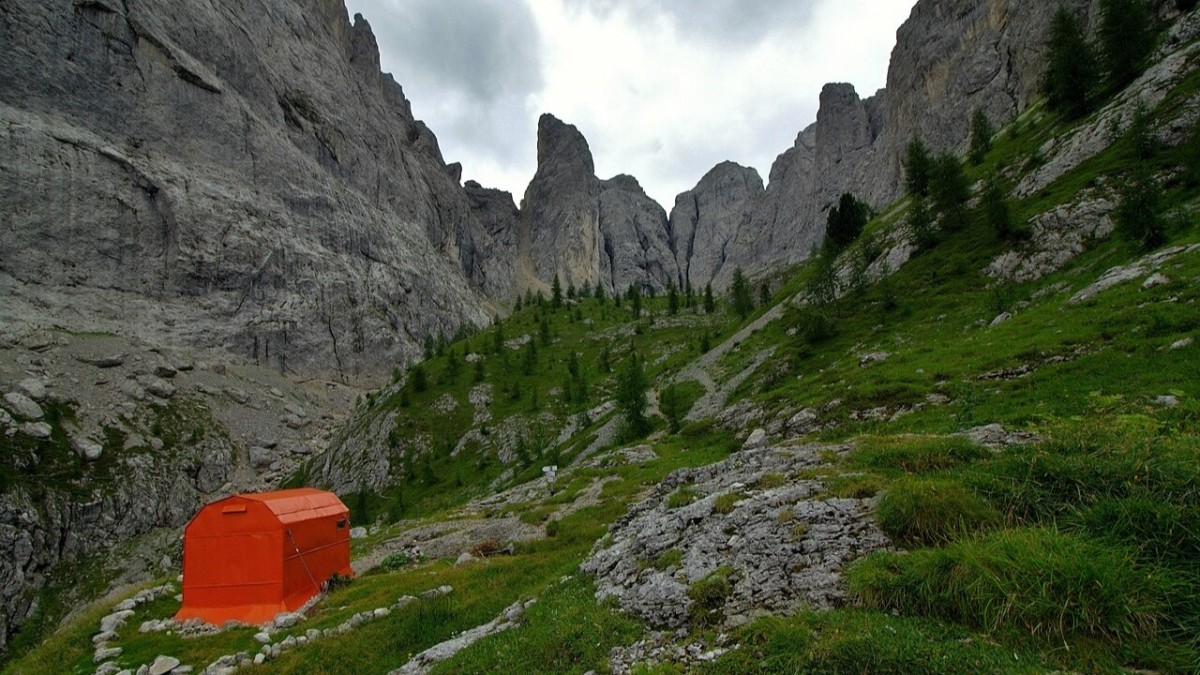
In construction terms, bivouacs can take very different forms. Some are simple prefabricated metal boxes, rectangular and practical. Others are proper pieces of contemporary design, such as geodesic structures or futuristic capsules anchored to the rock.
The origin of the word bivouac
The Italian word bivacco has roots spanning several European languages and military cultures before it entered the vocabulary of mountaineering. It comes from the Old German biwacht, made up of bei (“near” or “beside”) and Wacht (“watch” or “guard”). Its original meaning was an additional night watch, a period of outdoor surveillance during military campaigns.
The term later entered French as bivouac during the 17th century and quickly spread through European military usage. With the rise of modern mountaineering between the late 18th and 19th centuries, it became part of mountain vocabulary.
How does a mountain bivouac work?
The structure is always open and available to anyone, 24 hours a day, 365 days a year. There is no charge for staying overnight, no booking system and no check-in.
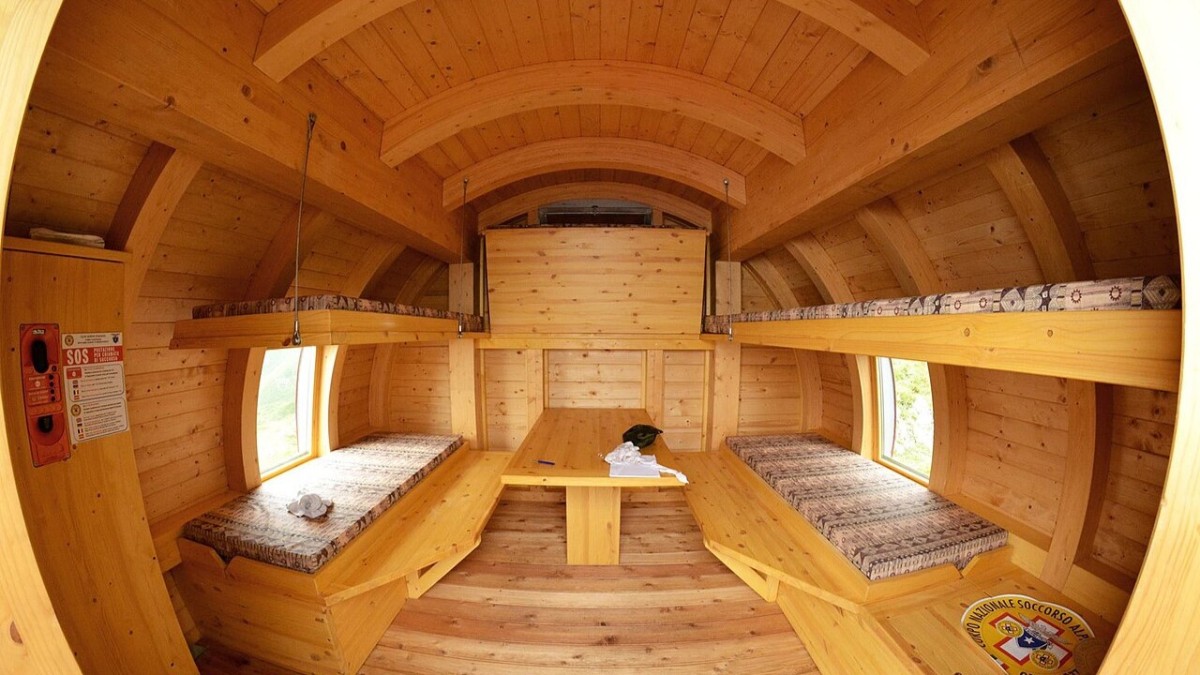
Inside, there are almost always bunks or a raised wooden platform where people can lay out their sleeping bags. Some bivouacs also have blankets, a small table and benches, while the better-equipped ones may have a wood-burning stove or gas cylinder for cooking.
The basic kit hikers should have when heading for a bivouac includes:
- A sleeping bag suitable for the altitude and season.
- An insulated sleeping mat.
- A camping stove and food for self-catering.
- Water or a purification system.
- A head torch.
- Rubbish bags.
What do people do in a bivouac?
A bivouac is first and foremost a strategic stopping point for Alpine crossings, demanding summit climbs or multi-day hikes. It allows people to break up stages that would otherwise be too long, set off at dawn for a nearby peak, or simply wait safely for bad weather to pass.
In the morning, people have breakfast, leave everything tidy and continue their journey. Some bivouacs have a bivouac logbook — also called a summit book — where visitors leave a thought, a note about the weather or advice about the trail.
Famous bivouacs in Italy
Italy boasts some of the most spectacular and iconic bivouacs in the entire Alpine region. Here are a few worth knowing, both for their location and their history:
Gervasutti Bivouac (Aosta Valley): Perched on a rock face at 2,835 meters on Mont Blanc, it is a masterpiece of Alpine architecture.
Its futuristic shape, reminiscent of a space capsule, has made it famous worldwide.
Bivacco Fanton (Veneto, Dolomites): Located at 2,648 m in the heart of the Marmarole, it offers breathtaking views of the Dolomite towers.
Reachable via challenging trails, it's a classic for Dolomite lovers.
- Bivacco Città di Lissone (Lombardy): at 3,680 m on the slopes of Monte Disgrazia, it is one of the highest bivouacs in Lombardy.
- Hess Bivouac (Trentino-Alto Adige): Located at 2,873 m in the Adamello-Presanella Group, it represents a fundamental support point for glacial crossings in the area.
- Bivacco Rainetto (Piedmont): Located at 2,590 m in Val Grande di Lanzo, it's perfect for those seeking peace and solitude.
- Bivacco Costanzi al Camoscio (Friuli-Venezia Giulia) : nestled in the Montasio Group at around 2,100 m, it is an essential refuge with extraordinary views of the Julian Alps.
Stay inspired for your travels in Italy —get our weekly newsletter for the latest travel, legal, and lifestyle news.