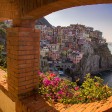
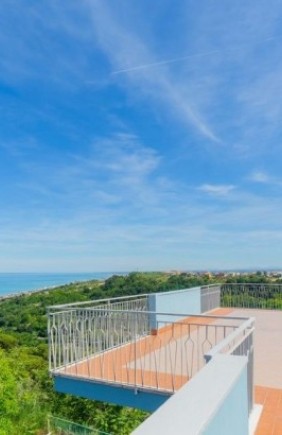
Off north-west Sardinia, Italy’s car-free prison island with rare white donkeys is a place of pale coves, wind-swept cliffs and quiet roads where the animals amble freely.
Closed to the public for 112 years, it served first as a quarantine station and penal colony, then as a prisoner-of-war camp and, later, a maximum-security prison. Since becoming a national park, it has reopened to visitors, though private cars are still not allowed ashore.
Why Asinara was closed to the public for more than a century
Asinara’s modern history changed in 1885, when the Italian state created a Maritime Quarantine Health Station and an agricultural penal colony on the island. Residents were forced to leave their homes and land.
The quarantine facilities were used to isolate ship crews and passengers suspected of infectious illnesses, including cholera and tuberculosis.
During the First World War, Asinara also became a prisoner-of-war camp for thousands of Austro-Hungarian soldiers.
Several buildings were converted into a maximum-security prison from the 1970s. The prison housed people linked to organised crime, terrorism and banditry before closing gradually during the 1990s.
The rare white donkeys of Asinara
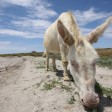
Asinara’s white donkeys are its most recognisable residents. They wander freely across the island alongside brown and grey donkeys, and their pale coats are thought to be the result of a rare genetic trait.
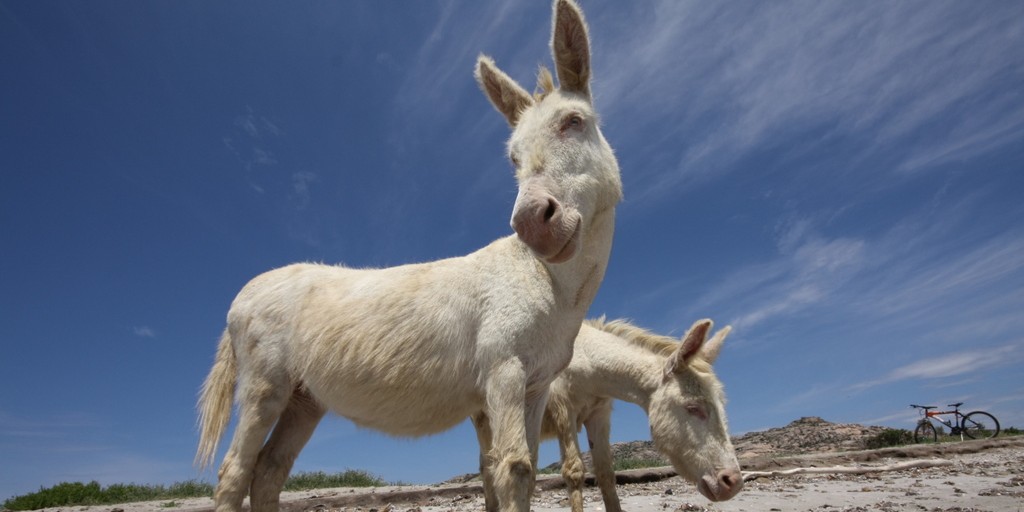
Their precise origins remain uncertain. One account suggests that the animals may have arrived from Egypt during the 19th century, brought by the Marquis of Mores, Duke of Asinara, though this has not been confirmed.
Visiting Asinara Island without a car
Lying opposite the Gulf of Asinara, the island covers roughly 52 km². It has about 110 km of coastline and reaches its highest point at Punta della Scomunica, 408 metres above sea level.
Private cars are not allowed on Asinara. Visitors can travel on foot, by bicycle, in electric vehicles or on authorised guided transport, including minibuses, 4x4s and a tourist train.
Things to do on Asinara Island
Cala Reale and the former quarantine station
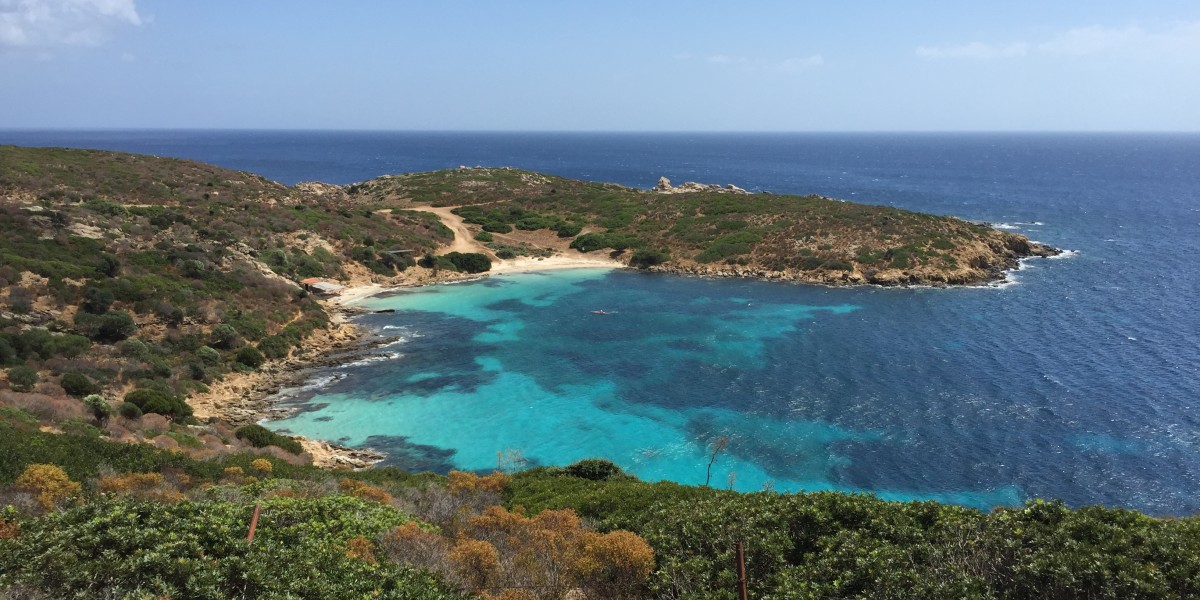
Visitors arriving by public ferry from Porto Torres disembark at Cala Reale, one of Asinara’s key historical areas.
It is home to the Osservatorio del Mare, housed in the former lighthouse keepers’ residence. The site includes the Asinara Marine Animal Rescue Centre, which treats marine turtles in difficulty and carries out monitoring and educational work connected with the surrounding sea.
Cala d’Oliva and the island’s prison history
Cala d’Oliva is Asinara’s best-recognised settlement. Before the 1885 expropriation, it was home mainly to fishing families, many with roots in Liguria.
The village is also tied to a significant chapter in Italy’s anti-mafia history. During the summer of 1985, two magistrates were moved to Asinara with their families after reports of a possible attack against them emerged.
Fornelli and the former maximum-security prison
At Asinara’s southern end, Fornelli is a main arrival point for boats travelling from Stintino. It contains the former Fornelli prison, one of the best-known surviving sites from the island’s maximum-security prison period.
The prison complex remains closed in 2026, so visitors should not rely on access to its interior when planning a trip. Above Fornelli sits the Castellaccio, a fortification with views across the sea towards Stintino.
Asinara hiking trails and protected areas
Asinara has 11 official themed trails around Fornelli, Cala Reale and Cala d’Oliva, with routes for cyclists, walkers and visitors looking for a shorter accessible path.
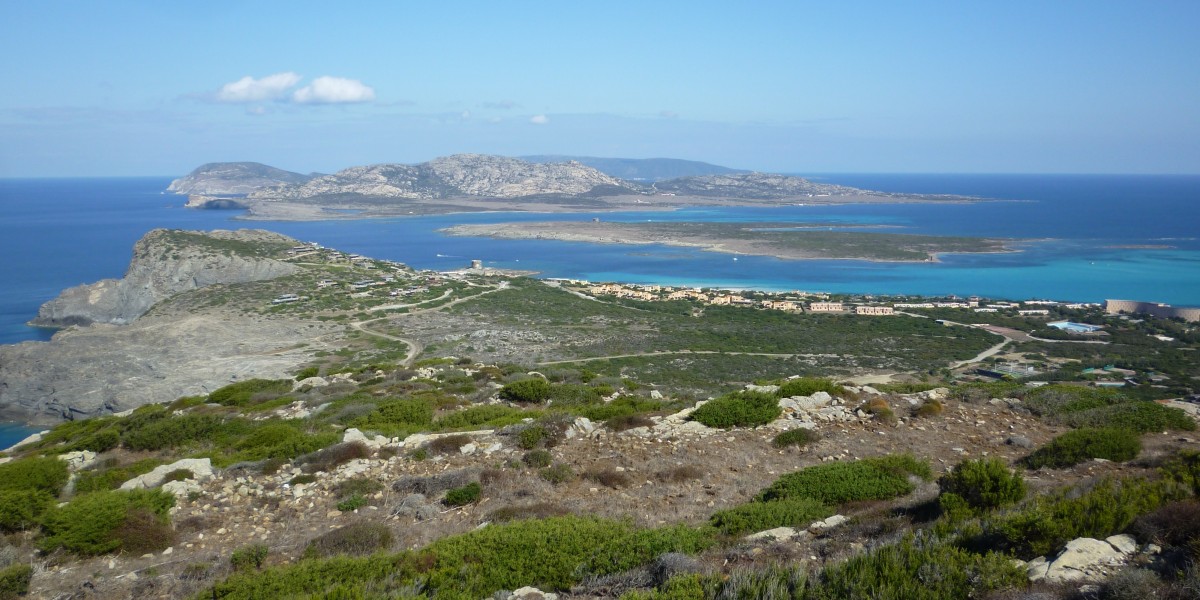
- Sentiero dell’Acqua, Fornelli: an easy, fully cycle-friendly 6.9 km circular route taking around two hours.
- Sentiero del Muflone, Cala Reale: a 6.1 km circular route of about two hours beginning at the Tumbarino Wildlife Observatory, with opportunities to spot mouflon and birds.
- Sentiero della Natura, Cala Reale: a short 2 km trail with Braille text and tactile stations.
- Sentiero del Faro, Cala d’Oliva: the longest option at 17.9 km and around five hours and 30 minutes, heading towards Punta dello Scorno and passing near Cala d’Arena.
Wildlife beyond the white donkeys
Asinara has a large mouflon population, present since the Neolithic period, later disappeared and were reintroduced during the 1950s.
Other animals listed include feral goats and horses, wild boar and domestic pig hybrids, peregrine falcons, kestrels, owls, Sardinian frogs and Hermann’s tortoises.
Dolphins may be seen during summer boat excursions in calm conditions. Whale and marine turtle encounters are described as less common but possible.
The best time to visit Asinara Island
Spring is identified as the strongest time for nature, with mild temperatures, flowering Mediterranean scrub and active wildlife. Early autumn still has warm sea conditions and bright days, with fewer people than the central summer period.
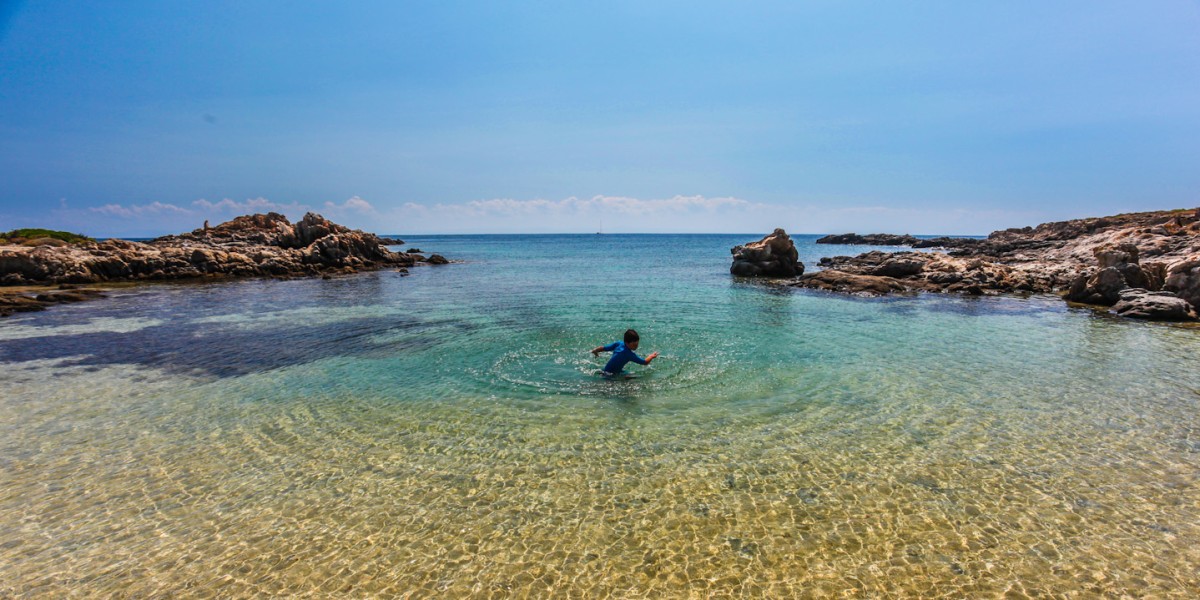
July and August are suitable for swimming and snorkelling, but the Park advises against trekking and cycling during summer because of strong sun, limited shade and limited water availability.
Information taken from The WOM Travel, “In Sardegna c’è un’isola senza auto che è stata chiusa al pubblico per 112 anni: oggi è un paradiso dai colori irreali"