Typical Italian autumn desserts come from a centuries-old tradition built around simple ingredients such as chestnuts, grapes, grape must, walnuts and figs.
These ingredients become small regional masterpieces, with authentic recipes handed down through generations and often tied to local festivals, grape harvests and the wider harvest season.
Here are 10 typical autumn desserts to try in Italy.
Chestnut cake
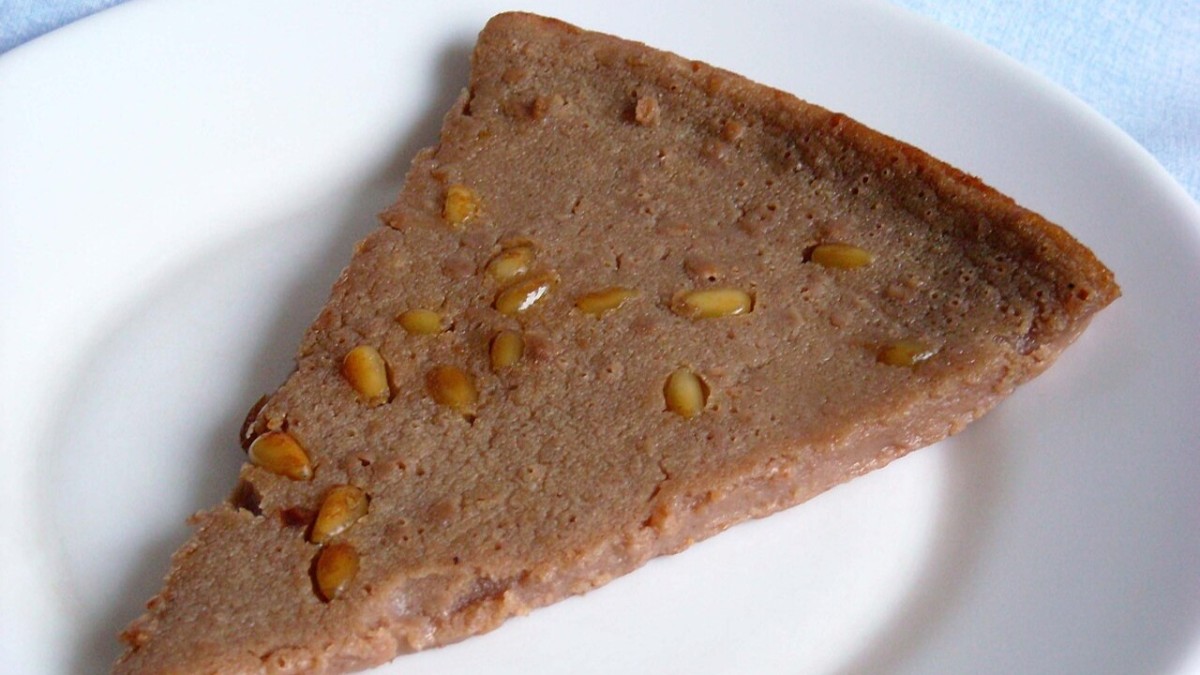
Castagnaccio is probably Italy’s most iconic autumn dessert: a flat cake made with chestnut flour, water and extra-virgin olive oil, with pine nuts, raisins and rosemary mixed through.
Part of the rural food tradition of central and northern Italy, castagnaccio has roots in Tuscany, Liguria, Piedmont and Emilia-Romagna. It is usually soft inside, with a light crust on top. It is best eaten warm, perhaps with a glass of wine or a spoonful of fresh ricotta.
Mont Blanc
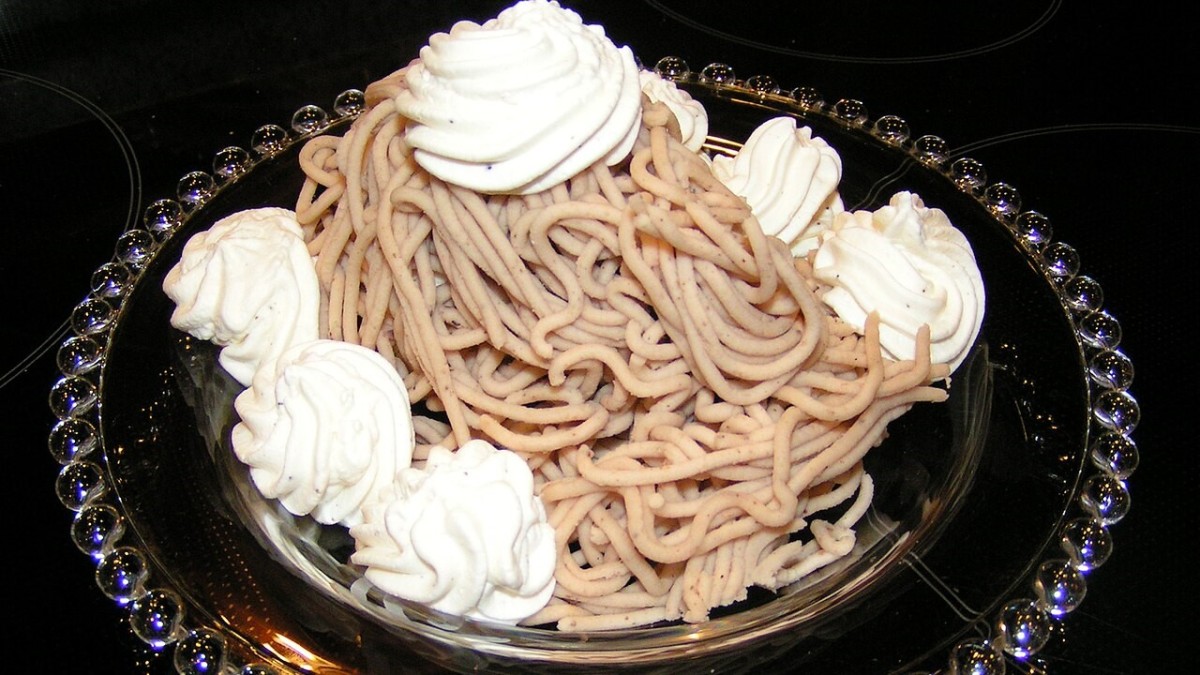
Mont Blanc gives chestnuts a slightly grander role. It is a mound of pressed chestnut purée, piped into spaghetti-like strands and topped with a generous cloud of whipped cream.
The dessert is typical of Piedmont and the Aosta Valley, although its popularity extends beyond Italy. It is also called Mont Blanc in France, while Switzerland lays claim to it too. The traditional recipe uses boiled chestnuts, sugar, bitter cocoa and a hint of rum or vanilla.
Bertolina cake
Less familiar outside Lombardy, Torta Bertolina is an autumn bake that deserves more attention. It is a soft, fragrant cake filled with plenty of strawberry grapes, whose juice turns the mixture a deep purple.
This speciality comes from Crema, in the province of Cremona, and is prepared between September and October, at the height of the grape season. The recipe is homely and straightforward: a soft mixture of flour, eggs, sugar, butter and yeast, with whole grapes folded in.
Apple strudel
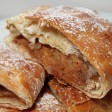
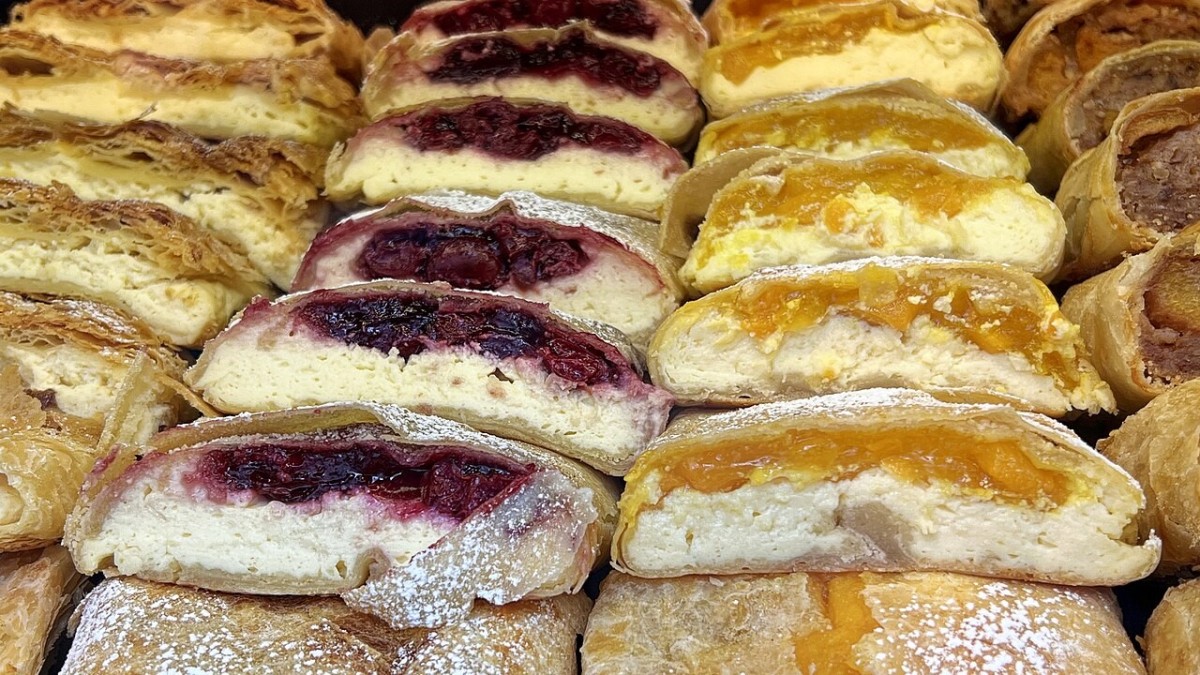
Apple strudel is the quintessential autumn dessert in Trentino-Alto Adige and, more broadly, across the eastern Alpine area. Thin pastry wraps around a fragrant filling of apples, raisins, pine nuts, cinnamon and breadcrumbs toasted in butter.
The secret to a memorable strudel lies in balance. The apples, ideally rennet apples with their sharper flavour, should be soft without turning mushy. The pastry should be crisp but not dry, while the spices need to be present without taking over.
Wine doughnuts
Wine doughnuts are a classic of Lazio and central Italian cooking, closely tied to the grape harvest. Their dough is simply made with flour, sugar, extra-virgin olive oil and red wine.
They are especially popular in Lazio, particularly around the Castelli Romani and Ciociaria, but also appear in Umbria, Abruzzo and parts of Campania. Every village has its own version: some add aniseed for an extra aromatic note, while others use white wine for a lighter flavour.
Roccata di Assisi
Roccata di Assisi is an Umbrian strudel that remains little known outside the region, despite its remarkably complex flavours. It consists of thinly rolled pastry filled with apples, walnuts, dried figs, raisins, cocoa and pine nuts, sometimes with a dash of alchermes, a scarlet Italian liqueur.
As its name suggests, the recipe is linked to Assisi and, more generally, Umbria, where it is traditionally prepared in autumn, often around All Saints’ Day or for other local celebrations.
Pitta ’mpigliata
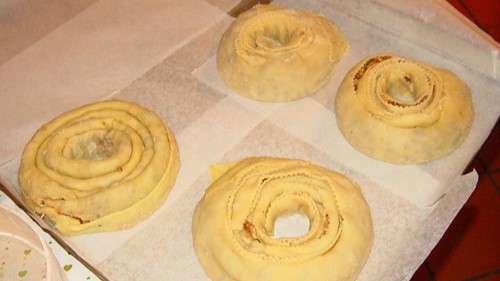
Calabria has one of southern Italy’s more surprising autumn desserts. Pitta ’mpigliata, also called pitta ’nchiusa, is made with thin pastry filled with walnuts, raisins, honey, cinnamon and cloves. The pastry is rolled into rose- or spiral-shaped pieces before baking.
It comes from the San Giovanni in Fiore area, in the Sila region of Cosenza. This pitta has ancient roots, and its link with the dried fruits of the autumn harvest makes it particularly fitting for the season.
Grape mustard
Grape mustard is a thick cream made by slowly cooking fresh grape must, with flour, dried fruit and sometimes citrus zest added along the way. The result is a deeply flavoured dessert that sits somewhere between a pudding and a jam.
This preparation is widespread across much of central and southern Italy, with names and recipes changing between regions.
Pane di sapa
Pane di sapa is an old and rather mysterious Sardinian dessert, closely connected to Sardinian tradition. Despite the name, it is not bread in the usual sense. It is a dark, semi-dense mixture enriched with sapa — grape must cooked down into a syrup — as well as walnuts, raisins, orange zest and spices.
Traditionally made between autumn and Christmas, pane di sapa is especially common in central and southern Sardinia, particularly around Campidano and Oristano. Sapa, the key ingredient, gives it a deep brown colour and a distinctive sweet-and-sour taste with caramelised notes.
Stuffed dried figs
Stuffed dried figs are a long-standing tradition in southern Italy, particularly in Puglia, Calabria, Campania and Basilicata. Sun-dried figs are split open and filled with almonds, walnuts and citrus zest, sometimes with a small piece of chocolate.
In Puglia and Calabria, the preparation becomes particularly elaborate. Apulian crocette, for instance, are made by crossing pairs of figs around an almond, then baking them until golden. In Calabria, cinnamon and cloves are often added for a more layered aromatic profile.
Stay in the know about living in Italy as a foreigner—get our weekly newsletter for the latest travel, legal, and lifestyle news.