Trentino and Alto Adige are often grouped together as one Alpine destination, yet they are two autonomous provinces with distinct languages, cultures and histories.
For foreigners considering life in the region, the most noticeable contrast is linguistic: Trentino is predominantly Italian-speaking, while Alto Adige, also called Südtirol, has a German-speaking majority and strong ties to the Tyrolean world.
Two autonomous provinces, not one administration
Trentino-Alto Adige is a region with special autonomous status. In practice, the main powers sit with the Autonomous Province of Trento and the Autonomous Province of Bolzano, while the region has more limited responsibilities.
The two provinces have major powers over healthcare, education, urban planning, transport and part of taxation.
Their separate identities have historical roots.
- Alto Adige belonged to the Austro-Hungarian Empire until 1919, when it was annexed to Italy under the Treaty of Saint-Germain-en-Laye.
- Trentino was also under Habsburg rule, though it already had a strong Italian cultural component.
Trento and Bolzano: location and borders
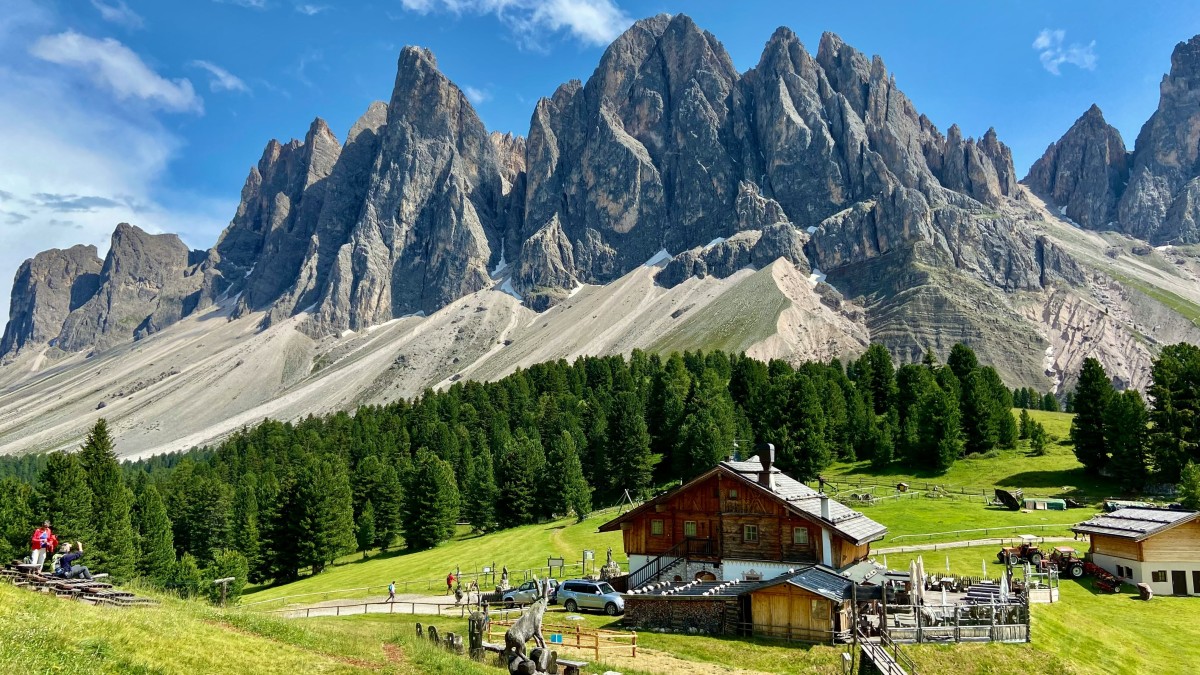
Trentino forms the southern part of the region. It borders Veneto and Lombardy to the south, Lombardy to the west, and Alto Adige to the north. Its capital, Trento, sits in the Adige Valley and is home to Castello del Buonconsiglio and MUSE, the science museum.
Alto Adige lies to the north. It borders Austria to the north and east, and Switzerland to the west. Its capital is Bolzano, or Bozen in German, a city of around 108,000 inhabitants at the confluence of the Isarco and Talvera rivers with the Adige. Its Christmas markets and the Archaeological Museum, where Ötzi is kept, are among the places mentioned in the source.
The boundary between the provinces broadly follows the Salorno bottleneck, or Salurner Klause, where the Adige Valley narrows. Historically, this has also been seen as the dividing point between Italian-speaking and German-speaking areas.
Languages in Trentino-Alto Adige
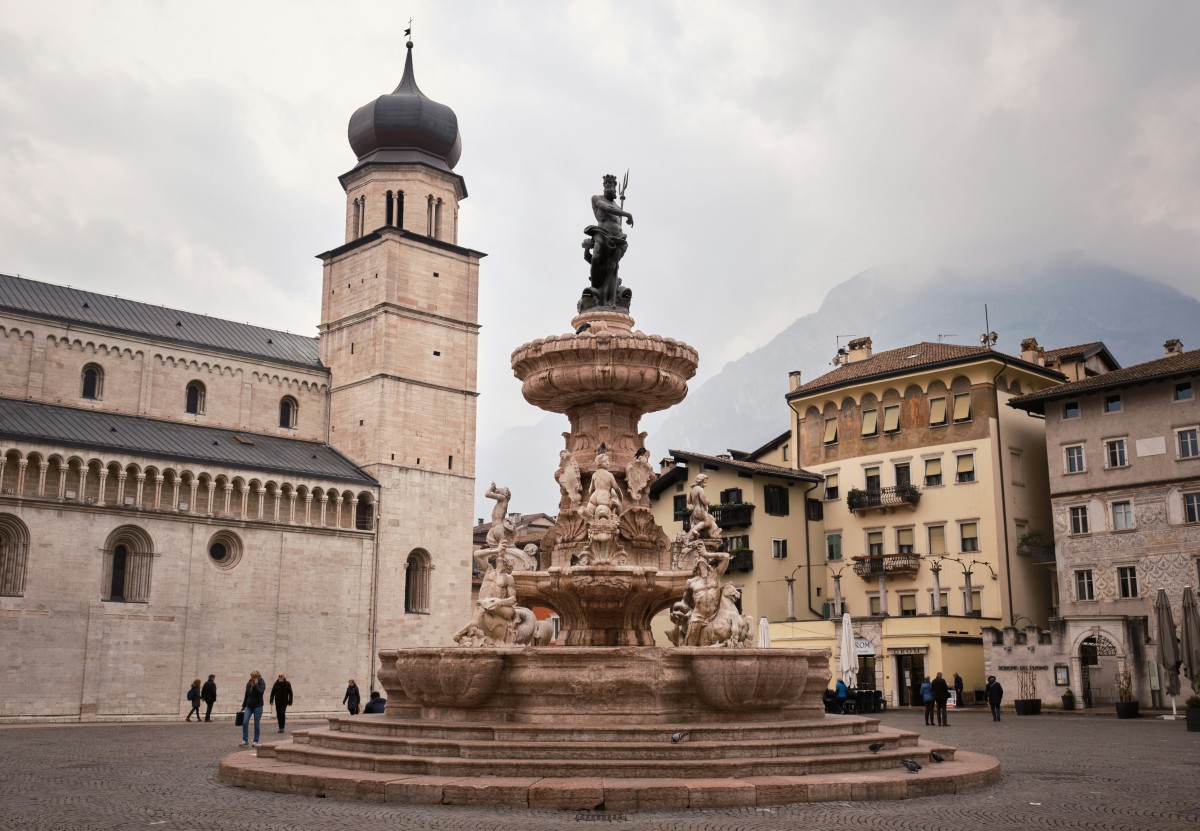
Italian, German and Ladin are the region’s three official languages.
- Italian is dominant in Trentino and spoken by almost the entire population.
In Alto Adige, Italian speakers account for around 25–26% of residents and are concentrated mainly in Bolzano, Merano, Laives and Bressanone.
German is the mother tongue of around 69–70% of Alto Adige’s population. Everyday speech often uses Tyrolean dialects, which can differ considerably from the standard German taught in schools.
Ladin, an ancient Romance language descended from Vulgar Latin, is spoken in Val Badia and Val Gardena in Alto Adige, as well as Val di Fassa in Trentino.
Landscapes and food traditions

Trentino includes the eastern Dolomites, the Trentino side of Lake Garda, Val di Sole and Val di Non. Its local dishes include canederli in brodo, Storo polenta, tortei di patate and strangolapreti.
Alto Adige includes the western Dolomites, Val Pusteria, the Sciliar Plateau, and wine-producing areas around Merano and Bolzano. Food associated with the province includes PGI speck, Knödel, apple strudel, Schlutzkrapfen and Kaiserschmarren.
Living in Trentino-Alto Adige
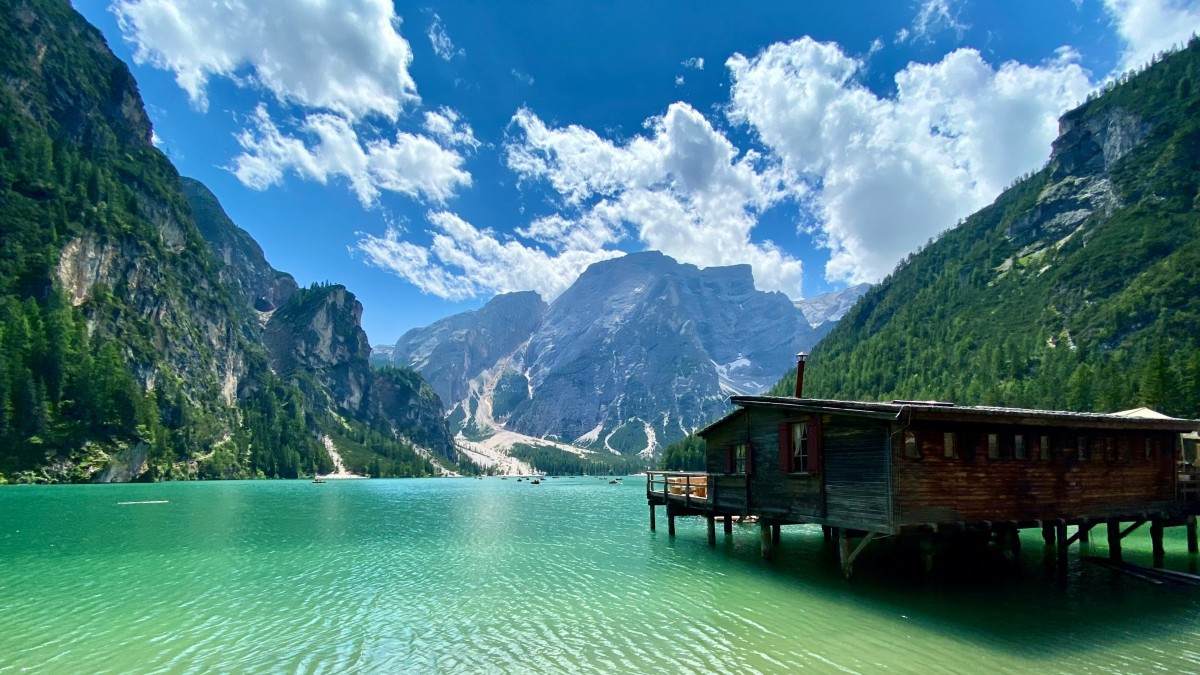
Day-to-day life in Trentino-Alto Adige is shaped by strong local services. Healthcare is described as among Italy’s best, with shorter waiting times than the national average, modern hospitals and a widespread local healthcare network. It is one reason the region features among the northern Italian spots with a high quality of life.
Schools are described as well funded, with modern buildings. In Alto Adige, Ladin communities have a trilingual school system, reflecting the area’s Italian, German and Ladin-speaking communities.
Getting around is also relatively straightforward. Buses, regional trains, cable cars and cycle routes are described as integrated and punctual, which matters in a region of valleys and mountain towns.
- Property for sale in Trentino-Alto Adige
- Long-term rentals in Trentino-Alto Adige
- Case vacanza in Trentino-Alto Adige
Stay inspired for your travels in Italy —get our weekly newsletter for the latest travel, legal, and lifestyle news.