On the rolling hills of Emilia-Romagna, WASP has completed Itaca, Italy’s first certified 3D-printed building. Nestled within Shamballa—WASP’s open-air laboratory for sustainable living—Itaca is a fully eco-friendly home, with construction expected to be finished by spring 2026. Beyond its striking design, the project showcases how technology and sustainability can merge to shape the future of housing.
Reimagining sustainable living
Itaca was first unveiled by Massimo Moretti, founder and president of WASP, at Italian Tech Week in Turin. Conceived as a self-sufficient farm and 3D-printed housing model, the project is built around a circular micro-economy. Its ambition is bold: to establish a replicable model for sustainable construction worldwide, leveraging the speed and accessibility of 3D printing technology, particularly WASP’s versatile Crane system, which can operate even in remote locations.
A key goal was to ensure that Itaca meets the same rigorous standards as traditional buildings, including seismic resilience in line with Italian and European regulations. Given Italy’s strict construction codes, especially in regions prone to earthquakes, achieving certification under these conditions proves that this model could be successfully replicated across much of the globe.
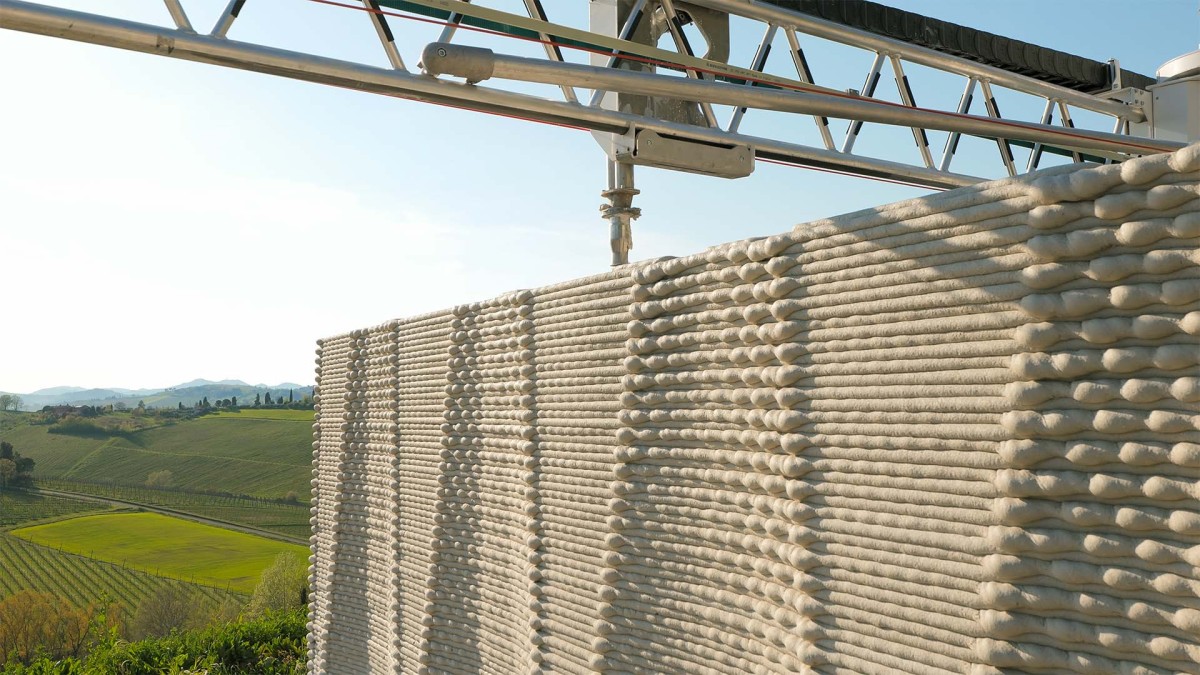
The 3D Construction Model
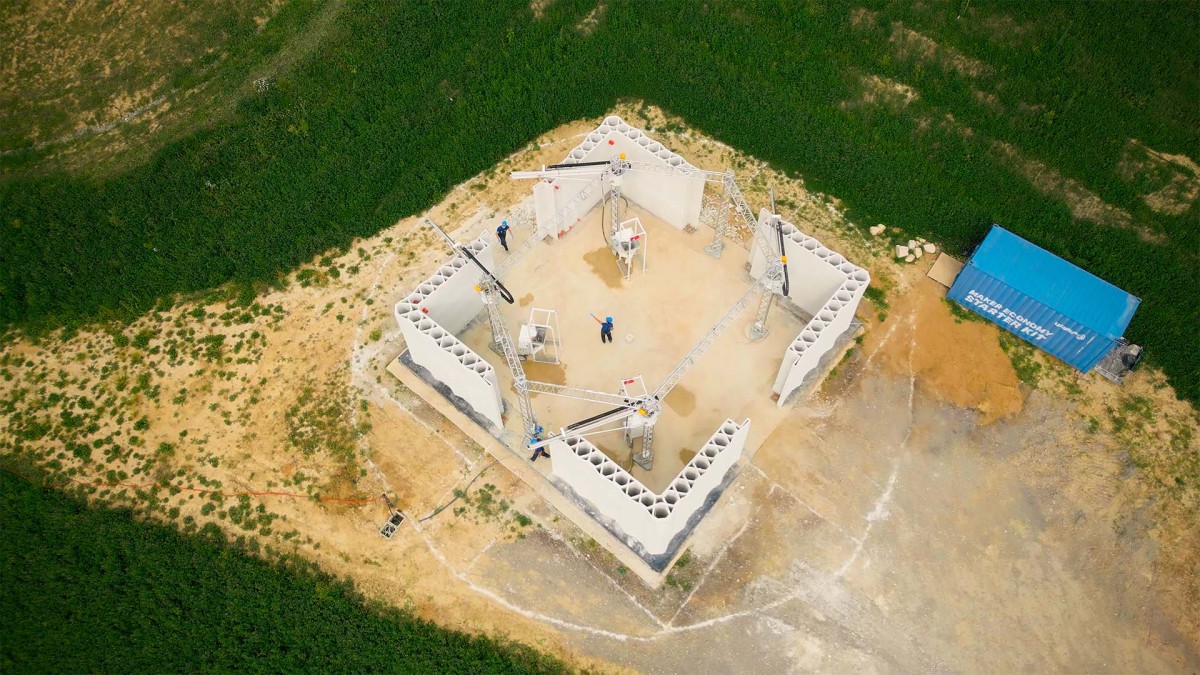
Built by WASP 3D Build, WASP’s startup dedicated to 3D-printed construction, Itaca is the first structure to take shape in Shamballa. Its construction relies on an innovative configuration of the Crane WASP system, which uses four robotic arms mounted at the corners of a hexagonal frame. This allows four wall sections to be printed simultaneously, dramatically speeding up the process: the structural shell of a house can be completed in just a few days.
Design and Structure
The design of Itaca is inspired by the geometry of a mandala—a square inscribed within a circle. Four main walls rise from the corners of the square, each featuring a central opening. Covering a total of 164.9 m², each wall stands 3.8 metres high and takes around 24 hours to print.
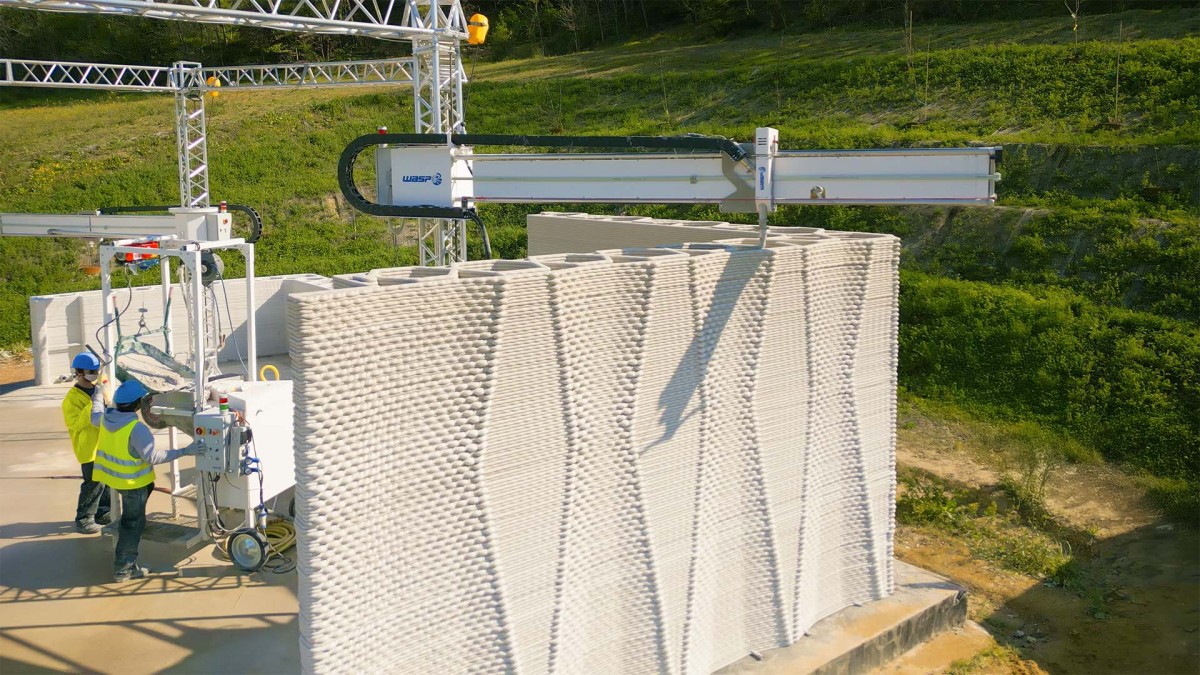
The walls are made from a cement-free lime-based mix, chosen for its lower carbon footprint compared with traditional concrete, while still meeting the performance standards required for a safe, durable building. Lime’s natural breathability also helps regulate indoor temperatures and prevents mould.
Sustainability at its core
Reinforcement columns will be inserted into cavities created during printing to ensure structural integrity, comply with seismic regulations, and support the roof. The walls themselves are thick—between 60 and 70 cm—and the cavities will be filled with rice husks from agri-food waste and natural lime powder. This method integrates insulation directly into the walls, creating a passive house that is both energy-efficient and environmentally conscious.
The walls are ventilated, helping regulate internal temperature, reduce energy consumption, and cut emissions from heating and cooling. Radiant heating, electrical systems, and insulation are all embedded during printing, eliminating the need for retrofitting. The integrated ventilation also allows air to circulate naturally, enabling the building to “breathe,” purify the indoor environment, and maintain high air quality.
By combining carefully chosen construction materials with natural insulators sourced from waste, the walls achieve a net-negative CO₂ footprint. Where regulations allow, the same architectural module can even be built using earth, further reducing environmental impact.
Beyond the building
Itaca is not just a house—it is part of a broader vision of sustainable land use and circular micro-economy. On the surrounding grounds, two rainwater collection basins have been created to capture and store water, prevent soil erosion, and irrigate crops. This transforms an area previously prone to rapid runoff and summer drought into a biodiverse ecosystem.
Over 500 trees and 50,000 aromatic and medicinal plants will be planted, and an AI-powered automated garden—currently in development—will optimise cultivation year-round. Vertical 3D-printed hydroponic systems will provide fresh vegetables throughout the year with minimal water use.
A green roof and solar panels on Itaca’s top will provide insulation, reduce energy costs, and support urban biodiversity. Within the farm, a laboratory will extract active compounds from plants and conduct biological research, using advanced technologies to maximise the potential of the cultivated resources in Shamballa.