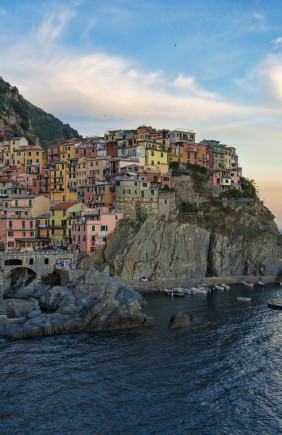
They are millennials or highly-skilled tourists and come to Italy to treat themselves to a moment of relaxation, opting mainly for Rome, Milan and Venice: the average expenditure is $2,424 of which $970 (40%) is spent before the trip and the remaining $1,454 (60%) in Italy. International tourists mainly use cards, are environmentally aware and like customised solutions. This is what emerges from the Inbound edition of the Global Travel Intentions Study 2023 published by Visa to highlight how travel from abroad to Italy is changing after the pandemic and emerging trends.
"With the recovery of tourism in Italy, the return to pre-pandemic flows and major international events coming up such as the Jubilee and the Winter Olympics in Milan Cortina, intercepting the needs and expectations of the international traveller represents an unmissable opportunity," says Stefano Stoppani, Visa Italy country manager.
"Digital payments offer the entire supply chain the tools to seize this opportunity: to regions to analyse flows and strategically improve services and to SMEs to increase sales volumes. They offer greater protection against fraud and other risks to increase opportunities with foreign tourists," he added.
Italy, the report reveals, attracts mainly travellers from Switzerland, the UK, France, Spain, the USA and the UAE, with millennials and high-skilled tourists leading the most representative segments and Rome, Milan and Venice as preferred destinations. The average length of stay is 8 days with longer stays for families with children (10 days). The desire to relax, followed by the desire to explore, is the main motivation, especially for the French. What drives the Americans, on the other hand, is the desire for adventure, while the Swiss look forward to meeting relatives and friends.
Payment cards and digital wallets are the main payment instruments (71%), although their use is accompanied by cash once at the destination, mainly to pay for restaurants and shopping. Among the main factors driving the use of payment cards, 74% of the travellers surveyed reported extensive acceptance, while 29% valued security and protection against fraud. Moreover, most tourists (88%) use the same payment card in Italy as in their home country.
"Digital payments overcome all those language and currency barriers that hinder the purchasing or mobility experience of international travellers in Italy, making their stay more enjoyable," Stoppani added. "And they represent a security guarantee in case of fraud. At Visa, thanks to AI, we can tap into the aggregated data of 4.2 billion cards and over $14 trillion worth of transactions to detect unauthorised ones quickly and effectively. This is how we are able to prevent around USD 27 billion of global fraud each year” the manager continued.
In terms of new post-pandemic habits, environmental awareness continues to grow with international travellers being more mindful (60%) and actively seeking more sustainable travel options in terms of accommodation (26%), mobility (24%), purchasing behaviour (23%) and supporting local business (22%).
The other important trend that emerged concerns customisation. Travellers arriving in Italy want to enjoy personalised experiences during their stay: the majority (67%) prefer to operate independently when it comes to booking accommodation and transport, with travellers from Switzerland (80%), Germany (79%) and the United Kingdom (69%) standing out as being more independent in organising their holidays.
And for the future, 35% of foreign tourists expressed a desire to return to Italyin the next 12 months. In particular, the intention is very high among travellers from Germany (62%) and Switzerland (60%).