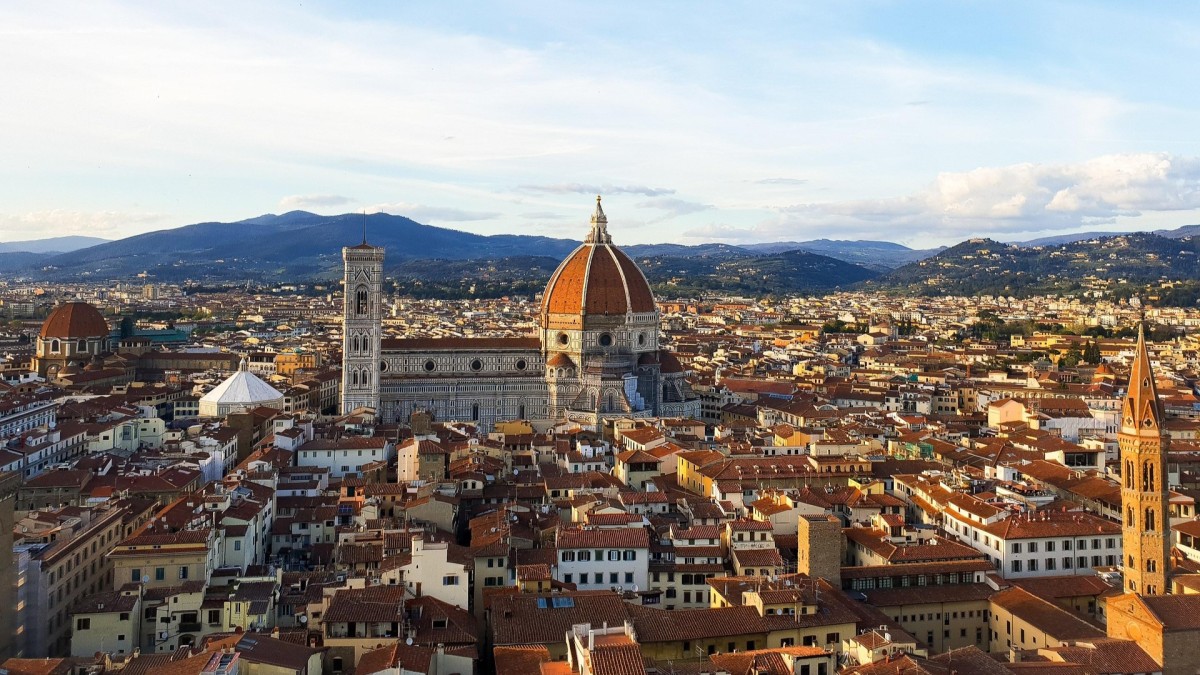
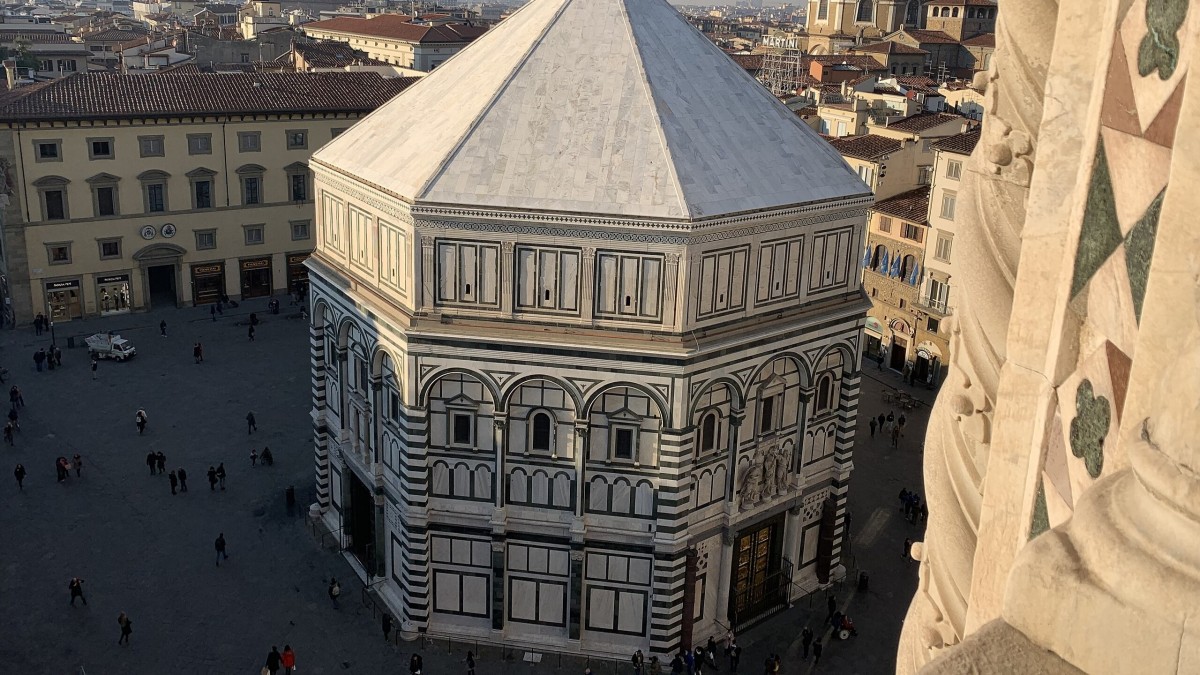
Among Florence’s most iconic artistic landmarks, the Baptistery of San Giovanni is unmissable. Situated directly opposite the Duomo, the Cathedral of Santa Maria del Fiore, and the famous Giotto’s Campanile, it stands as a historic landmark of unparalleled significance. Even from its monumental bronze doors, the Baptistery captivates anyone stepping into the square. Here’s its story and why it’s worth a visit.
Who built the Baptistery of San Giovanni? Its history
The Baptistery has a long and fascinating history, far older than most realise. It stands on a site that, according to some sources, once hosted a Roman temple dedicated to Mars, while others suggest it was a domus. Its transformation from a pagan site into a Christian building took place between the 4th and 5th centuries AD. The structure we see today, however, was built between the 11th and 12th centuries in the distinctive Florentine Romanesque style.
The Baptistery’s history is also the story of its famous decorations: the bronze doors—especially Lorenzo Ghiberti’s Gates of Paradise—and the mosaics covering the dome highlight the building’s importance to the city.
What to see inside the Baptistery
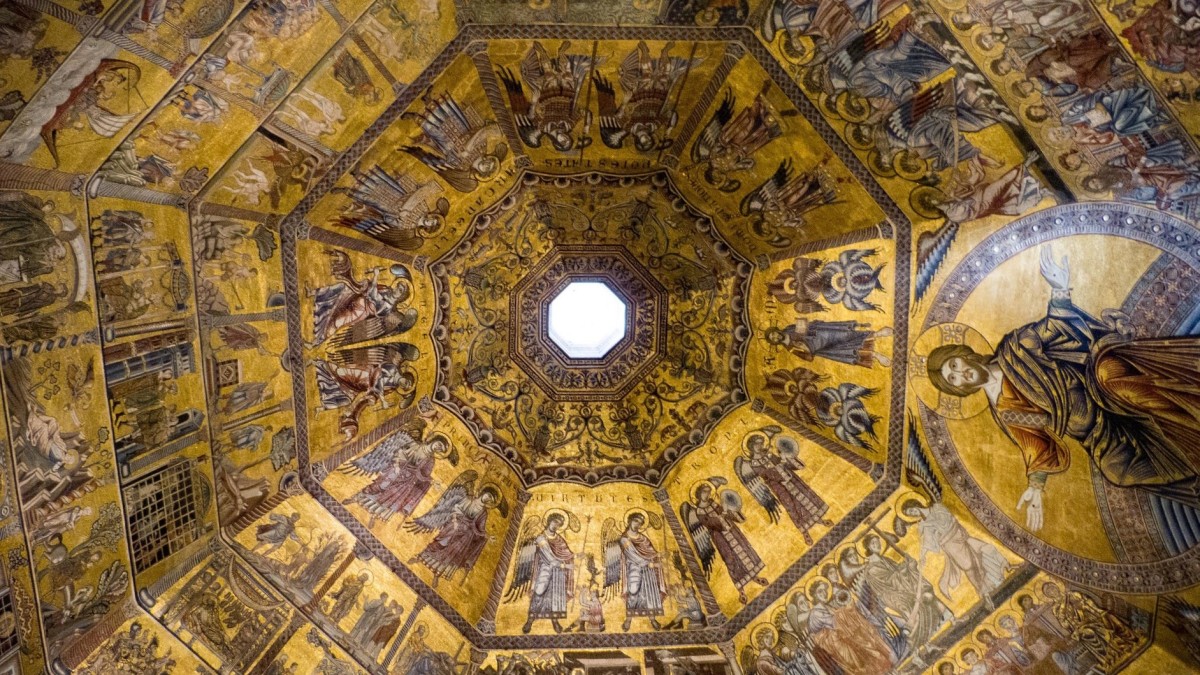
Beyond its majestic exterior, with its stunning polychrome marbles, the interior is equally impressive. Highlights include:
- Dome mosaics: among the finest examples of Italian medieval art, created between the 13th and 14th centuries, depicting biblical scenes including the renowned Last Judgment.
- Marble floor: a refined geometric inlay with cosmic and symbolic motifs.
- Octagonal baptismal font: at the centre, where Florentine citizens were baptised, including notable figures such as Dante Alighieri.
- High altar: in Neo-Romanesque style, behind which grilles offer glimpses of the crypts.
Who is buried in the Baptistery of San Giovanni?
The Baptistery also served as an important burial site for notable figures in the city’s history. The most famous is the tomb of Antipope John XXIII (Baldassarre Cossa), deposed by the Council of Constance and later welcomed to Florence, where he died in 1419. His funerary monument, created by Donatello and Michelozzo, is one of the finest examples of Renaissance sculpture.
How many doors does the Baptistery have, and why are they famous?
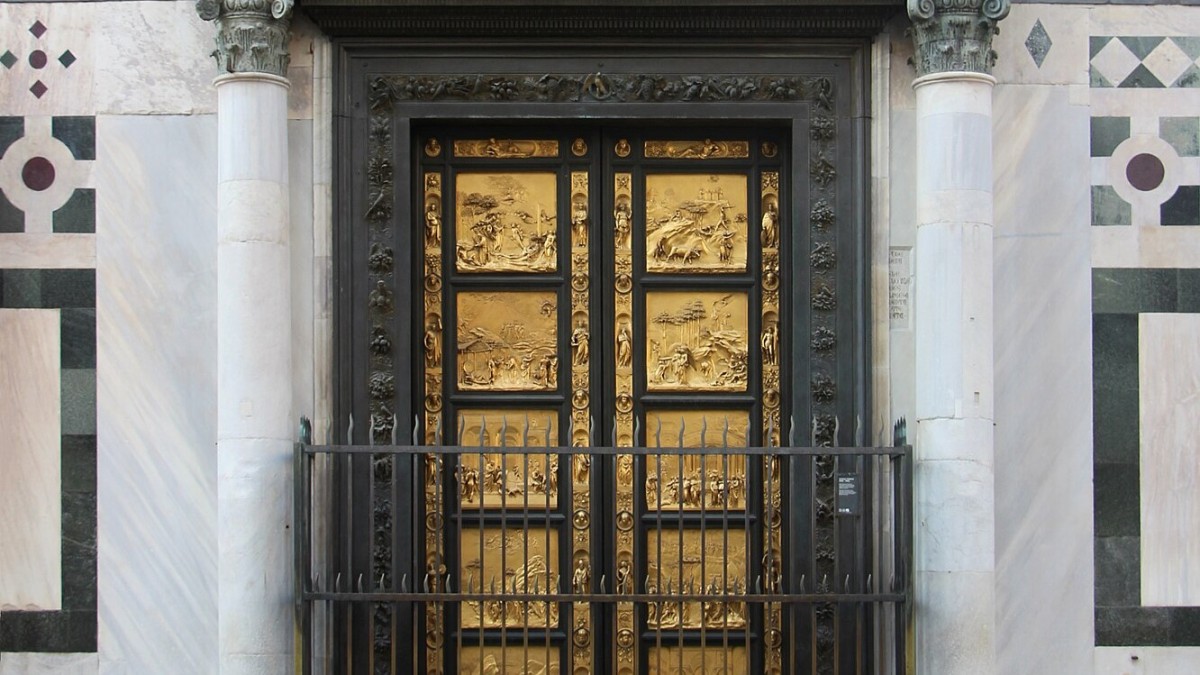
The exterior of the Baptistery is as remarkable as the interior, thanks to its monumental doors, created by some of the greatest artists of the period. There are three main doors:
- South Door: crafted by Andrea Pisano between 1330 and 1336, it is the oldest of the three. Comprising 28 panels, it depicts scenes from the life of Saint John the Baptist and allegories of the Virtues.
- North Door: by Lorenzo Ghiberti, completed between 1403 and 1424 after winning a famous competition organised by the Arte di Calimala. Its 28 panels illustrate episodes from the New Testament and the life of Christ.
- East Door (Gates of Paradise): also by Lorenzo Ghiberti, created between 1425 and 1452, it is regarded as one of the greatest masterpieces of the Renaissance. Comprising 10 large panels depicting scenes from the Old Testament, the Gates of Paradise take their name from the exceptional beauty of their decoration.
The original doors are now kept at the Museo dell’Opera del Duomo for preservation, while faithful replicas can be admired outside the Baptistery.
Opening times and tickets for visiting the Baptistery of San Giovanni
It’s no surprise that the Baptistery is a must-see in Florence, attracting visitors from around the world. Planning ahead is therefore essential. Tickets are not sold for the Baptistery alone, but as part of packages that give access to the treasures of the Opera di Santa Maria del Fiore. In particular:
- Ghiberti Pass: includes the Baptistery, Museum, and Santa Reparata. Full price €15.
- Giotto Pass: includes the Campanile, Baptistery, Museum, and Santa Reparata. Price €20.
- Brunelleschi Pass: includes access to the Dome, Campanile, Baptistery, Museum, and Santa Reparata. Price €30.
The Baptistery is usually open daily from 08:30 to 19:30.
Living in Florence
Famed worldwide for its monuments, Florence offers much more than just tourist attractions. The historic centre, a UNESCO World Heritage site, is easy to explore on foot or by bike, and features lively squares, historic markets such as San Lorenzo, cafés, bars, and restaurants.
The city also provides a wide range of services and opportunities for residents: from prestigious universities to art institutes, historic libraries to internationally renowned museums. Discover with idealista the best neighbourhoods to live in Florence and find the property for sale or rent that suits you best: