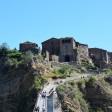
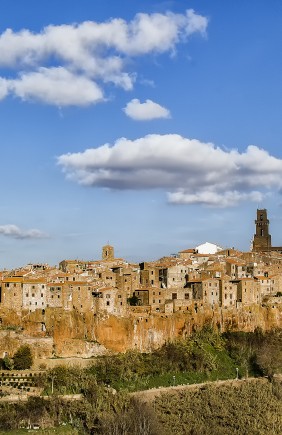
A village of stone houses, a bell tower rising among sumac shrubs, and the sound of water still flowing along the valley floor. A former 19th-century tanning village near Vizzini, in the province of Catania, it looks like a film set from another time, but it is real.
Directors including Franco Zeffirelli and Gabriele Lavia have worked among its peeling walls and masonry vats, drawn by a place where the atmosphere has remained remarkably intact.
A film set that really exists: what La Cunziria is
La Cunziria is not a restored historic centre, but a settlement of around forty buildings pressed against the hillside. At its centre stands a small church dedicated to Sant’Eligio, patron saint of metalworkers and of everyday craft work too. The local stone houses follow the slope on staggered levels, incorporating small underground rooms at their lower levels, evidence of long-standing technical solutions.
The roofline is uneven, marked by collapses and openings that allow light through. Prickly pears and sumac grow around the buildings. Sumac was the plant used to extract tannin for the tanning process.
The village also has links to literature and cinema:
- Giovanni Verga set the famous duel in Cavalleria Rusticana here, and it was no coincidence that Zeffirelli chose these buildings as a natural backdrop in 1981.
- Later, Gabriele Lavia used it as the setting for La Lupa, confirming the visual pull of this stone amphitheatre.
Many structures are now in a fragile condition, but channels, vats and traces of workshops are still visible, showing how the production system once worked. The site is included among the FAI’s Luoghi del Cuore, or “Places of the Heart”, which support the protection of places with valued local heritage, including its hydraulic history and working landscape.
The water that powered everything: the production system
To understand La Cunziria, picture a sunny, windswept valley with three key resources always close at hand: sun, sumac and a steady supply of water. The Masera stream was not simply part of the scenery but vital infrastructure, managed through a network of small channels and basins that made it possible to process hides and supply other workshops.
The system used the natural change in level through saie, artificial irrigation channels introduced during the Arab period and later refined, which created small drops in the water. Horizontal water wheels and connected machinery operated there, increasing output through straightforward but sturdy technology.
Beyond tanning: wool, cereals and sugar
Alongside leather tanning, the system supported other activities that needed water and power. Cereals were milled, woollen cloth was treated in fulling mills or finishing workshops, and sugar cane, grown in the surrounding countryside, was processed as early as the 16th century.
Together, these activities made the valley a productive district before the term existed, shaped by seasonal cycles and careful use of resources. The remaining buildings, many of them dating to before the 1693 earthquake, are valuable examples of civil engineering predating the 18th century.
How to get to La Cunziria
The village lies within the area of Vizzini, in the province of Catania. Driving is the most practical way to reach it, particularly when arriving via Catania Airport. The route follows inland roads towards Vizzini, then continues in the direction of Contrada Masera.
The roads are passable but often narrow and only basically maintained, so care is advisable, particularly around dusk. It is possible to reach Vizzini by bus or train from the main towns and cities of eastern Sicily, but a taxi, transfer or private vehicle is needed for the final section.
Article originally published on The Wom Travel: Sembra un set cinematografico d’altri tempi, ma è un borgo fantasma nel cuore della Sicilia: un luogo magico tutto da scoprire