In 2025, 46% of Energy Performance Certificates (Attestati di Prestazione Energetica, or APE) issued for residential buildings fell into energy classes F and G.
These figures come from Saie — the Construction Fair for design, building and systems — based on SIAPE data. They highlight the challenges facing Italy’s housing stock and bring energy refurbishment back into focus ahead of the event’s 60th edition, taking place at BolognaFiere between 7 and 10 October 2026.
APE 2025: almost half of buildings fall into the lowest energy classes
Italy’s property stock continues to show a substantial need for energy-efficiency improvements. The picture emerges from SIAPE, the Energy Performance Certificate Information System developed by ENEA, with figures analysed by Saie — the Construction Fair for design, building and systems.
- Almost 7 million Energy Performance Certificates have been registered in Italy since 2019.
- Around 1.3 million APEs were issued in 2025 alone, an increase of 6.4% compared with 2024.
The most significant figure, however, concerns the distribution of properties across the energy classes.
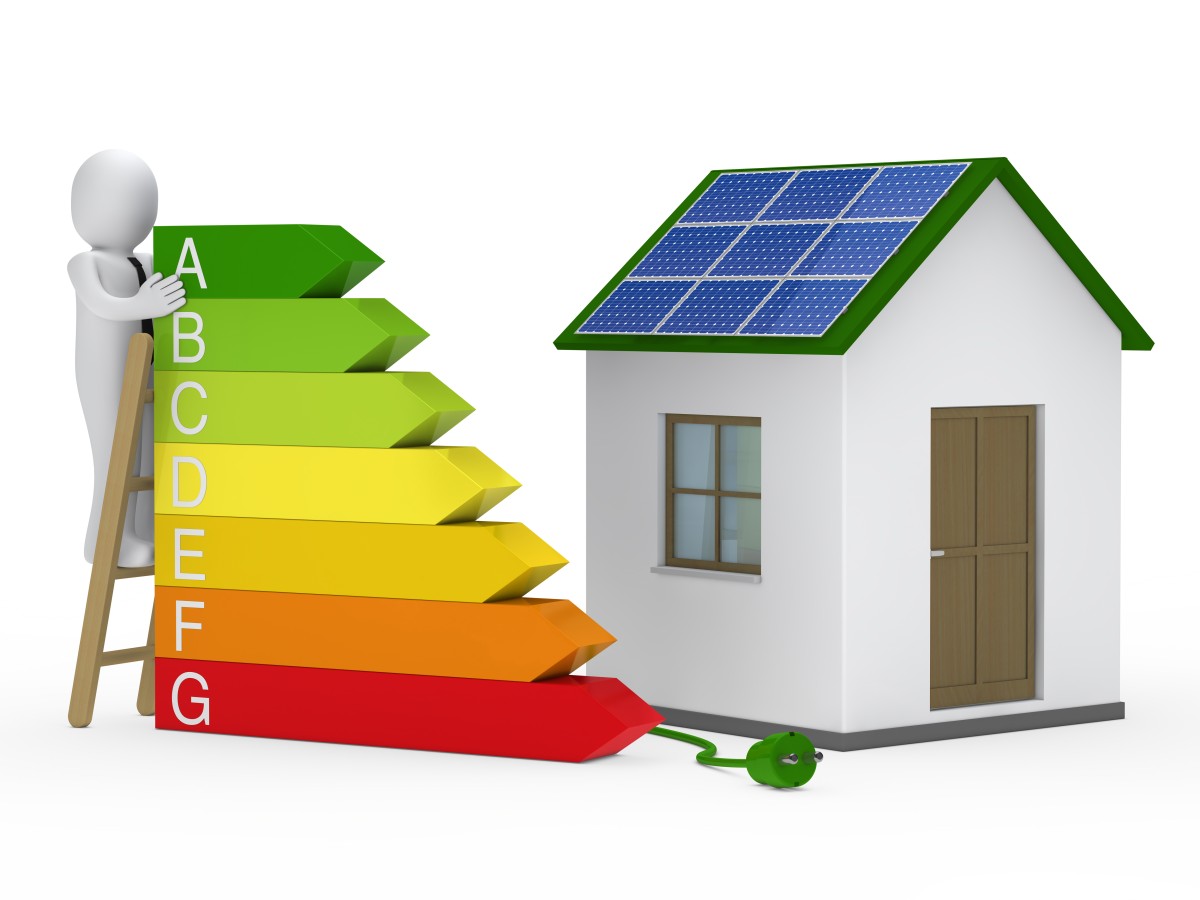
In 2025, 46% of APEs were in classes F and G, the two bands with the poorest energy performance. In detail, 22% of certified buildings were in class F and 24% in class G. Taken together, this share was two percentage points higher than in 2024.
At the other end of the scale, buildings in the most energy-efficient classes, A1 to A4, accounted for just 11% of APEs issued in 2025. This was also lower than the 14% recorded in 2024. Class A4 alone accounted for 4.4% of certifications.
The resulting picture is of a housing stock still largely made up of energy-hungry buildings, despite the strong push for refurbishment work through tax incentives in recent years.

Energy efficiency: differences between Italian regions
The situation is not consistent across the country. According to 2025 SIAPE data, there are significant regional differences in the share of buildings in the higher-performing energy classes.
Looking at classes A1, A2, A3 and A4 together, the highest percentages were recorded in:
- Valle d’Aosta: 20%;
- Autonomous Province of Bolzano: 18.7%;
- Lombardy: 18%;
- Autonomous Province of Trento: 18%;
- Veneto: 16%;
- Sardinia: 14%.
At the other end of the scale, the largest shares of certified buildings in classes F and G were recorded in:
- Campania: 61%;
- Lazio and Tuscany: 59% each;
- Basilicata: 57%;
- Molise: 56%;
- Puglia: 55%;
- Umbria: 54%.
The territorial differences are even more apparent at the provincial level. The provinces with the largest share of A-rated APEs include:
- Sondrio: 30%;
- Brescia: 25%;
- Bergamo: 20.2%;
- Ascoli Piceno: 20%;
- Monza and Brianza: 18%.
For classes F and G, the highest shares were recorded in:
- Isernia, Rieti and Enna: 70% each;
- Massa-Carrara: 66%;
- Viterbo: 65%;
- Frosinone: 65%;
- Naples: 65%.
Energy refurbishment: the role of incentives and the Green Homes Directive
In recent years, Italy’s building-renewal process has been largely shaped by the period of building incentives. According to recent Nomisma estimates cited by Saie, work carried out under these schemes may have enabled Italy to meet 56% of the targets set for 2030 by the Green Homes Directive.
That represents a significant step, though much remains to be done. To speed up the refurbishment of Italy’s property stock, the key issue is therefore the continuity of investment and the establishment of a stable implementation framework.
The matter is particularly relevant at a time of fluctuating energy prices and supply-related difficulties. For households and property owners, improving a building’s energy performance means directly addressing one of the main factors affecting energy use and running costs.
However, energy refurbishment is not solely about reducing bills. Work on the building envelope, windows and doors, installations and technological systems can also help improve comfort at home, cut consumption and increase property values.
Refurbishment will shape the future of construction
The 2025 energy-certification data therefore reveals a dual reality.
- On one side, the number of registered APEs continues to grow, and work carried out in recent years has helped start a process of renewing the country’s property stock.
- On the other, almost one in two certified buildings still falls within energy classes F and G, while the share of homes in the A classes has fallen compared with 2024.
It is in this context that energy refurbishment has a strategic role, aimed not only at cutting energy use, but also at supporting innovation in the construction sector, developing new skills and improving the quality of the built environment.
As Emilio Bianchi, Saie’s general director, points out, SIAPE data describes a housing stock that still uses a high amount of energy. In Bianchi’s view, refurbishment is an investment that can bring benefits for productivity, employment and property values, but scaling it up will require innovation, technology and widely available skills. The challenge, then, extends beyond individual buildings to the entire construction supply chain.
Stay in the know about living in Italy as a foreigner—get our weekly newsletter for the latest travel, legal, and lifestyle news.