Thinking about how to buy a 1‑euro house and finally swap grey commutes for an Italian hill town? In 2026, the schemes are still alive, but the reality behind the headlines includes strict renovation deadlines and a fair bit of bureaucracy. Understanding how these projects work, who can apply and what the real costs look like is the first step before falling for that crumbling stone façade.
- What is the €1 house scheme in Italy in 2026?
- How does buying a 1 euro house in Italy work?
- Buying a 1 euro house as a foreigner
- Requirements and obligations: who can buy and what you must do
- Real costs of buying a 1-euro house
- Building and energy renovation bonuses in Italy 2026
- Where to find €1 homes in Italy in 2026
What is the €1 house scheme in Italy in 2026?
1 euro houses in Italy have been making headlines for years, and in 2026, the schemes are still running in a number of small towns. The idea is simple: sell abandoned, often crumbling homes for €1 to people willing to renovate them, and in doing so help repopulate villages.
It’s important to know that these are municipality‑run programmes, not a single national law. Each town launches its own initiative, sets its own rules and deadlines, and decides which buildings are included.
In 2026, some towns are pausing their schemes after successful early rounds, while others are launching new calls to attract residents, investment and small‑scale tourism projects.
How does buying a 1 euro house in Italy work?
If you want to buy a cheap house in Italy to renovate, the process is more structured than the headlines suggest. In most towns, it looks roughly like this:
- Choose a town running a €1 house scheme
Look for municipalities that clearly advertise “Case a 1 euro” or “Case a 1€” on their official website. - Download and read the public notice
The bando sets out who can apply, which properties are involved, the renovation deadlines, deposits, penalties and any special conditions. - Submit your application and project
You usually need to send an application form plus a basic renovation plan. - Sign the purchase and commitment contracts
If your application is accepted, you’ll sign the deed transferring ownership for €1 and a separate agreement describing your renovation obligations, timelines and sanctions if you don’t comply. - Obtain planning and building permits
With a local architect or engineer (often a geometra), you submit your project to the municipality’s technical office for approval and get any necessary planning permissions. - Start renovation within the deadline
Most schemes require you to start work within a set period after permits are granted, often 6–12 months, with overall completion required within 12–36 months, depending on the town. - Complete works and obtain compliance certificates
Once the renovation is done, the municipality or relevant authority will check that the house is structurally sound and compliant with building and safety codes before releasing any deposit.
Buying a 1 euro house as a foreigner
Can foreigners buy a 1 euro house in Italy? Yes. There is no rule that reserves these properties for Italian citizens only, so international buyers are welcome as long as they follow the local procedure.
One key requirement is the Italian tax code (codice fiscale), which you need for paying taxes, signing the deed and dealing with Italian public offices. It’s a tax identification number, but on its own, it does not give you the right to live or work in the country.
If you’re from outside the EU, remember that buying property does not automatically grant residency. If you plan to spend more than short tourist stays in your €1 home, you’ll need to look into the correct visa or residence permit separately.
Requirements and obligations: who can buy and what you must do
There is no single national list of requirements for 1 euro houses in Italy, but most municipal schemes share a set of common conditions. You’ll find the exact rules in each town’s bando, but you can usually expect:
- Basic eligibility
- Be at least 18 years old.
- Agree to the terms in the public notice and sign the required contracts.
- Provide a copy of your ID and codice fiscale (for foreigners as well as Italians).
- Renovation commitments
- Present a renovation project, sometimes with cost estimates.
- Start works within a fixed period after permits are issued.
- Complete the renovation within the deadline set by the municipality
- Financial guarantees
- Pay a security deposit, typically between €2,000 and €5,000, which can be forfeited if you fail to renovate.
- Show evidence that you have the financial capacity to complete the works.
- Use and resale conditions
- In some places, commit to a specific use (for example, tourism‑related accommodation).
- Agree not to resell the property for a certain number of years, if the scheme includes this condition.
Real costs of buying a 1-euro house
The biggest misconception about 1 euro houses in Italy is that you’re getting a liveable home for the price of an espresso. In reality, the €1 is just the starting point. The total investment usually runs into tens of thousands of euros, sometimes more.
Upfront costs
- Notary and registration fees
You’ll pay a notary to draw up and register the deed, plus registration and other property taxes. - Security deposit
Most programmes require a deposit returned only after you complete the renovation within the agreed timeframe. - Municipal or application fees
Some towns charge administrative fees for processing your application, technical inspections or issuing building permits.
Renovation costs
Renovation is almost always the largest expense. These houses are often in very poor condition and might need structural work, roofing, plumbing, electrical and heating systems, insulation and sometimes seismic upgrades.
- For a basic, no‑frills renovation of a small property, you might be looking at roughly €20,000–€50,000+.
- For a larger home, higher‑end finishes or extensive structural work, €50,000–€100,000+ is realistic.
- Properties in areas with strict heritage or seismic rules can be more expensive to bring up to standard.
Professional fees
- Architect or geometra to design and submit your project, deal with permits and oversee works.
- Structural engineer, where needed, especially in earthquake‑prone regions.
- Surveys and technical reports, such as energy performance certificates and compliance checks.
Building and energy renovation bonuses in Italy 2026
Italy has, over the last few years, introduced and adjusted a range of tax incentives for home renovation and energy efficiency. These are national schemes, not specific to €1 homes, and they can potentially reduce your overall renovation bill if you qualify.
These bonuses can make a noticeable difference to your total spend, but they’re not automatic, and they rarely cover 100% of your renovation costs.
Renovation (restoration) bonus
A tax deduction of 50% of eligible renovation expenses, up to a maximum of €96,000 per property. This typically applies to works such as structural repairs, internal reconfiguration, upgrading systems and restoring existing buildings.
Energy‑efficiency incentives
Deductions for works that improve a property’s energy performance, such as better insulation, new doors and windows, more efficient heating systems or renewable energy installations.
Furniture and household appliance bonus
A 50% income tax deduction on purchases of eligible furniture and large appliances for a property that is being renovated. It's calculated on a maximum of €5,000 of spending in 2026, and usually spread over ten annual instalments.
Where to find €1 homes in Italy in 2026
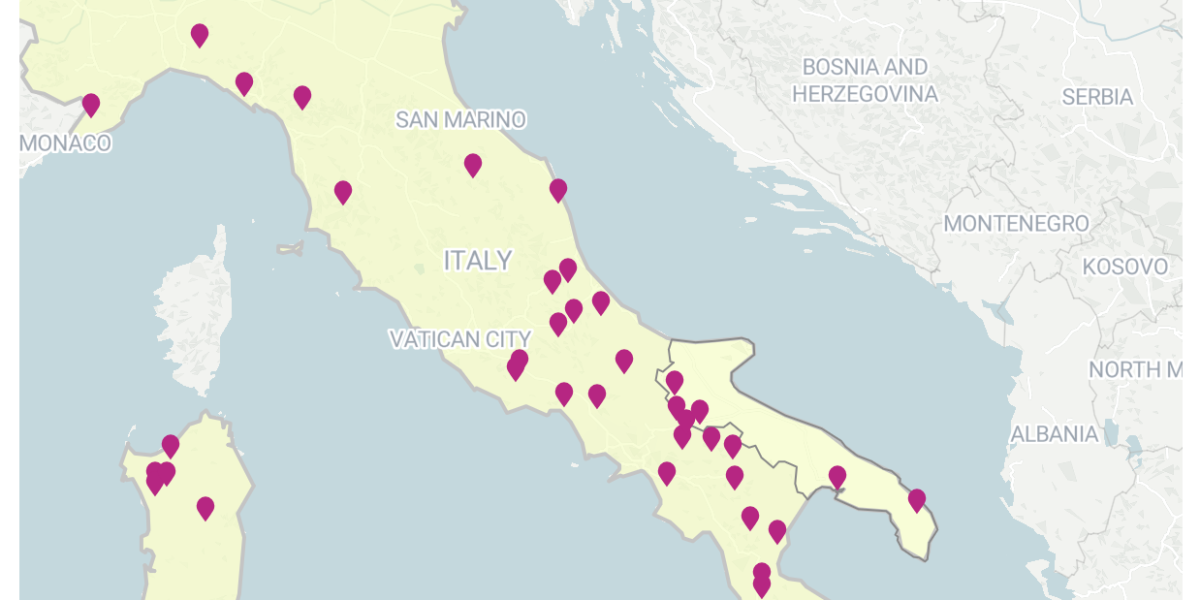
€1 house schemes tend to appear in small towns with shrinking populations, often away from major tourist centres but in very scenic settings. You’ll find some of the top places in Italy to buy a 1 euro house in 2026, from inland Sicilian hill towns to quiet villages in Piedmont and Sardinia.
If you’re a visual person, it’s worth checking a dedicated map of 1 euro houses in Italy in 2026 to understand where these schemes are clustered and how far they sit from major cities, airports and the coast. Sea‑lovers should also keep an eye on 1 euro houses in Italy near the sea, where you’ll often trade higher renovation costs and more competition for easier access to beaches.
------------------
Stay in the know about living in Italy as a foreigner—get our weekly newsletter for the latest travel, legal, and lifestyle news.