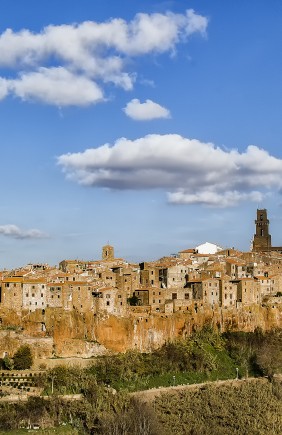
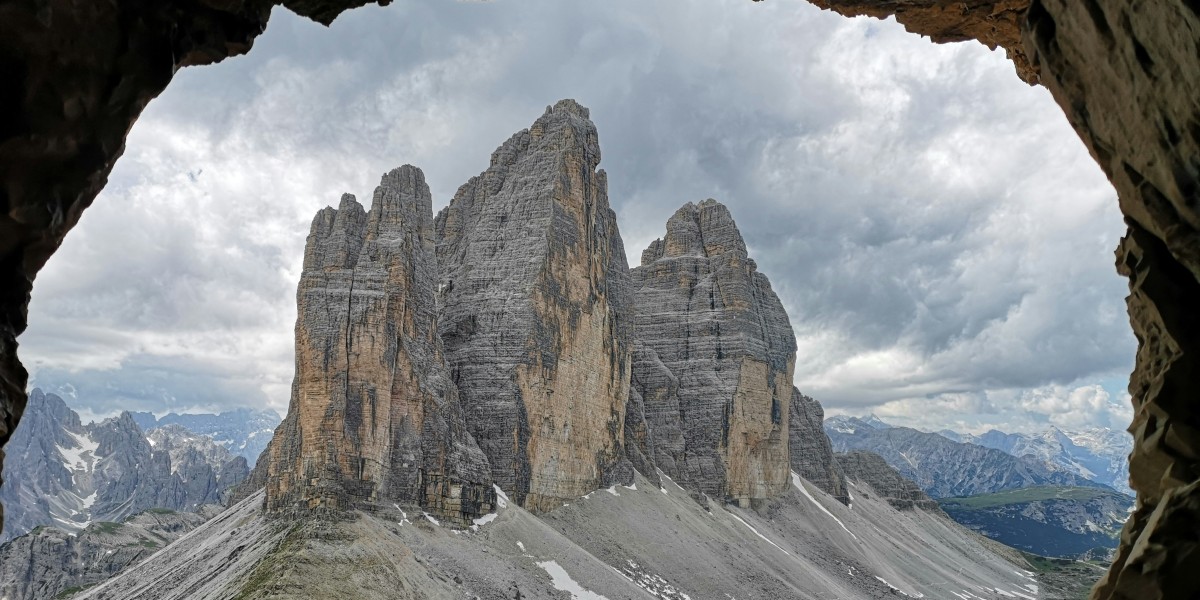
Living in Bolzano feels a bit like slipping into a pocket of Austria that somehow ended up in Italy. It’s closer in spirit to Innsbruck than Naples, with street signs in Italian and German and the Dolomites looming over the city. It’s small, safe and outdoorsy, and was recently rated as having the best quality of life in Italy.
What is it like living in Bolzano?
Day‑to‑day life in Bolzano is very compact and walkable. The city feels organised and calm, with reliable buses, loads of cyclists, and riverside paths where you constantly bump into dog‑walkers and serious runners.
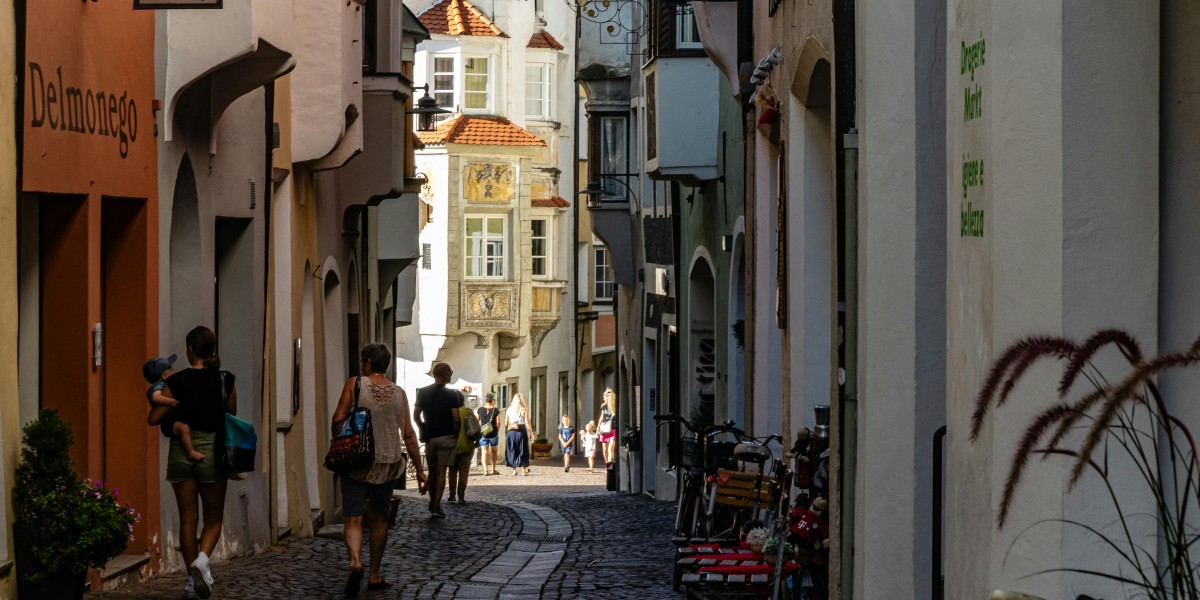
You notice the mix of cultures straight away: Tyrolean houses with wooden balconies, Italian espresso culture at the bar, and hearty Alpine dishes like canederli next to classic Northern Italian pasta. Winters are cold but pretty, especially around the Christmas market. Summers are warm and dry, and most people escape into the mountains at weekends.
The population is mostly German‑speaking, with a strong Italian‑speaking minority and a growing international crowd drawn by the university and the outdoor lifestyle. That gives the place a slightly more reserved, Central European vibe than many Italian cities, but it’s also why public services, schools and infrastructure run pretty smoothly.
Living in Bolzano: pros and cons
Life in Bolzano is pretty comfortable once you’re set up, but it has its own quirks and challenges, especially if you’re arriving from abroad and don’t already speak the languages.

Some of the pros of life in Bolzano include:
- High quality of life and safety
The city consistently scores well in Italian quality‑of‑life rankings, with low crime, clean public spaces and well‑kept parks. - Access to nature and outdoor activities
Ski resorts are an easy drive or bus ride away, and you’ve got cable cars up to Renon and Colle/Kohlern right from the edge of town. - Strong public services and infrastructure
Bolzano has good hospitals, solid schools and a decent public transport network.
On the downside, some of the cons of living in Bolzano are:
- High housing costs and limited supply
Property and rents are among the highest in Italy on a per‑square‑metre basis, and there isn’t endless space to build, so choice can be limited. - Language demands and slower integration
Many jobs need both Italian and German, and public‑sector roles often require formal bilingual certification.
Best areas to live in Bolzano
Bolzano is fairly small, so you’re never miles away from anything, but the feel changes a lot between the medieval centre, the leafy north‑west, the more modern south, and the hillside villages above the valley.
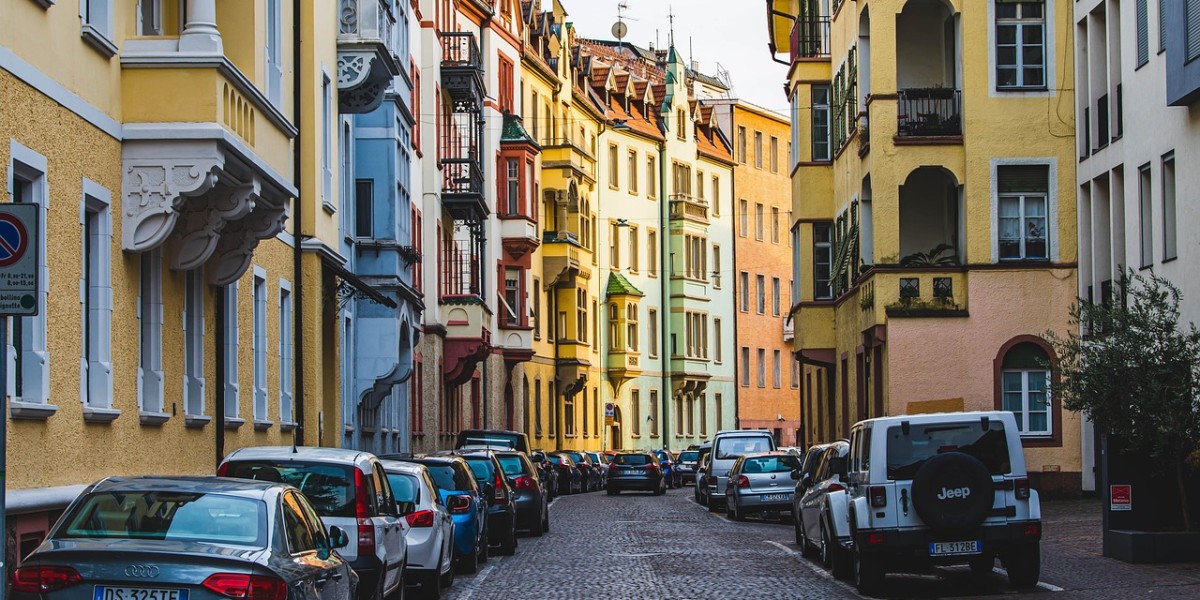
Bolzano city centre
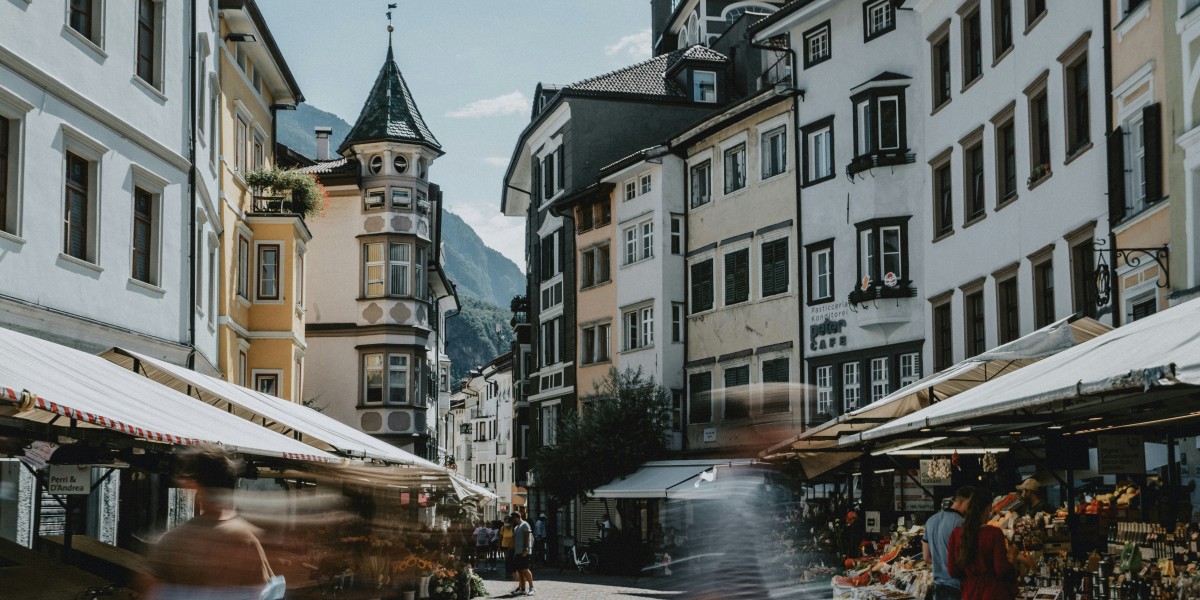
The historic centre, the arcades and Piazza delle Erbe are the obvious choice if you like to step out of your door straight into bars, markets and shops. You’ve got the station on one side, museums nearby, and more cafés than you’ll ever get through.
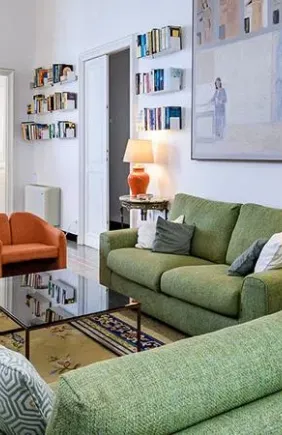
Flats here tend to be in older buildings, often beautifully atmospheric but sometimes a bit quirky in layout, and parking is limited. It suits singles, couples and students who want to walk everywhere and don’t mind paying a premium for the address.
Gries‑San Quirino and the north‑west
This used to be a spa resort and still has that slightly grand, leafy feel. There are tree‑lined streets, old villas, more modern apartment blocks and parks. It’s quieter than the centre but still close enough to walk or cycle in, and the Talvera parks and riverside paths are on your doorstep.
This area tends to attract families and professionals who want more space, a bit of greenery and a calmer atmosphere without giving up city life entirely.
South Bolzano and Oltrisarco‑Aslago
These areas feel more modern and practical, with apartment blocks, supermarkets, retail parks and some light industry. They don’t have the postcard charm of the centre or Gries, but prices are usually more accessible by Bolzano standards, and you get better access to the A22 motorway and train station.
The population here is more mixed, including many newer arrivals from other parts of Italy and abroad.
Surrounding villages and hills
Up on Renon, reached by cable car from the city, you’ve got big views over the valley, access to woods and meadows, and a stronger German‑speaking, rural feel.
San Genesio sits in the forests above Bolzano and is great if you’re into horse‑riding or hiking, while Appiano down the valley is surrounded by vineyards.
Is Bolzano expensive? Cost of living in Bolzano
Bolzano is expensive by Italian standards, and the main culprit is housing, though eating out and going for a drink aren’t exactly cheap either. The cost of living in Bolzano feels closer to a major northern European city than a typical Italian provincial town.
As for housing, property prices in Bolzano averaged around €4,685 per m² in November 2025, while rent prices in Bolzano were about €14.6 per m². This means a basic 70 m² flat would typically cost just over €1,000 per month in rent, and entry‑level purchase prices start at roughly €180,000 for smaller flats. This puts Bolzano among the priciest cities in Italy, especially considering its size.
Eating out isn’t exactly cheap either: Numbeo puts a meal at a cheap restaurant at around €19.00, while a three‑course meal for two in a mid‑range place comes in at about €77.50. A draft beer averages €5 and a regular cappuccino about €2.52.
Basic monthly utilities for an 85 m² flat sit at roughly €190. Public transport is manageable: a city pass is €39 per month, or you can go for the südtirolmobil Fix365 at €250 per year if you plan to use buses and regional trains regularly.
Putting it all together, a single person renting a modest flat will usually need in the region of €1,800–2,000 per month to live comfortably in this part of Italy, depending on how often they eat out and travel.
Living in Bolzano as a foreigner
Living in Bolzano as a foreigner can be rewarding, but it’s not as plug‑and‑play as moving to somewhere like Berlin or Barcelona. The city has long‑established German‑speaking families, Italian‑speaking communities who arrived in the 20th century, and now more international residents drawn by the university, tourism sector and quality of life.
Is Bolzano good for expats?
Bolzano is good for expats who value safety, order and easy access to mountains over a wild nightlife. It’s very family‑friendly, with playgrounds everywhere, safe streets, and decent childcare and schools. Healthcare is solid, the city feels well looked after, and weekends can easily be filled with skiing, hiking, and cycling.
Language, culture and integration
Language is probably the single biggest integration hurdle. Italian and German are both official, with German dominating in many neighbourhoods and Italian more common in national‑level administration and among Italian‑speaking migrants.
There are language courses at the Free University of Bozen‑Bolzano and local adult education centres. Most expats who settle long-term end up learning at least Italian, then add German over time to open up more job options and feel properly part of local life. Getting involved in Alpine clubs, ski or climbing groups, or volunteer organisations is one of the quickest ways into local circles.
Families, schools and international options
For families, Bolzano is quite a comfortable base once the school question is sorted. There are separate German and Italian state schools, as well as kindergartens in both languages. In the wider region, you also find Ladin schools in the valleys.
Social life, food and free time
Social life in Bolzano is less about big nights out and more about good food, wine and early starts in the mountains.
- The area around Piazza Walther and Corso Libertà/Freiheitsstraße is full of bars where people meet for aperitivo.
- There are plenty of cosy spots like Batzenhäusl or Hopfen & Co. serving Tyrolean dishes and beer.
- Culturally, you’ve got Museion for contemporary art, the South Tyrol Museum of Archaeology, and Runkelstein Castle with its medieval frescoes
- There's a full calendar of events too. The Bolzano Christmas market, autumn Törggelen evenings in farmhouses, wine festivals and music concerts.
Stay in the know about living in Italy as a foreigner—get our weekly newsletter for the latest travel, legal, and lifestyle news.
For a taste of the high life, sign up for the monthly luxury market round-up.