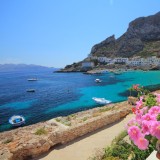
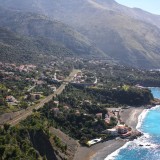
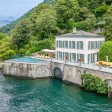
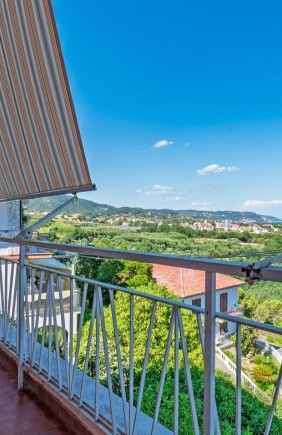
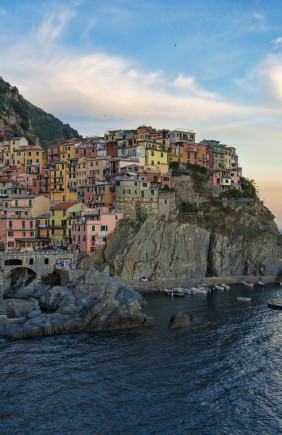
A train ticket, a window seat, and the moment the scenery shifts without warning: sea gives way to hills, then to a ridge of houses clinging to pale tuff rock.
In Campania, many historic villages are easily reached by train, with short local bus connections where needed, making them ideal for a slow weekend without worrying about parking.
Castellabate (Cilento)
Set high above its seaside hamlets, the historic centre of Castellabate looks out over the Cilento coastline. Stone steps lead up towards the castle and through a web of narrow lanes. Below you’ll find alternating stretches of pale sand and rocky shoreline.
How to get there: Castellabate is reached via the Cilento railway line, followed by short local connections to the village and its coastal areas.
Best thing to see: The panoramic terraces above the Tyrrhenian, where farmland and sea meet in a single wide view.
Ravello (Amalfi Coast)

Perched high above the water, Ravello is defined by gardens and terraces that look down over the Amalfi Coast. Villa Rufolo and Villa Cimbrone combine formal flowerbeds, pergolas and dramatic belvederes where the coastline appears as a vertical mosaic of cliffs and villages. In the warmer months, cloisters and historic courtyards host music and cultural events in open-air settings.
How to get there: Travel involves taking the train to Salerno or Sorrento, then continuing by bus along the winding mountain road.
Best thing to see: The gardens of Villa Cimbrone, with their dramatic clifftop viewpoints.
Cetara (Amalfi Coast)
Cetara remains closely tied to its fishing heritage. At dawn, boats return with anchovies and other blue fish, and for centuries the village has produced colatura di alici, a traditional anchovy-based condiment matured in wooden barrels.
Even in winter and the shoulder seasons, when the Amalfi Coast is quieter, local restaurants continue to serve seafood in a calmer atmosphere.
How to get there: Access is by train to the main coastal hubs, followed by bus or maritime connections that stop directly at the harbour.
Best thing to taste: Colatura di alici, the anchovy essence that defines Cetara’s culinary identity.
Atrani (Amalfi Coast)
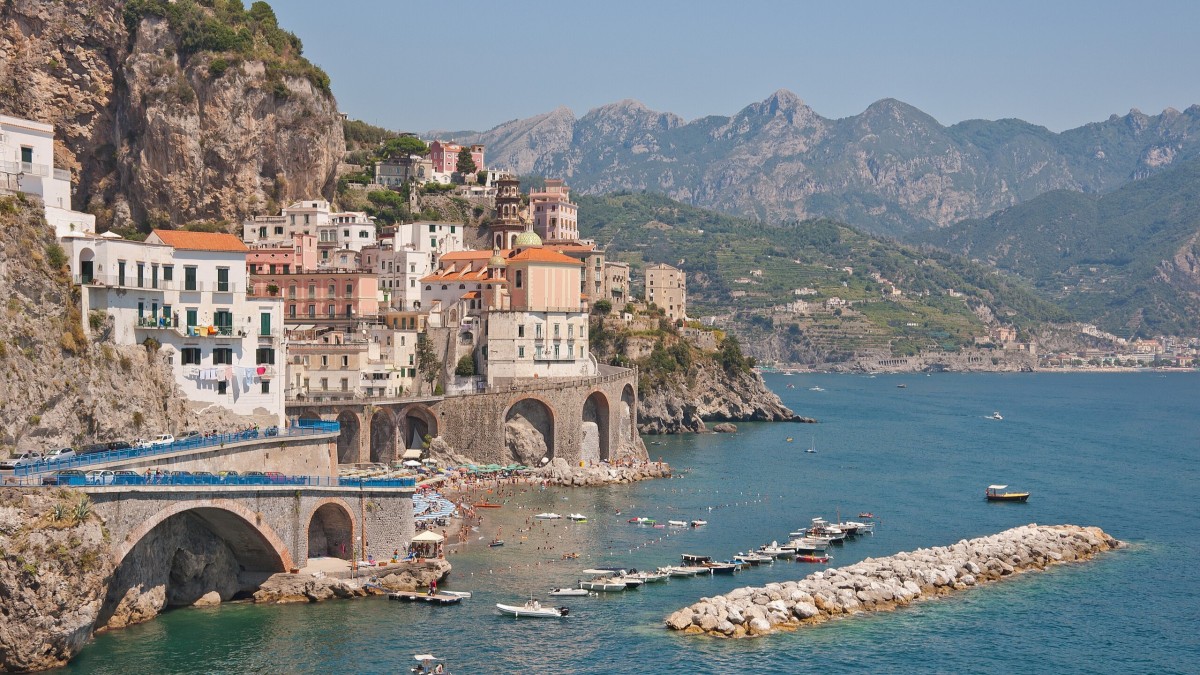
Supposedly the smallest town in Italy, Atrani compresses whitewashed houses, arches and staircases into a compact stretch of shoreline. Small maritime details appear everywhere, from fishing nets draped over balconies to a bell tower reflected in the water.
The beautiful town of Atrani can be visited in half a day and pairs easily with nearby stops along the coast.
How to get there: Reach the coast by train, then continue by bus between the villages.
Best thing to do: Spend time in the seaside piazza, where the village life unfolds just metres from the sand.
Monteverde (Irpinia)
In Irpinia, Monteverde sits on a hill overlooking the Ofanto valley, clustered around a medieval castle of Lombard origin. Paved streets lead to historic buildings with imposing doorways and inner courtyards. Within the castle is the MiGra, the Interactive Museum of Grain and of Women in Rural Civilisation, which presents tools, testimonies and objects linked to agricultural life.
How to get there: The village has received European recognition for accessibility, with routes and services designed to accommodate visitors with reduced mobility.
Best thing to visit: The MiGra museum inside the castle, dedicated to rural life and agricultural traditions.
Sant’Agata de’ Goti (Sannio)
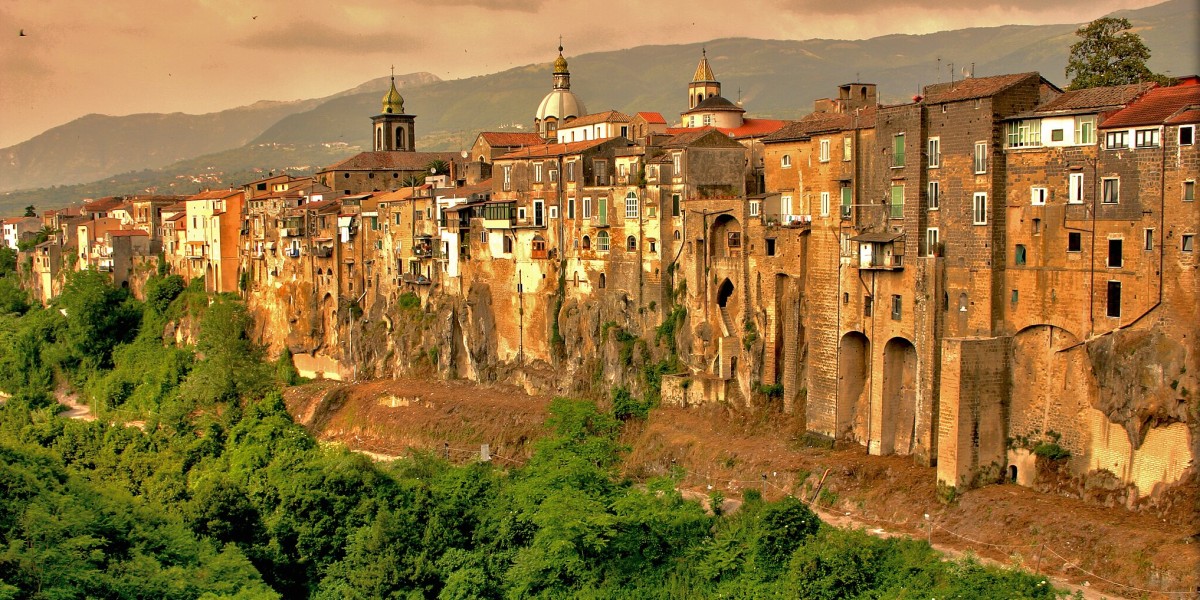
In the Benevento hinterland, Sant’Agata de’ Goti stands dramatically on a tuff spur between two streams. Inside the historic centre, narrow lanes open onto small squares and ancient churches, including the 17th-century Annunziata with its fresco cycles and the Cathedral of the Assunta with a Romanesque crypt.
Local wines from Sannio and seasonal cuisine form part of the experience, particularly in autumn when the surrounding hills take on warm colours.
How to get there: The village is accessible by regional train lines to nearby towns, followed by short bus connections.
Best thing to see: The historic centre perched on its tuff ridge, suspended between two waterways.
Planning a car-free trip in Campania
To build an itinerary, start with the main rail hubs of Naples and Salerno for connections along the coast and towards Cilento. For inland destinations, regional train lines reach provincial towns, where local buses complete the journey.
Best times to go:
- Spring: Mild temperatures, clear skies, flowering gardens in Ravello and green landscapes in Cilento.
- Summer: Suited to coastal trips and island visits, with early mornings and late afternoons more comfortable on the Amalfi Coast.
- Autumn: Inland areas at their best, with cooler air and seasonal scents, while the coast remains pleasant.
Travelling through Campania without a car isn’t just feasible; in these villages, it often feels like the more natural way to arrive.
Original article seen in The Wom Travel
Stay inspired for your travels in Italy —get our weekly newsletter for the latest travel, legal, and lifestyle news.