Disclaimer: The information contained in this article is provided for general information purposes only and may not reflect the most current legal developments. It does not constitute legal, tax or financial advice from us and should not be relied upon when making purchase, tax, residency, succession or estate-planning decisions.
Rules and tax rates may change and vary by individual circumstances, nationality and location. Always obtain independent professional advice from a qualified Italian lawyer and tax adviser before acting.
If you’ve been eyeing a restored masseria in Puglia, a villa above Lake Como, or a grand apartment in Rome, the short answer is yes: foreign buyers can purchase luxury property in Italy.
Buying property in Italy as a foreigner is entirely legal in most cases, including high-end real estate. There are a few rules to understand, particularly around reciprocity and tax, but there’s no blanket ban on non-Italians owning homes here.
- Can foreigners legally buy luxury property in Italy?
- Buying property in Italy as a foreigner: legal and administrative requirements
- The real cost of buying luxury property in Italy
- Where are the best places to buy luxury property in Italy?
- Buying property in Italy for 1 euro vs luxury real estate
- Pitfalls of buying property in Italy as a foreigner
- Can you live in Italy after buying luxury property?
Can foreigners legally buy luxury property in Italy?
It's no surprise Italy is consolidating its position as one of the world’s most compelling luxury destinations. Foreign buyers can purchase property in Italy, but the rules depend on nationality and residency status.
- EU, EEA and Swiss citizens can generally buy under the same conditions as Italian nationals.
- Non-EU buyers are subject to the principle of reciprocity.
The reciprocity rule explained
The key principle is called reciprocità (the reciprocity rule). This means purchasing is permitted only if the buyer's home country grants equivalent property rights to Italian nationals.
The absence of reciprocity renders the purchase contract void. Furthermore, any limitations applicable to Italians in the foreign country (e.g. on property size) will also apply to the foreign buyer in Italy. In practice:
- EU and EEA citizens face no restrictions.
- Non-EU/EEA citizens with a regular Italian residence permit are also exempt from this rule and treated like Italian citizens for property purchases.
- Citizens of other countries (including the US and UK, where reciprocity is generally established) are subject to this rule and their eligibility must be verified by a legal professional before signing any contract.
How difficult is it for an American to buy property in Italy?
Legally, not difficult. There are no special bans on Americans buying a home in Italy. Nor are there minimum investment thresholds or a requirement to become a resident before purchase.
The difficulty tends to be administrative rather than legal, particularly if you are unfamiliar with Italian bureaucracy.
Buying property in Italy as a dual citizen
If you hold dual citizenship with an EU country, the process is even simpler. You are treated as an EU buyer, which can make banking and tax registration smoother. It may also help later if you decide to relocate permanently.
Buying property in Italy as a foreigner: legal and administrative requirements
Even though buying luxury property in Italy is open to foreigners, there are several mandatory steps.

Codice Fiscale (Italian tax code)
You must obtain a Codice Fiscale, which is an Italian tax identification number. It’s required for:
- Signing contracts
- Opening utilities
- Paying property taxes
- Completing the final deed
Italian bank account and proof of funds
For luxury property transactions, especially high-value purchases, sellers and notaries will expect:
- Clear proof of funds
- Compliance with anti-money laundering regulations
- Transparent origin of capital
Opening an Italian bank account is not legally mandatory, but it often simplifies payments and tax handling.
The role of the notary
In Italy, the notaio is a public official, not simply a lawyer. The notary:
- Verifies legal ownership
- Checks for debts or liens
- Ensures taxes are correctly calculated
- Registers the transaction with the Land Registry (Catasto)
The final deed (rogito) is signed before the notary, who acts as an impartial state authority.
Can you buy luxury real estate in Italy without residency?
Yes, it is possible to buy property in Italy without being a resident. However, it is crucial to understand that property ownership does not, by itself, grant residency rights.
For non-EU citizens, the ability to buy is generally subject to the condition of reciprocity, unless they hold a valid Italian residence permit. A valid Italian residence permit ('permesso di soggiorno') is decisive: it makes the purchase as straightforward as for an EU citizen.
Important distinctions:
- Non-EU citizens with a regular residence permit are exempt from the reciprocity rule, making the purchase process as straightforward as for an EU citizen.
- For non-resident, non-EU buyers, property ownership does not grant the right to live in Italy long-term.
- These buyers are still subject to Schengen visa limits (typically 90 days in any 180-day period).
- Long-stay visas must be applied for separately.
You may have seen headlines about Italy offering €30,000 to move there. These are regional incentive schemes aimed at revitalising small towns. They are not linked to luxury real estate purchases and come with strict conditions.
Buying property in Italy through a foreign company
Some high-net-worth buyers purchase luxury property through a foreign company. This can be relevant for investment properties, estate planning and asset protection structures.
However, corporate ownership can trigger different tax treatment and ongoing compliance obligations. Specialist cross-border tax advice is essential here, particularly for US and UK buyers.
The real cost of buying luxury property in Italy
The headline purchase price is only part of the story. The real cost of buying a house in Italy as a foreigner includes taxes and fees. These typically range between 7% and 15% of the purchase price, depending on the property type.
Purchase taxes
The taxes required when buying luxury property in Italy depend on:
- Whether the property is your primary residence
- Whether it’s a second home
- Whether you buy from a private seller or developer
For second homes, buyers usually pay:
- Registration tax (imposta di registro)
- Mortgage and cadastral taxes
- VAT (IVA) if buying from a developer
Luxury properties classified as immobili di lusso do not qualify for certain primary residence tax reductions.
Professional fees
Expect to budget for:
- Notary fees
- Legal fees (if you appoint an independent lawyer)
- Estate agency commission, often paid by the buyer in Italy
Agency fees commonly range between 3% and 5% plus VAT.
Ongoing costs
After purchase, owners should consider:
- IMU (municipal property tax) on second homes
- Condominium fees for high-end apartments
- Maintenance costs, particularly for historic villas or countryside estates
- Insurance and utilities
Older properties, especially protected buildings, can carry strict restoration rules and higher upkeep costs.
Currency and transfer considerations
For non-euro buyers:
- Exchange rate fluctuations can significantly affect total cost
- International transfer fees can add up on large sums
Currency brokers are commonly used for luxury transactions to manage risk.
Where are the best places to buy luxury property in Italy?
The best location to buy luxury property in Italy depends on whether the focus is lifestyle, rental potential or long-term investment.
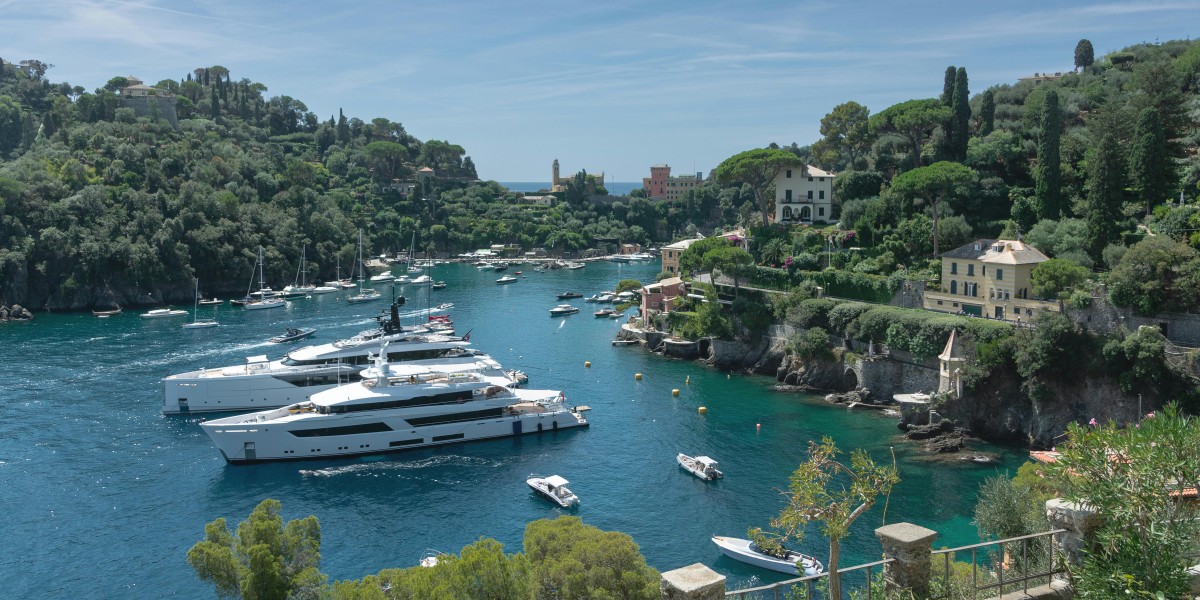
Popular high-end markets include:
- Tuscany – countryside estates and restored farmhouses
- Puglia – masserie and coastal villas with growing interest
- Lake Como – waterfront villas with strong international demand
- Rome – historic centre palazzi and elegant residential areas
- Amalfi Coast – limited supply and high prices
- Milan – prime city apartments in districts such as Brera
Urban markets like Milan and Rome generally offer stronger resale liquidity. Rural luxury markets can be slower to resell, even if they photograph beautifully.
How to find houses for sale in Italy
In the luxury segment, not all properties are publicly advertised.
Common routes include:
- Licensed estate agents
- Boutique luxury agencies
- Private networks and off-market sales
Independent legal checks remain essential before committing to any proposal.
Buying property in Italy for 1 euro vs luxury real estate

The €1 house schemes tend to generate a lot of attention abroad. These programmes apply mainly to depopulated rural towns and require renovation within strict deadlines. They often demand financial guarantees.
They are entirely different from buying luxury real estate in Italy. A restored historic villa in Umbria or a seafront home in Liguria operates in a completely different market segment, with different risks and expectations.
Pitfalls of buying property in Italy as a foreigner
While buying property in Italy is generally safe with proper due diligence, foreign buyers should be aware of several specific pitfalls.
The most common issues include:
- Violation of the Reciprocity Rule: For non-EU, non-resident buyers, this is the most severe risk. Failure to meet the reciprocity condition renders the purchase contract legally null and void, leading to a total loss of the acquired rights.
- Building and Planning Non-Compliance ('Abuso Edilizio'): Discovering after the purchase that the property has illegal structures or alterations not recorded in official plans. This can block future sales and require costly regularisation or demolition.
- Restrictions on Historic or Listed Buildings: Underestimating the strict constraints, approval times, and costs associated with renovating properties subject to cultural heritage protection ('beni culturali').
- Misunderstanding Tax and Inheritance Law: Failing to account for ongoing property tax (IMU), capital gains tax upon resale, and Italy's forced heirship rules, which can affect estate planning unless the succession is governed by the law of another country validly chosen under EU Regulation 650/2012.
Italian inheritance law can also affect succession planning. Forced heirship rules (legittima) protect close family members. However, under EU Regulation 650/2012, a foreign national may elect, in their will, the law of their country of nationality to govern the entire succession, which can disapply Italian forced heirship. Specialist cross-border estate planning advice is therefore essential.
Can you live in Italy after buying luxury property?
Owning a home does not automatically allow you to relocate. Non-EU nationals must still apply for:
- Elective residency visas
- Investor visas (which are not based on property purchase alone)
- Other long-stay permits
As for cost of living, living in Italy on $3,000 a month is feasible in many cities if you already own your home outright. In prime areas such as central Milan or the Amalfi Coast, ongoing costs can be significantly higher.
Healthcare access depends on residency status. Property ownership alone does not grant access to the public healthcare system.
If you’re seriously considering buying a home in Italy, the opportunity is very real. Just approach it with solid legal advice, proper tax planning, and realistic expectations about bureaucracy.
Stay in the know about living in Italy as a foreigner—get our weekly newsletter for the latest travel, legal, and lifestyle news.
For a taste of the high life, sign up for the monthly luxury market round-up.