For years, it has been taken for granted that a prestigious address guarantees a smooth property sale. The data now suggests that this is no longer the case. In many situations, the opposite is true.
Homepanda Horizon, an observatory launched by the estate agency operator Homepanda, analysed 243,266 property listings over twelve months of continuous monitoring across Milan, Rome, Naples and Turin.
The result is a snapshot of the market that challenges some of the sector’s most deeply rooted assumptions.
The Homepanda Sellability Index
This paradox emerged thanks to two proprietary tools:
- The Homepanda Sellability Index (IVH), which measures on a scale of 0 to 10 the real probability of a property being sold
- The Price Reduction Thermometer, which tracks how often and by how much a listing’s price is adjusted during the time it remains online.
Famous neighbourhoods that don’t sell
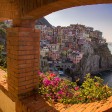
Navigli in Milan
In Milan, the IVH ranks Navigli third from last among the city’s thirty-two areas, with a score of 1.8 out of 10.
Also near the bottom are Quadronno-Palestro-Guastalla (2.0), Solari-Washington (2.2), Arco della Pace-Sempione (3.4), Garibaldi-Porta Nuova (3.7) and the Centro Storico (3.8). These are six names regularly mentioned when talking about the “Milan to experience”, yet their actual sellability is far more limited than their public image suggests.
The Milan district with the highest score is Città Studi-Susa, with an IVH of 7.0: a university area rooted in everyday life, rarely associated with traditional ideas of Milanese prestige.
Centro Storico in Rome
In Rome, the paradox is even more pronounced. The Centro Storico records a rate of price changes that is 183% higher than in Appio Latino-Colli Albani, the city’s most stable area. On the Sellability Index, it sits near the bottom of the capital’s rankings, with a score of 3.05.
The highest IVH score in Rome belongs to Mezzocammino-Spinaceto-Tor de’ Cenci, with 7.5. It's a well-served suburban district that has never featured on the cover of any official promotional campaign.
Posillipo in Naples
The same pattern appears in the other two cities. In Naples, Posillipo — the hill overlooking the bay and a symbol of the city’s international image — is the area where sellers are forced to reduce prices 140% more often than in San Carlo all’Arena-Sanità, the most stable neighbourhood in the city.
San Salvario in Turin
In Turin, San Salvario, the post-Olympic nightlife district long dubbed the “Trastevere of the north”, records an average online listing time of 169 days, one of the highest figures in the city.
Infrastructure beats prestige
A single underlying theme runs through all four cities: real sellability follows urban transformation, not tradition.
- In Milan, the M4 metro line is reshaping the map of property values. Ponte Lambro-Santa Giulia, served by the M4, is the fastest-moving area in Italy, with an average online listing time of just 19 days.
- In Turin, the redevelopment of Lingotto — OGR, the M1 metro, and post-Olympic residential projects — drives the only genuinely positive exception in an otherwise slow market, with an average of 100 days online.
- In Rome, well-connected suburban districts outperform historic areas.
In each of thecities, the neighbourhood with the highest sellability index is never one traditionally seen as prestigious, but rather an area that has undergone recent transformation.
The four personalities of the market
The report describes the four metropolitan markets as distinct personalities.
Milan is the rational — and fortunate — market: 84% of listings undergo no price reduction at all, a national record. This rationality does not stem from individual sellers, but from the combination of experienced agency networks and a structurally more liquid market than any other Italian provincial capital. Average time online stands at 27 days.
Rome is a polarised market, with a 91% gap between the fastest neighbourhoods (80 days) and the slowest (152 days), and dynamics that vary dramatically from one area to another.
Naples is described as an emotional market, marked by wide extremes: 65 days in Materdei-Museo at the lower end, and 138 days in Colli Aminei-Capodimonte-Ponti Rossi at the upper.
Turin is the patient — or static, depending on your perspective — market, with an average listing time of 131 days. Santa Rita-Mirafiori Nord reaches 170 days, the highest figure recorded among all areas across the four cities.
The penthouse, the property dream… that doesn’t sell
If prestigious neighbourhoods struggle, the property type most closely associated with luxury performs even worse. The penthouse — panoramic views, terrace, exclusivity — is the showpiece of high-end marketing campaigns. According to Homepanda Horizon’s data, it is also the type of property in Italy that requires more time and greater price flexibility to achieve a sale.
- In Milan, the penthouse has an IVH of 4.08 compared with 4.57 for a standard flat: a modest but consistent gap.
- In Rome, the difference is the largest among the four cities, with an IVH of 3.26 versus 4.46, more than a full point apart.
- Naples provides the most striking figures. Only 51% of Neapolitan penthouses undergo no price changes while listed online, compared with 81% in Milan.
The most telling statistic concerns extreme cases: 12% of penthouses in Naples require five or more price reductions before finding a buyer. In Milan, this happens in 1.9% of cases, six times less frequently.
Private seller versus agency: the stereotype holds up (almost everywhere)
For decades, a common belief in the Italian property debate has been that private sellers — those who list without professional support — are more likely to misjudge the initial asking price than those assisted by an agency. Homepanda Horizon’s data confirms that this stereotype is largely accurate.
In Milan, private sellers make five or more price reductions 58% more often than those who rely on an agency. In Rome, the same pattern appears, with private sellers exceeding agencies by 38% in cases of multiple price changes. In Naples, the gap narrows but remains in favour of agencies.
The anomaly is Turin, where 78.2% of private sellers never change the asking price, compared with 74.1% of agencies. Viewed in isolation, this might seem to reflect particularly rational do-it-yourself sellers in Turin. The broader context tells a different story. Turin is the slowest property market in Italy, with an average listing time of 131 days, almost five times that of Milan.
In a structurally slow market, failing to adjust the price is unlikely to signal rational pricing. It is more probably one of the factors that further prolongs the sale. The Turin data may be the most revealing element of the entire report: it shows that the same behaviour — holding firm on price — can indicate accurate valuation in one context, as in Milan, or market difficulty in another, as in Turin. Only by cross-referencing with time-on-market data can the two situations be properly distinguished.
Stay in the know about living in Italy as a foreigner—get our weekly newsletter for the latest travel, legal, and lifestyle news.