In a small village in Tuscany’s Valdarno Aretino, the sound of running water is part of daily life. The Ciuffenna stream divides the historic centre, passing beneath stone houses and a high arched bridge before dropping through a narrow gorge.
At the centre of it all sits an old water mill on a rocky outcrop in the stream. Dating from around the year 1000, it is described as Tuscany’s oldest working mill and is still used to grind flour.
The water mill at the heart of Loro Ciuffenna
The mill is built directly over the stream, where the current powers its vertical-shaft mechanism. Inside, the stone millstones remain in use, mainly milling chestnut flour linked to the area’s rural food traditions.
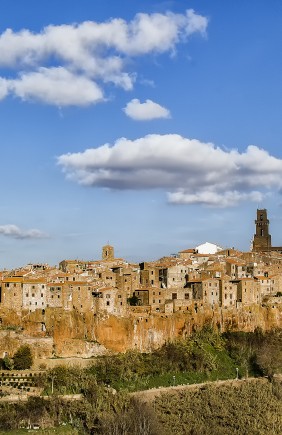
Its position in the middle of the waterway is part of what gives Loro Ciuffenna its unusual appearance. The historic centre developed around the stream, with homes built close together along its banks and a stone bridge linking the two sides above the gorge.
“Loro” is linked to the Latin word laurus, meaning laurel. “Ciuffenna” comes from the name of the stream, recorded since the Middle Ages in forms that point to an ancient Roman name of Etruscan origin.
A medieval village suspended over a gorge
Loro Ciuffenna lies between Florence and Arezzo and is included in I Borghi più belli d’Italia, a list of Italian villages recognised for their historic and cultural character. The village’s historic layout is still clear in its stone buildings, narrow lanes and the elevated position of the church above the centre.
- The Church of Santa Maria Assunta occupies the site where the village fortress once stood.
- A short walk from the historic walls, the Santuario della Madonna dell’Umiltà was built between the late 16th and early 17th centuries.
Modern art inside the town hall
The Museo Venturino Venturi, inside the Palazzo Comunale, is dedicated to sculptor and painter Venturino Venturi, who was born in Loro Ciuffenna in 1918. The museum holds bronzes, wooden works, ceramics and drawings, alongside a series of stone portraits.
Romanesque carvings and the wild Valdarno
A few kilometres outside the village, stands the Pieve di San Pietro a Gropina. The church is recognised as a national monument and is described as one of Tuscany’s most significant examples of Romanesque architecture.
The surrounding Valdarno Aretino also includes the Area Naturale Protetta delle Balze, between the Resco and Ciuffenna streams. Its vertical rock formations, eroded walls and pinnacles are made of sand and clay.
Above Loro Ciuffenna, the Pratomagno massif has woodland, open ridges and small settlements.
Getting to Loro Ciuffenna and planning a stay
Loro Ciuffenna can be reached by car from the A1 motorway, using exits near the Valdarno towns and continuing on provincial roads towards Pratomagno.
For rail travellers, the stations mentioned are Montevarchi and San Giovanni Valdarno, with onward connections by local bus or taxi. The nearest airports listed are Florence, Pisa and Perugia.
- Property for sale in Loro Ciuffenna
- Long-term rentals in Loro Ciuffenna
- Holiday rentals in Loro Ciuffenna
Stay inspired for your travels in Italy —get our weekly newsletter for the latest travel, legal, and lifestyle news.