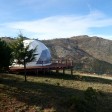
Italy’s large stock of unsold auction land could find a new purpose through glamping, according to a RINA Prime Research Centre study. The analysis says that 37% of land lots sold at auction have characteristics suitable for a glamping development, potentially linking underused plots with demand for outdoor stays that include hotel-style comforts.
The idea is relevant in a market where land can be difficult to sell or repurpose. In 2025, Italy had more than 9,900 land lots at auction, worth around €1.65 billion in total. Only around 32% were awarded, while the average sale period reached 7.7 years, according to RINA Prime.
A potential new use for auctioned land
The study identifies two categories of land that may work for glamping:
- existing assets that can be converted quickly
- natural or agricultural plots suitable for new developments
The difference in entry costs is substantial. Land already compatible with glamping had average prices of around €229,000, while plots with potential for conversion averaged approximately €21,000. RINA Prime says the latter could support multi-lot strategies that are built up over time.
Glamping as an investment sector
Glamping combines outdoor accommodation with comforts associated with luxury stays. Grand View Research estimated the global market at around US$3.79 billion in 2025 and forecast that it could exceed US$7.8 billion by 2033, with annual growth of around 9.5%.
Europe represents around one third of the global market. Italy is seeing growing demand but is not yet described as fully mature. This is unlike France, the UK and the United States, where multi-site operators and established management models are already in place.
RINA Prime puts investment per unit at €15,000–€40,000 and says projects can grow gradually by adding accommodation units. Its reported performance indicators include average occupancy of around 60%, average daily rates of €150–€200, and investment payback periods of five to six years.
Multi-site development and local impact
RINA Prime identifies integrated platforms, rather than individual isolated sites, as the more effective model for the sector. The approach involves managing three to five locations or more, standardising operations, centralising management and developing a recognisable brand.
Glamping can support rural-area revitalisation, local jobs and supply chains connected to services, tourism and visitor experiences. It also describes the sector as a lower-impact form of development that can use local resources without compromising natural balances.
Italy’s market remains fragmented and is affected by regulatory and permitting complexity. RINA Prime says further development will depend on simpler permissions processes, institutional capital, structured operators and models that can be repeated at scale.
- Explore land plots for sale in Italy
Stay in the know about living in Italy as a foreigner—get our weekly newsletter for the latest travel, legal, and lifestyle news.