Keeping a property vacant involves ongoing outgoings that weigh on every owner’s finances. The fixed and variable costs of an empty home range between €400 and €1,500 per quarter.
IMU has a significant impact because, unlike properties used as a main residence, it must be paid.
TARI is also almost always payable in full, except in rare cases involving homes without furnishings or utility connections.
Electricity, gas and water bills continue to include fixed network charges even when consumption is zero.
In buildings with central systems, owners must pay the non-voluntary share and the building’s routine costs. Property maintenance is another indirect expense that builds up over time.
How much it costs to keep an empty flat
The cost of an empty home averages between €2,000 and €6,000 a year in fixed expenses, taxes and condominium charges alone. On top of that come indirect losses linked to depreciation and capital tied up in the property.
Keeping a property without tenants is never cost-free. Expenses are split between direct day-to-day costs and implicit asset-related costs.
IMU (Imposta Municipale Propria)
This is the main tax payable on properties other than a main residence. It is calculated using the cadastral value and the rates set by the relevant comune (municipality).
The tax must be paid in full even if the home remains unused for months or throughout the year.
TARI and utility contracts
The waste tax and household utilities, including electricity, gas and water, generate fixed management costs and network charges, regardless of whether meters record zero consumption.
Condominium charges and central heating
Condominium charges must be paid regularly. In buildings with central heating and thermostatic valves, in line with UNI 10200, turning radiators off removes only the voluntary share linked to actual consumption. The non-voluntary share remains compulsory, covering boiler maintenance, management of the service and heat losses across the building’s system.
This share can account for between 20% and 50% of the total amount. In a condominium where the average seasonal heating bill is €1,500 per flat, the fixed share for an unoccupied unit alone can cost between €300 and more than €1,000 a year.
The cold-neighbour effect
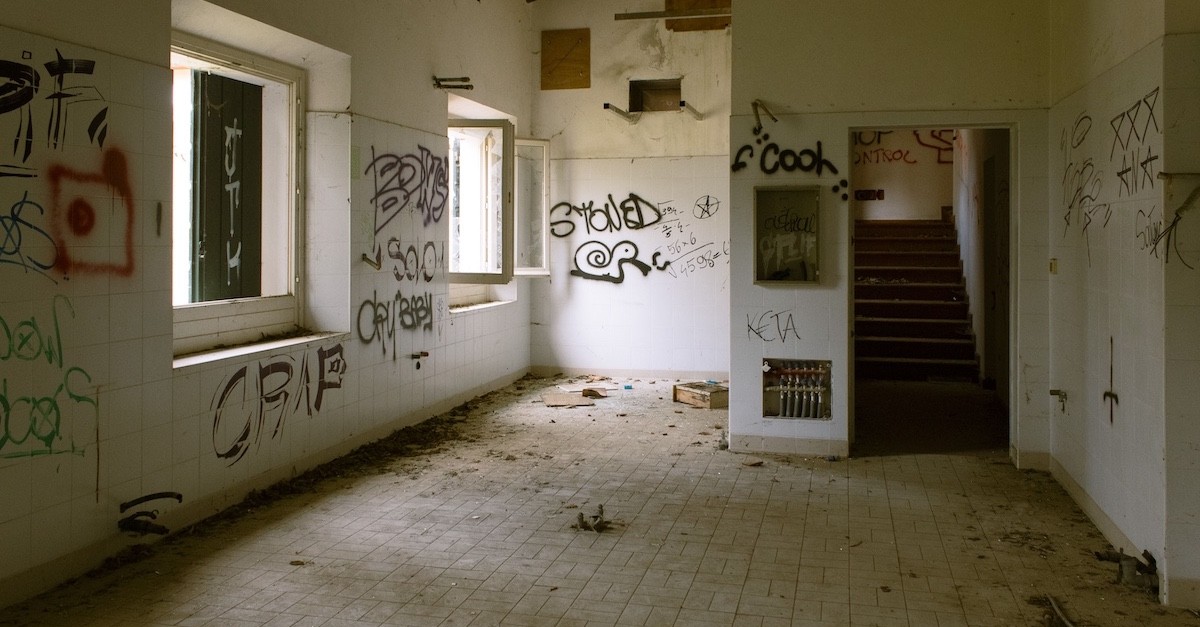
If the heating system is completely turned off for months during winter, the building’s walls cool down considerably. As a result, shared walls tend to absorb heat from neighbouring flats.
For safety reasons and to protect the building, condominium rules often require thermostatic valves to be set to the anti-freeze function — the *** symbol or setting 1, corresponding to around 5–7°C. This helps prevent pipes from freezing or bursting, but it also results in a small amount of additional voluntary consumption.
Other types of cost
Other costs to bear in mind for an empty home include:
Deterioration of the property: lack of ventilation, water not running through pipes and no heating can accelerate the ageing of a home.
Maintenance work costing around 1% of the property’s value each year is estimated to be needed to prevent deterioration.
- The cost of tied-up capital: money tied up in the property’s value produces no financial return, depriving the owner of potential income that could be earned by placing those funds in alternative investments.
Do you have to pay TARI if the home is empty?
As a general rule, TARI remains payable even when a property is unoccupied. National rules and case law from Italy’s Court of Cassation, including judgment no. 8383 of 5 April 2013, establish that the basis for applying the tax is not the actual production of waste, but the potential suitability of the premises to produce it.
A flat that is simply not being used is presumed to be habitable.
To qualify for a full exemption, the owner must prove to the comune that the property is completely and objectively unusable. Exemption is granted only when two essential conditions are met at the same time:
- Complete absence of furniture: the premises must contain no furniture, beds, tables or appliances at all. The presence of even one item of furniture removes the presumption that the property is unusable.
- Permanent disconnection of utilities: electricity, gas and water contracts must have been formally terminated, with meters sealed or removed. Zero consumption or a temporary suspension of supplies is not enough.
The property must be completely without any residential elements. Exemption is also available by right for properties declared unfit for use, derelict or undergoing major building renovation, provided this is supported by suitable technical documentation and planning authorisations.
Exemption is not automatic
The owner must submit a formal TARI cessation declaration to the comune’s tax office, attaching utility closure reports or technical assessments. The application is not retrospective and takes effect on the date it is submitted.
Where a property remains furnished or has active utilities, some comuni provide percentage reductions in their regulations for homes kept available for limited periods or for residents registered abroad with AIRE, Italy’s registry of citizens living overseas.
What are the disadvantages of rental properties?
Letting out a flat can reduce fixed costs, but it also brings operational risks and unexpected expenses. Understanding the meaning of a vacant rental property in financial terms, along with the possible issues involved, is essential when planning its management.
The term refers to a property bought or designated for rental that temporarily has no tenants, continuing to generate fixed expenses without producing income. The main issues linked to a vacant rental property fall into three risk areas:
Tenant default and legal proceedings: the main risk is tenant arrears. Legal eviction proceedings for non-payment take an average of six to 12 months.
During that time, the owner loses rental income, faces legal costs and must continue paying taxes and condominium charges, despite the property generating no income.
Illiquidity and rental void periods: property is an illiquid asset and cannot be turned into cash quickly.
During the gap between one tenancy agreement and the next, known as a rental void period, the property produces no income but continues to incur management costs.
Major maintenance and taxes: extraordinary repair work on systems or shared parts of the building remains the owner’s responsibility.
There is also the tax burden of IMU on second homes and tax on rental income, through IRPEF income tax or cedolare secca, Italy’s flat-rate rental tax, at 10% or 21%.
Risk factor | Economic impact | Operational safeguard |
|---|---|---|
Tenant default | High, due to unpaid rent and legal costs | Taking out bank guarantees or rent-protection insurance policies |
Major maintenance | Unpredictable, reducing the net margin | Setting aside 10–15% of collected rent each year in a reserve fund |
Rental void periods | Medium, as fixed costs remain without rental income | Using agreed-rent contracts, canone concordato, to access IMU reductions and the 10% cedolare secca rate |
Rules to bear in mind for vacant homes
Leaving aside tax matters, Italy’s Civil Code and Criminal Code set out specific duties for owners to ensure that a property is looked after and safe. In relation to an empty home and avoiding legal liability, the following provisions should be considered:
Custody and civil liability (Article 2051 of the Civil Code): the owner retains legal custody of the property and is directly liable for damage caused to third parties.
Water leaks or structural elements becoming detached from the façade may result in an obligation to compensate for the damage caused.
Failure to carry out work on dangerous buildings (Article 677 of the Criminal Code): leaving a property in a state of neglect that poses a danger to public safety is a criminal offence.
Failing to carry out necessary maintenance on unstable or protruding elements can lead to administrative penalties or, where there is a real danger, imprisonment for up to six months.
Safety of installations: if the gas supply remains active, the obligations relating to periodic boiler checks and flue-gas inspections continue to apply.
Even where utilities have been disconnected, the owner must still ensure there are no hidden risks, such as short circuits or leaks in pipes.
The appearance of the building: condominium rules prohibit an individual unit being kept in a state of neglect visible from outside, such as damaged window frames, accumulations of dirt or deteriorating balconies.
The condominium may take action to restore the building’s appearance.
Protection against unlawful occupation: an unoccupied home without supervision is exposed to the risk of unlawful occupation.
Periodic inspections are advisable to check doors and windows, while any breaches should be reported promptly to the relevant authorities.
- Planning designation: the property retains its residential use and cannot be used to store dangerous substances or for purposes that conflict with local planning rules and health and safety regulations.
Stay in the know about living in Italy as a foreigner—get our weekly newsletter for the latest travel, legal, and lifestyle news.