A recent Guardian feature picked out six of the best natural and free beaches in Italy, highlighting stretches of coastline that remain open to all despite the dominance of private beach clubs.
The selection spans the Adriatic, Tyrrhenian and Mediterranean, focusing on protected parks, volcanic islands and quieter corners that still feel relatively untouched.
Gargano Peninsula, Puglia

Part of Gargano National Park, this northern Puglian promontory is marked by white cliffs, olive groves and traditional fishing platforms. The Guardian highlights Vignanotica, a pale pebble crescent beneath a sheer limestone cliff, and Portogreco, a small cove edged by pines and sea caves.
Facilities can be limited, particularly at Portogreco, and some beaches are reached via short but uneven paths. Late afternoon shade from the cliffs at Vignanotica is a practical bonus during high summer.
Who it suits: confident swimmers and snorkellers who prefer rocky coves over long serviced beaches.
Riviera del Conero, Marche
Set within Conero Regional Park, this Adriatic stretch pairs limestone cliffs and pine forests with white-pebble bays and green-blue water. Sirolo and Portonovo Bay both combine wide areas of free beach with discreet facilities nearby, and the coastline rises dramatically before dropping into the sea.
Access often involves a downhill walk through trees, and some sections mix smooth rocks with pebbles, so footwear helps. Local seafood restaurants have been part of the scene for decades, and there is the option of paid loungers alongside free areas.
Who it suits: travellers after a scenic Adriatic setting with a local feel and minimal large-scale resort development.
Ponza, Lazio
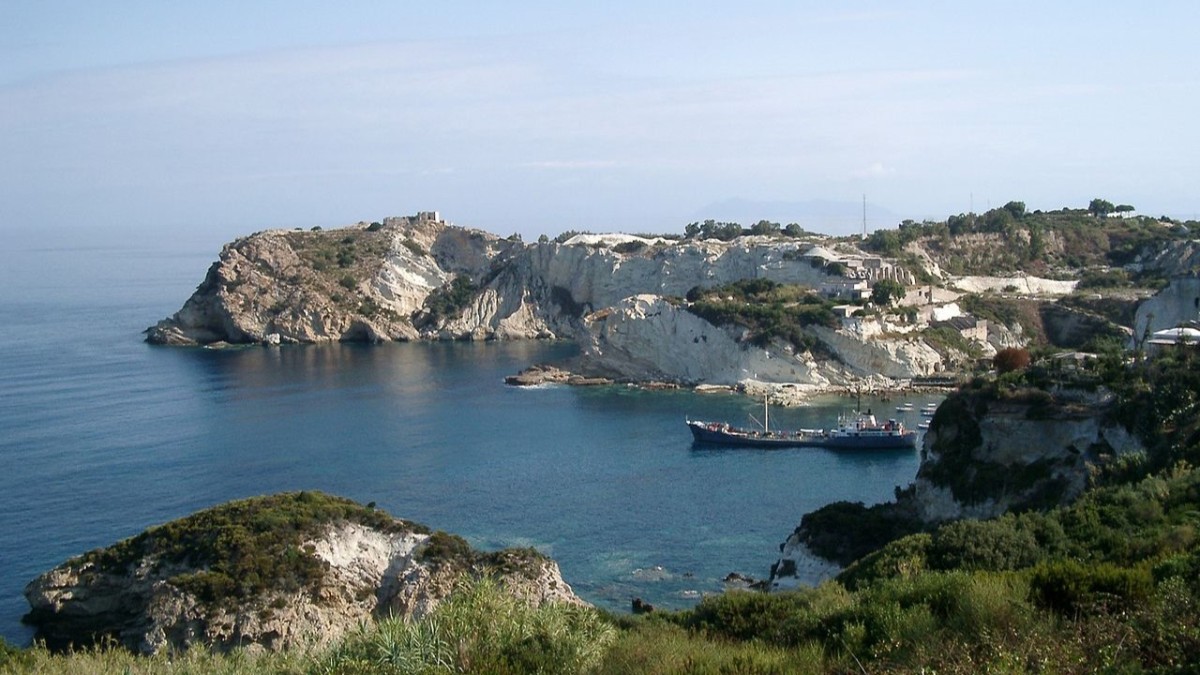
A short ferry ride from mainland Lazio, Ponza draws many visitors from Rome yet still centres its appeal on rocky coves and clear water. Frontone, the island’s longest beach, has free sections alongside beach clubs, while several of the most striking swimming spots are accessed by boat. White and yellow tuff cliffs frame much of the coastline.
Water taxis and small boat hire form part of the experience, especially for coves such as Chiaia di Luna. Steep paths and rocky entries mean access can require a bit of effort.
Who it suits: those comfortable with boat access and rockier swimming spots rather than conventional sandy beaches.
Pantelleria, Sicily
Closer to Tunisia than mainland Italy, Pantelleria replaces sand with flat volcanic rock terraces and deep blue water. The Guardian selection includes Balata dei Turchi in the island’s south, as well as swimming near Nikà where underwater thermal springs bubble up. Inland, the volcanic lake known as Specchio di Venere adds another element to the experience.
There are no traditional sandy beaches, so visitors lay towels on lava stone and enter the sea via rocks. The island’sstone houses and wind-shaped terrain reinforce its sense of separation from mainland resort culture.
Who it suits: travellers drawn to raw volcanic scenery and unusual swimming conditions rather than classic beach setups.
Elba – Nisporto Bay, Tuscany
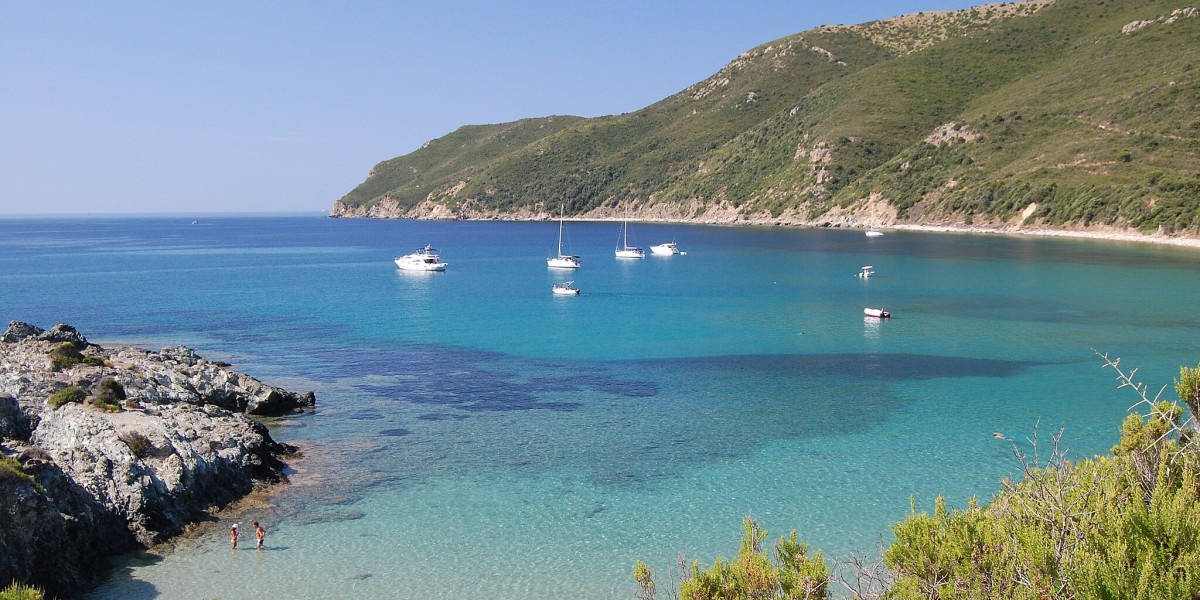
Part of the Tuscan Archipelago, Elba has around 145 kilometres of coastline, and Nisporto is singled out as a sheltered horseshoe-shaped bay in the municipality of Rio. The bay is reached via a winding road through green hills.
Even in peak season, Nisporto maintains a relatively tucked-away feel compared with busier parts of the island. Canoe and pedalo hire allow exploration of the surrounding coastline.
Who it suits: families and swimmers who prefer calmer water and easier access without heavy infrastructure.
Maremma – Marina di Alberese, Tuscany
Inside Maremma Regional Park near Grosseto, Marina di Alberese stretches for kilometres without beach clubs, bars or rows of umbrellas. Pine forests, dunes and wetlands shape the backdrop, and driftwood structures often serve as improvised shade. Wildlife in the wider park includes herons, Maremma cows and wild horses.
The beach is accessible by road and cycle paths that run through the protected area. Collelungo offers a quieter alternative reached on foot or by bike.
Who it suits: anyone wanting a long, sandy shoreline in a protected park setting with almost no commercial development.
Stay inspired for your travels in Italy —get our weekly newsletter for the latest travel, legal, and lifestyle news.