Rome has an old riddle hidden in plain sight. Its answer is not the Colosseum, the Pantheon or any other of the Eternal City’s best-known monuments, but four noble palaces remembered in a centuries-old rhyme.
Their clues are a cube, a harpsichord, a staircase and a doorway.
The old Roman rhyme behind Rome’s four wonders
The expression “the four wonders of Rome” emerged between the 18th and 19th centuries, when Romans created a rhyme celebrating four palaces:
“Il dado di Farnese, il cembalo di Borghese, la scala di Caetani, il portone di Carboniani.”
In English, it refers to the cube (or dice) of Farnese, the harpsichord of Borghese, the staircase of Caetani and the doorway of Carboniani.
Palazzo Farnese: the cube in Piazza Farnese
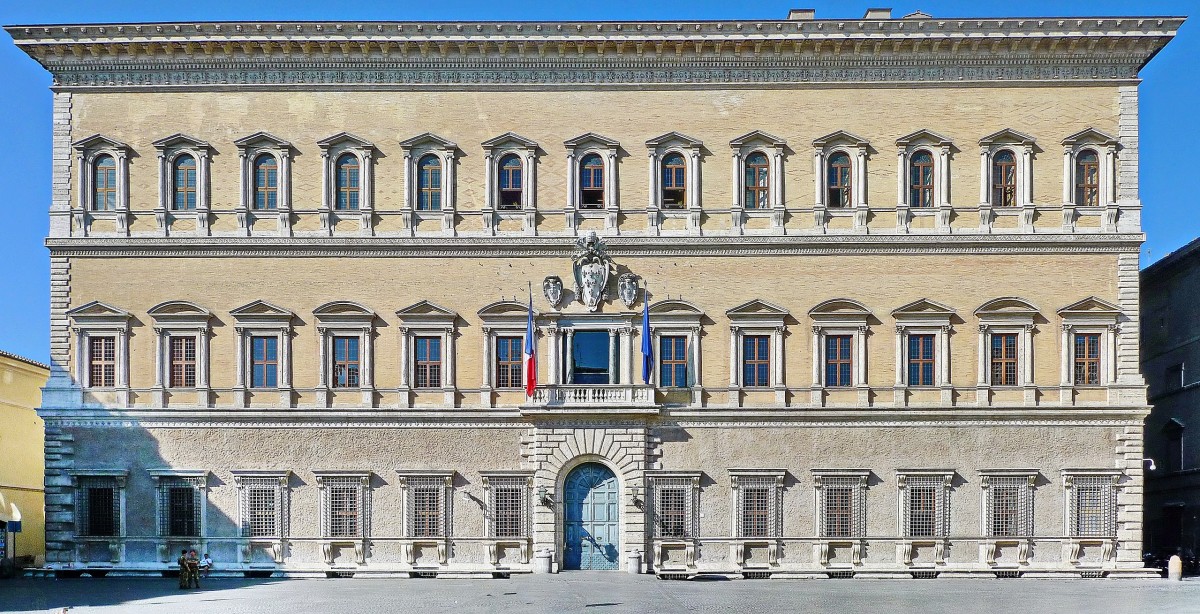
Palazzo Farnese, in Piazza Farnese in Rome’s Regola district, was the rhyme’s “cube”, a reference to its large square form.
Construction began in 1514 under Antonio da Sangallo the Younger. Michelangelo completed the second floor and cornice, while Giacomo Della Porta finished the palace in 1589.
Inside is the Carracci Gallery, frescoed by Annibale and Agostino Carracci between 1597 and 1608.
The building is now home to the French Embassy in Italy. Visits are possible only with booking and a compulsory guide.
Palazzo Borghese: the harpsichord
The irregular plan of Palazzo Borghese, particularly its façade on Via Ripetta, was compared with the keyboard of a harpsichord. Its shape developed as the building adapted to the streets that already surrounded it.
Its courtyard is framed by 96 Doric and Ionic columns. The garden has fountains dedicated to Venus, Flora and Diana, set in decorated niches.
The building housed the Borghese family’s art collection for centuries, before much of it was transferred to the gallery at Villa Borghese. It is privately owned and not regularly open for tourist visits.
Palazzo Ruspoli: the staircase of Caetani
The Caetani family acquired Palazzo Ruspoli in 1629. Around 1640, architect Martino Longhi the Younger created its monumental honour staircase and belvedere tower.
The staircase, reached from Via del Corso through the entrance on Largo Goldoni, contains more than 100 marble steps. Each was carved from a single block more than three metres long.
The property passed to the Ruspoli family in 1776. It now operates as an exhibition centre for temporary archaeological and art exhibitions.
Palazzo Sciarra Colonna: the doorway of Carboniani
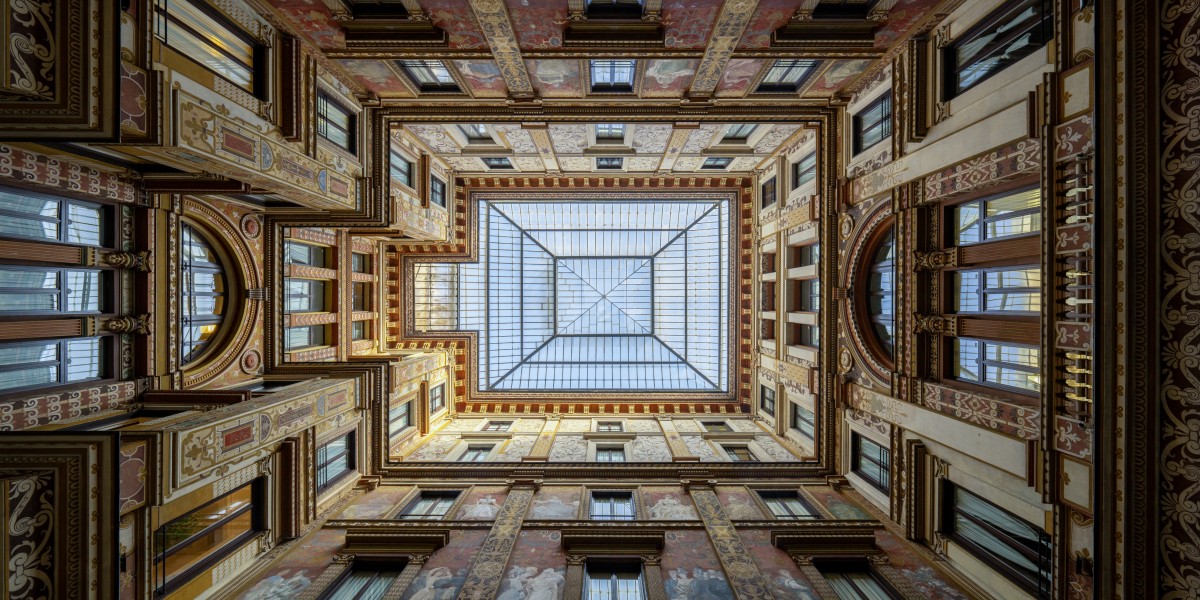
The fourth palace, Palazzo Sciarra Colonna, dates to the 15th century and is one of the oldest noble buildings on Via del Corso.
Its famous entrance inspired the final part of the rhyme. “Carboniani” referred to the Colonna family’s title as princes of Carbognano, a small town in the province of Viterbo.
Visiting Rome’s four wonders
The four palaces offer a quieter view of Rome’s historic centre, away from its most familiar monuments. Palazzo Farnese requires advance booking and a compulsory guide, while Palazzo Borghese is privately owned and not regularly open to visitors. Palazzo Ruspoli, meanwhile, hosts temporary archaeological and art exhibitions.
These palaces are part of the city’s non-touristy things to do in Rome, alongside the everyday corners that shape living in the city.