A medieval castle on the Lazio coast played an unexpected part in Cleopatra (1963), the Hollywood epic starring Elizabeth Taylor and Richard Burton. Two years before its release, 20th Century Fox transformed the castle’s surrounding shore into a setting fit for Alexandria’s royal palace.
Torre Astura’s transformation for Cleopatra
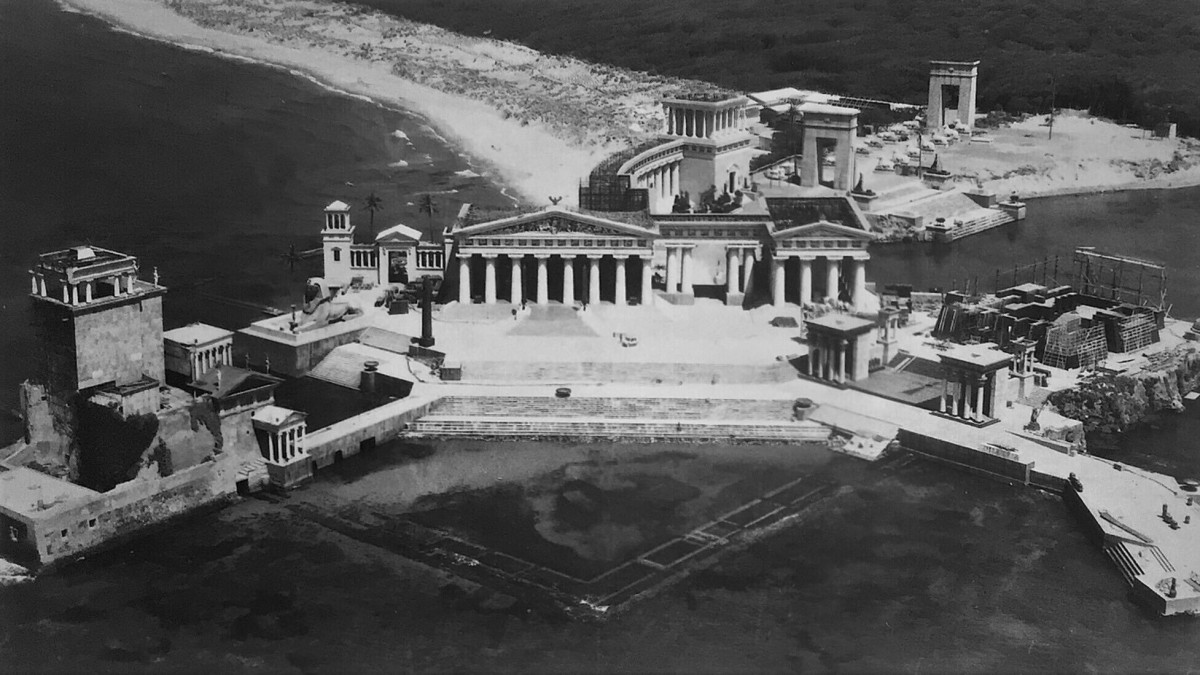
Torre Astura Castle stands on an artificial islet at the mouth of the River Astura, just over 10 km from central Nettuno. Its masonry bridge, sea-facing tower and coastal position placed a medieval Italian fortress in the world of ancient Egypt.
The production reached Torre Astura two years before the film’s release. Its beach became the site of the Alexandria palace scenery, placing the Lazio location among the film’s Italian shooting locations.
A castle with Roman and medieval roots
Torre Astura’s story reaches back well before its Hollywood moment. During the 1st century BC, this stretch of coast contained Roman patrician villas. Literary sources suggest that Cicero owned the Villa of Astura here.
The medieval fortress was established in 1193, when the Frangipane family took control of the site and built a maritime stronghold. In 1268, Conradin of Swabia took refuge in the tower after his defeat at the Battle of Tagliacozzo, before Giovanni Frangipane handed him to Charles of Anjou.
The castle later passed through the Caetani, Orsini, Colonna, Aldobrandini and Borghese families. The Colonna family added the walls and battlements that enclose the islet during a 15th-century restoration.
What remains visible around Torre Astura
The castle interior is not open to visitors, and the masonry bridge linking the islet to the mainland cannot be crossed. The closure is for conservation and safety reasons.
Several features can still be seen from outside:
- The pentagonal tower, designed with one corner facing the open sea.
- The perimeter walls and battlements around the islet.
- The brick-and-travertine arched bridge.
- Remains of a Roman villa, including parts of a large fishpond and other structures visible below sea level near the bridge.
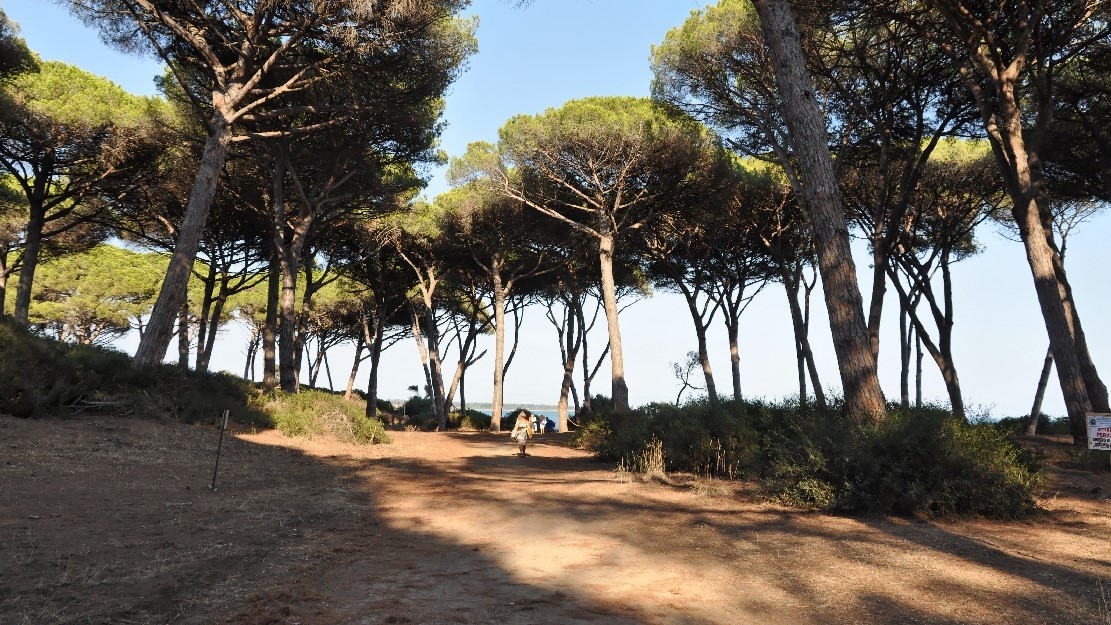
- The beach and pine forest, which cover an 8 km stretch of golden sand, juniper-covered dunes and Mediterranean scrub.
The wider area also supports fallow deer, wild boar, porcupines and numerous bird species.
Other films made at Torre Astura
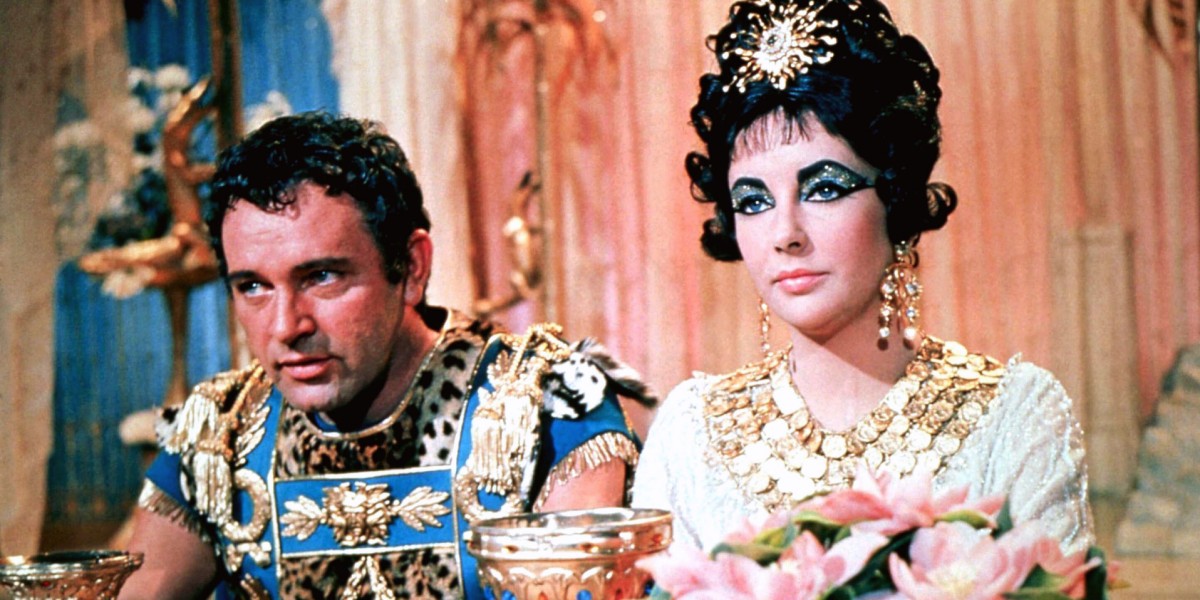
Torre Astura has appeared in several Italian and international productions after Cleopatra.
These include Mario Monicelli’s L’armata Brancaleone (1966), its sequel Brancaleone alle Crociate, Ettore Scola’s L’Arcidiavolo (1966), Luigi Comencini’s Pinocchio (1972), Salvo D’Acquisto (1974), and the television drama L’amaro caso della baronessa di Carini (1975).
In 2004, Wes Anderson used Torre Astura for scenes in The Life Aquatic with Steve Zissou, starring Bill Murray.
Visiting Torre Astura and Nettuno
Torre Astura’s beach and surrounding area are normally open to the public between July and August. Access is through the car park on Via Valmontorio, followed by a walk of roughly 2.5 km through the pine forest.
However, the beach was recently reported as closed, with no confirmed reopening date. The castle, beach and pine forest have been part of the Ministry of Defence’s Nettuno Military Range since 1984.
For visitors travelling from Rome, Nettuno is the terminus of the FL8 railway line, with journeys to Roma Termini taking around 70 to 80 minutes. The town has a medieval historic centre, Forte Sangallo and the Museum of the Allied Landing, as well as a marina and seafront beaches.
Stay inspired for your travels in Italy —get our weekly newsletter for the latest travel, legal, and lifestyle news.