Italy has firmly established itself as the most attractive destination in Europe for luxury hotel investment. With 59% of respondents citing it as their preferred market, the country is far ahead of Greece (11%) and Portugal (10%), reinforcing its role as a future hub for high-end hospitality in Europe. This emerges from Deloitte’s study, “The Italian Luxury Hospitality: Time to Elevate?”, which surveyed over 900 hospitality operators and investors active in Italy and international markets.
- Italy at the heart of luxury hotel development
- Strong returns and capital ready to invest
- Conversion and repositioning: luxury as a complete project
- Top destinations: cities lead, but interest in new locations grows
- High-end focus and ambitious returns
- Rising rates and the growing role of food & beverage
The report highlights strong confidence and optimism: around seven in ten operators expect annual revenue growth of between 6% and 20% in the sector over 2025–2027.
Italy at the heart of luxury hotel development
Six out of ten respondents believe Italy will become Europe’s leading market for luxury hotel development over the next three years. This optimism is backed by concrete investment plans: 70% of operators and investors intend to channel capital into the Italian market by 2028, with only a small minority ruling it out.
Italy’s competitiveness rests on a rare combination of factors: cultural and historical heritage, world-class cuisine and wine, diverse landscapes, and a well-established reputation as a premium destination. While this advantage did not always translate into investment appeal, it is now fully leveraged.
Strong returns and capital ready to invest
Profitability expectations are a key driver of interest. Over half of operators (52%) forecast annual revenue growth of 6–10% for Italy’s luxury hotel market, with a further 25% anticipating increases above 10%.
From an investment standpoint, 53% of respondents plan to commit over €100 million between 2025 and 2027, while more than one in five is ready to invest over €200 million. This significant capital is seen as essential for repositioning and transforming assets in the luxury segment, though it sometimes clashes with family-owned properties’ reluctance to sell or form partnerships with institutional investors.
Conversion and repositioning: luxury as a complete project
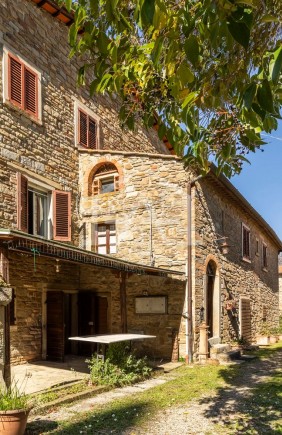
Sector growth is expected to come mainly from repositioning existing properties and converting historic buildings rather than new builds. Operators emphasise that this is more than refurbishment—it involves a fundamental redefinition of the hotel product.
Design, appropriate sizing, service quality, sustainability, and ESG criteria are central to creating a tailored guest experience. Traditional metrics are also shifting: many investors and operators are willing to reduce the minimum number of rooms to ensure consistency between location and concept. Operators favour hotels with 31–50 rooms, while investors lean slightly larger, preferring 51–70 rooms, or up to 100.
Top destinations: cities lead, but interest in new locations grows
Geographically, major cities—Milan, Rome, Venice, and Florence—remain the most attractive markets for luxury hospitality. They are followed by coastal and lakeside destinations already associated with international luxury, such as Costa Smeralda, the Amalfi Coast, Portofino, and Lake Como, which continue to draw investment despite strong seasonality.
There are also early signs of growth in mountain destinations, particularly in the Alps and Dolomites. Secondary cities remain marginal but are starting to attract interest as alternatives to mature or saturated markets.
High-end focus and ambitious returns
Investment strategies are predominantly aimed at the top segments. 68% of respondents plan to focus on Top Luxury, Premium, and Entry-Level Luxury hotels, while 27% target the Upper Upscale segment, highlighting the market’s strength and its capacity to support premium rates.
Return expectations are equally ambitious: nearly half of investors anticipate an IRR of 16–20% after a full asset repositioning, while 21% expect returns of 11–15%.
Rising rates and the growing role of food & beverage
Growth is expected to be driven primarily by higher average daily rates, which could rise by around 21% by 2027. Occupancy rates are also expected to improve, though investors take a more cautious view than operators.
Food & Beverage is increasingly seen as a strategic driver of luxury hotel repositioning. Over 70% of respondents plan significant investment in this area, with roughly a quarter of total capital allocated to restaurants and bars. Collaborations with renowned chefs or brands are considered crucial by 94% of respondents, underlining the central role of the gastronomic experience in defining luxury hospitality.