Italy’s luxury property market is increasingly pairing home ownership with access to private clubs, curated estate facilities and hospitality-led services. For a select group of buyers, the proposition extends beyond acquiring a villa, farmhouse or apartment to joining a closely managed residential community.
This model brings together luxury branded residences and private members’ clubs. Knight Frank’s Global Branded Residence Survey 2025 identifies 611 branded-residence projects worldwide, with the sector projected to exceed 1,000 by 2030.
In Italy, the approach is emerging across rural estates and spa destinations, where membership, service and controlled access form part of the ownership structure.
What club-linked luxury property in Italy involves
Club-linked ownership combines a residence with private amenities and managed services. Depending on the development, these may include concierge support, dining, wellness facilities, sport and estate-based activities.
Entry can take several forms: purchasing an entire residence within a managed estate, acquiring a fractional interest in a particular home, or joining a membership structure that provides stays and access to the development.
At Casali di Casole, for example, private residence club ownership is structured as fractional ownership. According to the residence club, each interest represents an undivided, deeded real-estate purchase in a specific Tuscan home.
Owners are guaranteed several weeks in residence each year, with additional short-notice stays available subject to availability. Housekeeping, maintenance and upkeep are handled by the club, while ownership interests may be gifted or resold.
Tenuta Toscana: a members-only estate near Castelfalfi
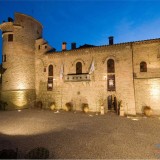
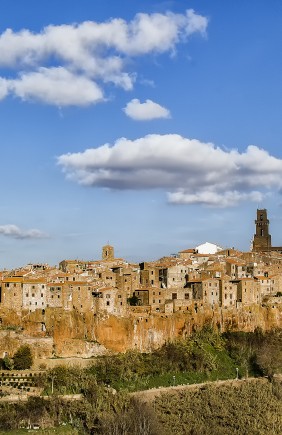
One of Italy’s clearest examples is Tenuta Toscana – Golf & Field Club, near the medieval village of Castelfalfi, between Pisa and Florence.
According to Il Sole 24 Ore, the project will feature 80 design residences within The Lodging Club. Member-owners and their guests will have access to the estate, including an 18-hole golf course designed by Tom Fazio, guided excursions in the hunting reserve, wine and olive-oil tastings using reserved estate labels, cooking courses and truffle hunting with experts.
The Lodging Club offers an alternative to buying an entire residence. Il Sole 24 Ore reports that a €2 million fee provides flexible stays in the residences, alongside related services.
What is significant in the luxury Tuscan context is that this model has been embedded within an existing mediaeval village and agricultural estate, rather than imposed as a self-contained enclave.
That distinction matters. It reinforces the idea that long-term value in Tuscany continues to derive from heritage, land stewardship and integration with place.
- Explore luxury property in Tuscany
Lake Garda: branded residences with a private-club element
Italy’s club-linked luxury-property model is not restricted to Tuscany.
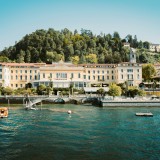
According to Il Sole 24 Ore, Lefay Resort & Spa Lago di Garda has entered the branded-residences sector and is described as the first Italian example within a spa destination.
Located on Lake Garda, The Lefay Club offers owners discounts on resort services and dining, a personal residential concierge and priority access to spa treatments, including during residencies by specialist therapists.
- Explore luxury property on Lake Garda
Paying for priority, not simply property
For an increasingly international cohort of high-net-worth buyers, luxury is no longer defined solely by owning a single exceptional home. It is also about the freedom to move between places, the ease of a fully managed life and entry into a discreet, like-minded community.
Italy’s new generation of rural estates reflects this changing mindset. The appeal lies as much in the infrastructure surrounding a residence as in the residence itself: priority access to private services, considered facilities, cultural programming and experiences that would be difficult to replicate independently.
The result is a more curated form of country living—one that replaces isolation with connection, without compromising privacy.
Fractional ownership adds another dimension, allowing several owners to share both the use and running costs of a property. For those whose lives span multiple countries, it can offer a more flexible route into Italy’s most sought-after landscapes, with the practical demands of estate management already taken care of.
The distinction matters. A standalone villa or rural estate remains the ultimate expression of private ownership; club-linked and fractional models offer something different: a stake not only in a beautiful place, but in a carefully orchestrated way of living there.