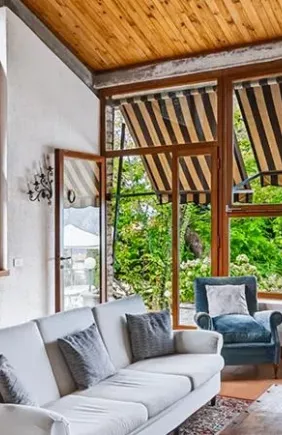
Italy is one of the few countries in Europe where millions of people live in the shadow of active volcanoes. For many residents and foreign buyers, the appeal of living near an Italian volcano is obvious: dramatic landscapes, fertile soil, and, in some areas, more affordable homes. At the same time, recent monitoring of volcanoes keeps the question alive: what is it really like to live near an Italian volcano?
Is it safe to live near Italy’s volcanoes?
Italy has four main active volcanoes, plus large volcanic systems such as the Phlegraean Fields near Naples. These areas are continuously monitored by Italian civil protection authorities and scientific institutes, with evacuation plans for the highest‑risk zones.
When living by a volcano in Italy, you should be aware of:
- Red and yellow zones around Vesuvius and Campi Flegrei, where evacuation plans and building rules are stricter.
- Ash fall and air quality during eruptions, especially around Etna and Stromboli.
- Insurance and resale considerations: some buyers factor volcanic risk into price and long‑term plans.
Living near Mount Etna
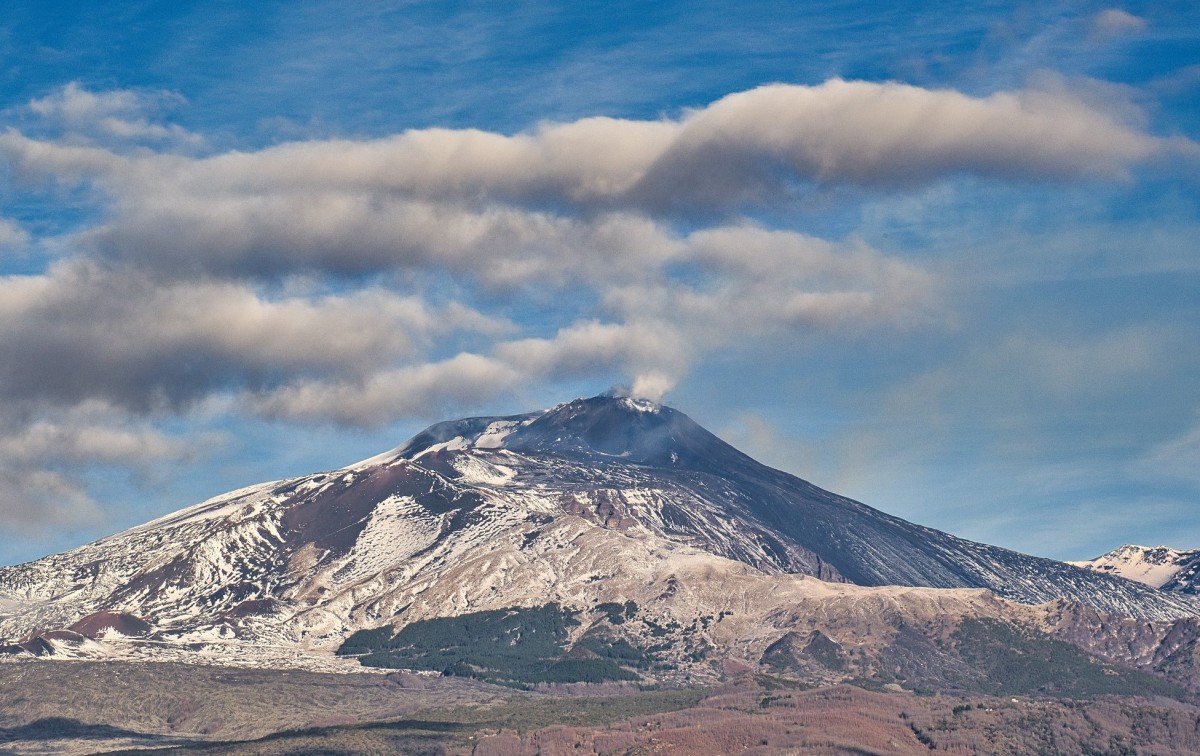
Mt Etna is Italy’s largest active volcano and a UNESCO World Heritage Site that rises above Sicily’s east coast. Eruptions are frequent, with ash plumes and lava flows that occasionally disrupt flights or local roads. Although serious damage to major population centres has been rare in recent decades.
Where people live around Etna
Etna’s lower slopes and coastal plain are densely populated and highly cultivated, thanks to fertile volcanic soils and a mild climate. If you’re considering living here, you’ll mostly be looking at:
- Catania – the main coastal city and economic hub on Etna’s southern flank.
- Nicolosi, Pedara and Trecastagni – residential hillside towns known as gateways to Etna.
- Zafferana Etnea and Giarre/Mascali – smaller towns between the volcano and the Ionian coast.
- Acireale and nearby seaside villages such as Aci Castello and Aci Trezza.
Property prices near Mt Etna in 2025
Housing around Etna ranges from city apartments in Catania to village houses and rural properties on the slopes.
According to idealista’s price evolution report for Catania in November 2025, property prices in Catania averaged around €1,237 per m², while rent prices in Catania averaged €9.6 m². Smaller slope towns often have lower prices than central Catania, while sought‑after coastal spots can be higher.
Living near Vesuvius
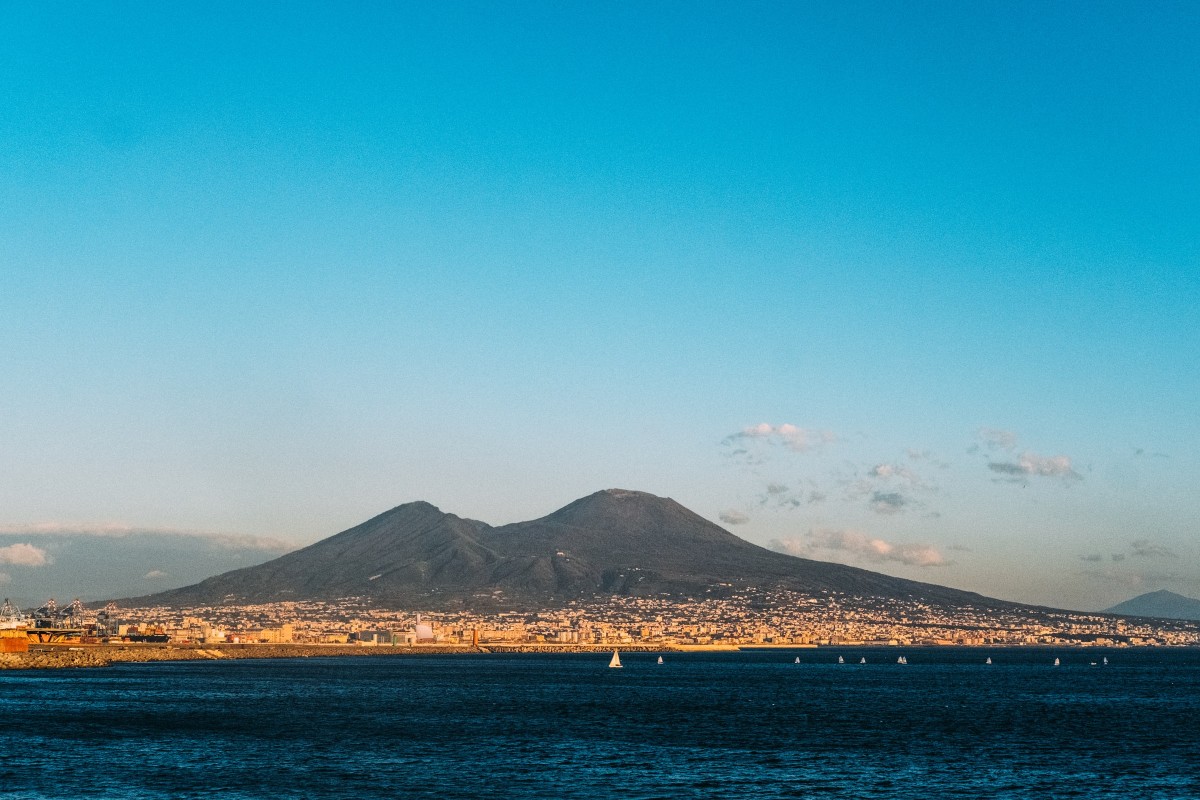
Mt Vesuvius looms over the Bay of Naples, with the Phlegraean Fields stretching out towards Pozzuoli and Bacoli. This is one of the most densely populated volcanic areas in the world. However, daily life for most people here looks more like busy city streets, espresso at the bar and ferry trips across the bay than disaster films. The volcano has not erupted since 1944, yet it is closely monitored, and evacuation plans exist for the highest‑risk zones.
Where people live around Vesuvius and Campi Flegrei
If you move here, you’re not “living next to a volcano” in isolation – you’re joining a huge metro area spread around the gulf. The main places people look at are:
- Naples – chaotic, historic and addictive, wrapped around the bay with Vesuvius on the horizon.
- Ercolano, Torre del Greco and Torre Annunziata – towns on Vesuvius’ lower slopes, between the city and the coast.
- Pompei – modern town next to the famous archaeological site, with rail links into Naples and along the coast.
- Pozzuoli and Bacoli – inside the Phlegraean Fields caldera, with volcanic lakes, fumaroles and sea views.
Property prices near Vesuvius in 2025
Around Vesuvius and Campi Flegrei, you’ll find everything from compact city flats in Naples to family houses in suburban towns along the slopes and coast.
Property prices in Naples in November 2025 averaged around €2,791 per m², while rent prices in Naples were roughly €15.4 per m². Prices in some Vesuvius‑side towns can be lower than in central Naples, while waterfront areas and well‑connected districts near the historic centre tend to be more expensive.
Living on the Aeolian Islands
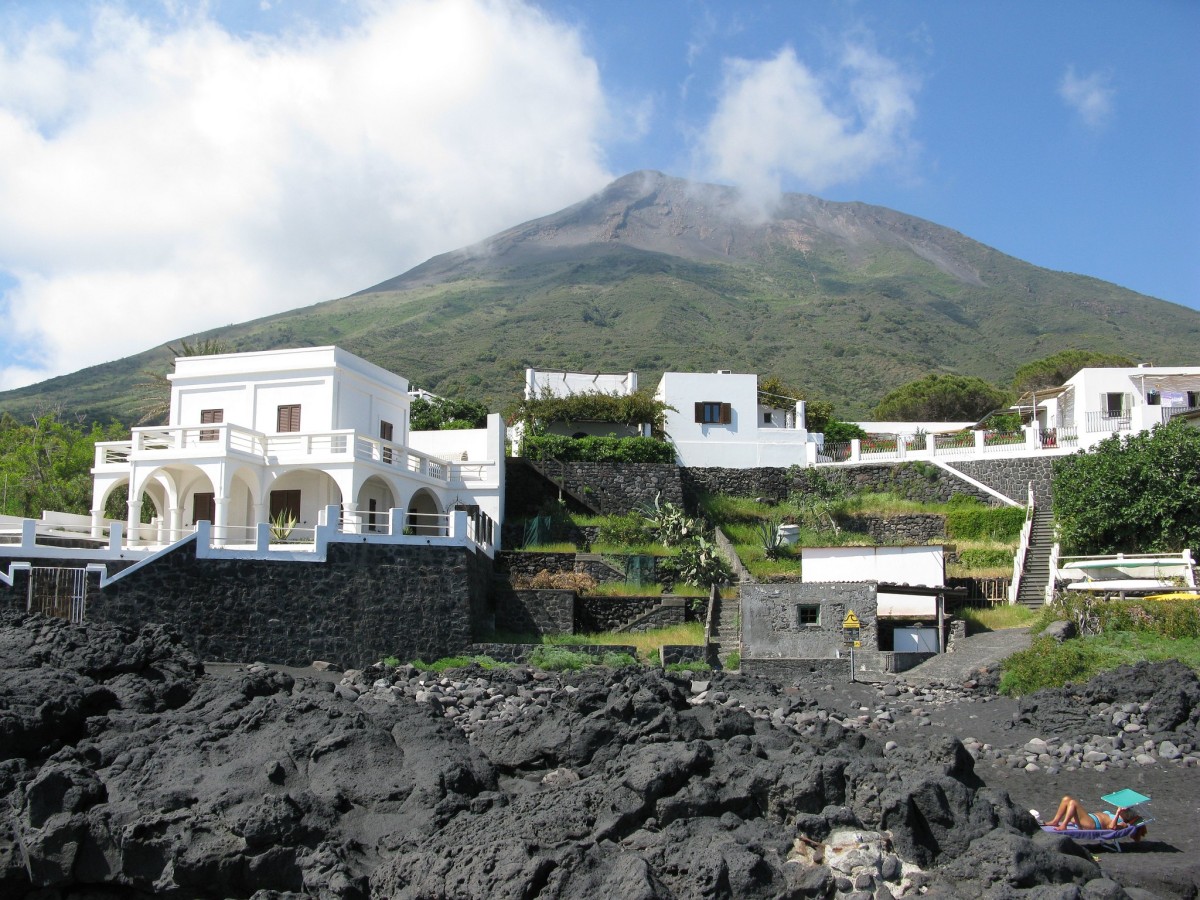
The Aeolian Islands sit off the north coast of Sicily, a scattered group of volcanic islands in the Tyrrhenian Sea. Stromboli is almost constantly active, sending up small eruptions that have earned it the nickname “the lighthouse of the Mediterranean”. Vulcano still has more hot fumaroles and thermal mud, and the archipelago is home to some of Italy's most underrated islands. Daily life, though, is more about ferries, fishing boats and slow island routines than dramatic lava flows.
Where people live in the Aeolian Islands
Only a few of the islands are active, and their permanent populations are relatively small. If you’re picturing island life here, these are the main spots:
- Lipari – the largest island, with the main town, services and best transport links.
- Stromboli – small settlements like Stromboli village and Ginostra at the foot of the cone.
- Vulcano – Vulcano Porto and nearby hamlets clustered around the harbour and crater area.
- Salina and Panarea – smaller, quieter islands with a mix of year‑round residents and seasonal visitors.
Many people choose a “safe distance” by living on Lipari or Salina, where you can still see the eruptions of Stromboli from afar.
Property prices in the Aeolian Islands in 2025
Property here is shaped by island size, ferry access and how seasonal the area is. There are modest village houses, simple apartments in Lipari town and more expensive second homes with sea views.
In November 2025, property prices in Lipari averaged around €2,249 per m². Homes on Lipari and Salina tend to be more expensive than simpler houses on Vulcano or Stromboli, and long‑term rentals can be harder to find in peak summer when many owners switch to holiday lets
Living near Mount Epomeo
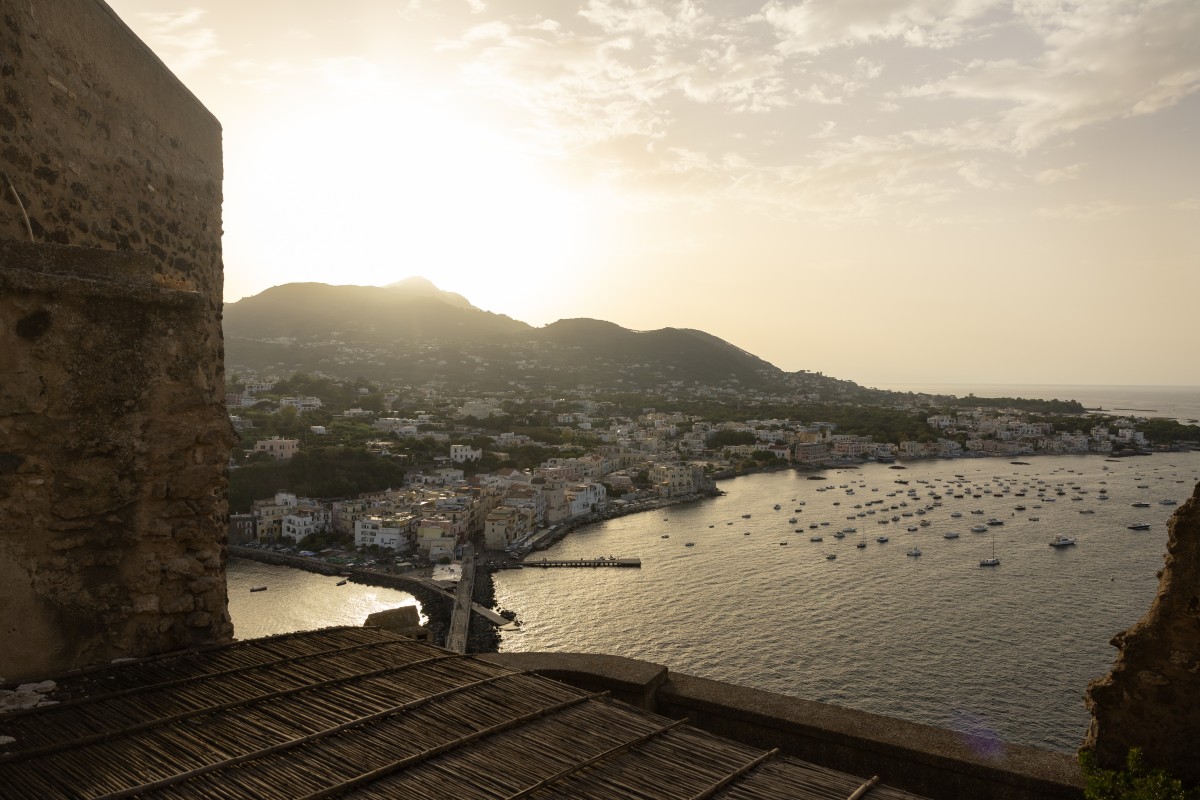
The island of Ischia sits in the Bay of Naples. Its green slopes are dominated by Mt Epomeo, an ancient volcanic peak rather than an obviously smoking cone. Life here revolves more around thermal spas, seaside promenades and small-town routines than dramatic eruptions. However, it is still part of the wider Campanian volcanic system, so monitoring and civil protection plans are in place.
Where people live on Ischia
Most of Ischia’s population is strung along the coast, with hilltop hamlets climbing towards Mt Epomeo. If you’re picturing daily life here, the main areas are:
- Ischia Porto and Ischia Ponte – the main town and ferry port, with shops, nightlife and Aragonese Castle just offshore.
- Casamicciola Terme and Lacco Ameno – spa towns on the north coast, with thermal parks and a quieter feel.
- Forio – on the western side, with long sunsets, beaches and easy access to Epomeo’s hiking trails.
- Serrara Fontana and small hill villages – higher up the slopes, cooler in summer and more rural.
Property prices on Ischia in 2025
Property on Ischia ranges from compact flats near Ischia Porto to terraced houses and small villas further inland, plus a lot of holiday-focused stock.
Property prices in Ischia averaged around €3,700 per m² in November 2025. Homes closer to Ischia Porto and the main beaches tend to sit at the upper end of the range, while properties in hill villages near Mt Epomeo can be a little cheaper.
Living in the Alban Hills
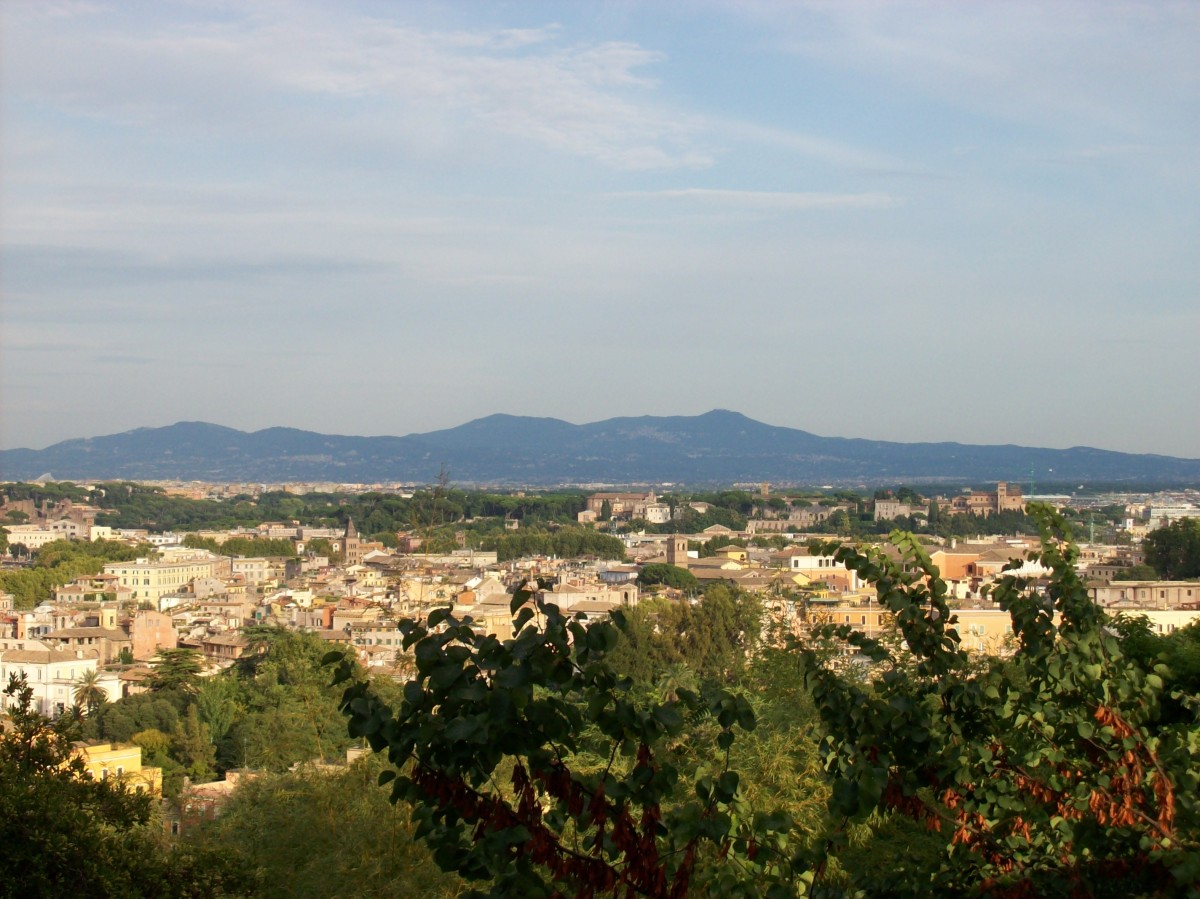
South‑east of Rome, the Alban Hills are the remains of an ancient volcanic complex. It's dotted with lakes, vineyards and the historic towns known as the Castelli Romani. There’s no visible volcanic activity these days, but you get cooler air than Rome in summer, wine country, and a semi‑rural feel within commuting distance of the capital.
Where people live in the Castelli Romani
Plenty escape up here for day trips from Rome or move permanently for more space. These places suit anyone who wants a calmer base with reasonably easy access to Rome for work or culture. If you’re looking at the Alban Hills as a place to live, the main towns are:
- Frascati – a lively town with wine bars, historic villas and good rail links into Rome Termini.
- Castel Gandolfo – perched above Lake Albano, known for the Papal summer residence and lake views.
- Albano Laziale – a larger local hub with shops, services and a more year‑round residential feel.
- Grottaferrata, Marino and Genzano di Roma – smaller towns and villages dotted among vineyards and wooded hills.
Property prices in the Alban Hills in 2025
Housing in the Castelli Romani ranges from apartments in historic centres to detached houses with gardens or small plots of land.
According to idealista’s price evolution report for property prices in Frascati sit around €2,928 per m², while rent prices in Frascati average €13 per m². Prices in lake‑view locations such as Castel Gandolfo tend to be higher, while smaller inland towns and less central streets in Albano Laziale can be more affordable than many neighbourhoods in central Rome.
Stay in the know about living in Italy as a foreigner—get our weekly newsletter for the latest travel, legal, and lifestyle news.