Italian Christmas desserts aren’t a one‑off finale. Through December, families slice panettone after lunch, dust pandoro with sugar at teatime and pass plates of honeyed bites with coffee or a small glass of something bubbly.
The classic Italian desserts everyone knows
You've almost certainly tried these two typical Italian bready treats, which heavily feature on an Italian table at Christmas.

Panettone
Milan’s festive dome of enriched dough, studded with raisins and candied citrus. Soft, airy and slightly citrusy. Italians slice it plain, toast it lightly, or serve with mascarpone cream or zabaglione. In some regions, you’ll find it used as the base for a festive trifle.
Pandoro
Verona’s star‑shaped butter cake with a fine crumb and a snowfall of icing sugar. No dried fruit here. Slice horizontally to create a “Christmas tree” and layer with mascarpone or chocolate cream. Kids love giving the whole cake a good shake inside the bag to coat it thoroughly with sugar.
Regional festive favourites worth knowing

Struffoli (Campania)
Tiny fried dough balls glazed in honey, topped with sprinkles, and often shaped into a wreath. Sticky, crunchy and very Naples at Christmas. In many Neapolitan families, it’s the kids’ job to arrange the little pyramids before the honey sets.
Torrone (various)
Honey‑sweet nougat made with whipped egg whites and toasted nuts. Found soft and chewy in the south, brittle up north. Almond is classic; pistachio and hazelnut are common too. According to local lore, some of the earliest torrone were invented by nuns for convent feasts.
Panforte and ricciarelli (Siena)
Spiced, dense fruit‑and‑nut cake alongside almond‑paste biscuits with a crackly sugar crust. Both are Tuscan stalwarts. Panforte was once considered medicinal, and you’ll still see it sliced thin to go with vin santo.
Mostaccioli (Naples)
Diamond‑shaped, cocoa‑spiced biscuits, often cloaked in dark chocolate. Soft inside, gently aromatic. Traditionally, these were stamped with religious symbols or family initials before baking.
Cartellate (Puglia)
Shortcrust fig cookies scented with citrus, spices and sometimes chocolate or nuts. Proper tea‑time bait. Each Sicilian town claims a secret filling blend—some tuck in dark chocolate, others go heavy on orange zest.
Cuccidati (Sicily)
Shortcrust fig cookies scented with citrus, spices and sometimes chocolate or nuts. Proper tea‑time bait.
Pangiallo (Rome)
Golden, fruit‑and‑nut sweet loaf traditionally baked for the winter solstice. In ancient Rome, it was baked as an offering to encourage the return of the sun after the shortest days of the year.
Feeling inspired by all things cocoa? Tuck into more chocolate Italian desserts for a taste of how Italians do chocolate in winter.
Serving and pairing notes
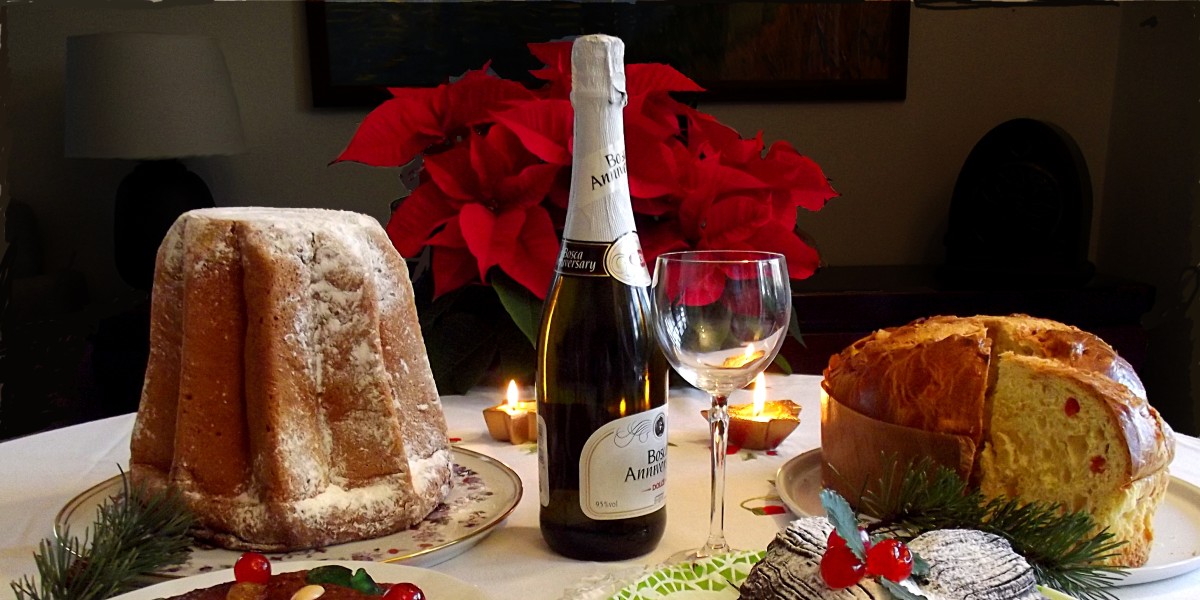
Set out a small spread and let people graze. Panettone and pandoro love mascarpone cream, citrus marmalades or a drizzle of warm chocolate. For the glass: spumante, Moscato d’Asti, Vin Santo or a Sicilian passito work nicely—if you’re looking for perfect bottles, you’ll find plenty of inspiration among the many Italian sweet dessert wines. Keep portions small and varied.
Are you an Italian foodie? There's a mouthwatering spread of authentic Italian desserts you most likely haven't tried, beyond the famous tiramisu that everyone's heard of.