In global prime real estate, visibility often commands attention — Monaco’s waterfront, the villas of Saint‑Tropez, the penthouses of Manhattan. Yet among ultra-high-net-worth families, a quieter pattern has emerged. Away from cameras and commercial density, capital is consolidating in landscapes that offer permanence, protection, and privacy.
In Tuscany, that landscape is Val d’Orcia.
Designated a UNESCO World Heritage Site and protected by some of Italy’s most restrictive planning laws, Val d’Orcia is not simply another desirable countryside location. It is a finite, tightly controlled cultural territory where ownership is both a privilege and a long-term strategic decision.
For billionaires and multi-generational family offices, it represents something rare: an irreplaceable asset insulated from over-development and trend-driven volatility.
Scarcity by law, not by marketing
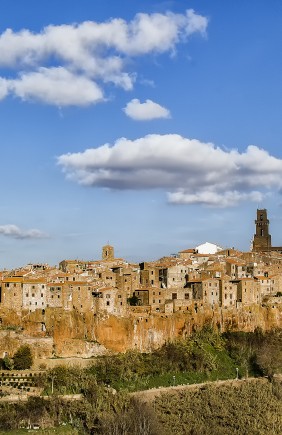
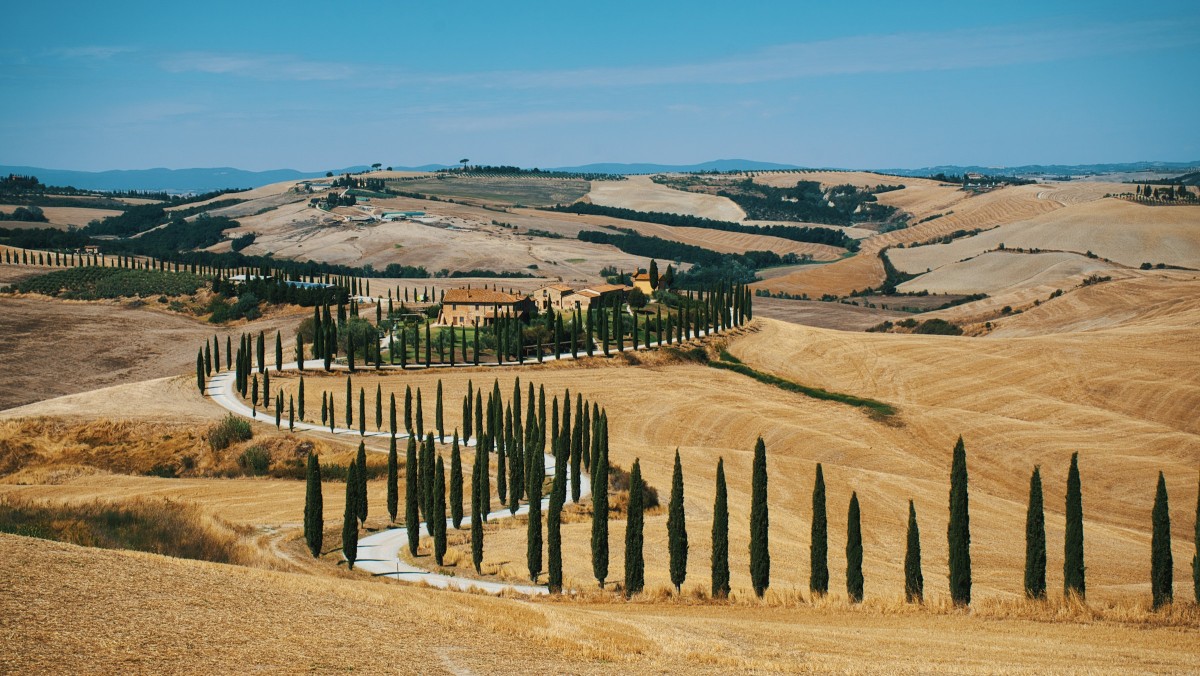
Val d’Orcia’s rolling hills, cypress-lined ridges, and medieval hill towns — Pienza, Montalcino, San Quirico d’Orcia — have remained largely unchanged since the Renaissance. Crucially, this continuity is enforced.
UNESCO designation and strict regional planning controls severely limit new construction. Large-scale development is virtually impossible. Restoration must respect architectural heritage and landscape integrity.
For investors, this creates structural advantages:
- Finite supply
- Protected sightlines and land use
- Barrier to speculative overbuilding
- Long-term value resilience
Unlike resort markets that expand with demand, Val d’Orcia cannot scale. Its boundaries are geographic and regulatory — and fixed.
Estates designed for privacy
Luxury here is expressed through land, history, and discretion rather than spectacle.
Prime holdings typically include:
- Historic noble villas with Renaissance provenance
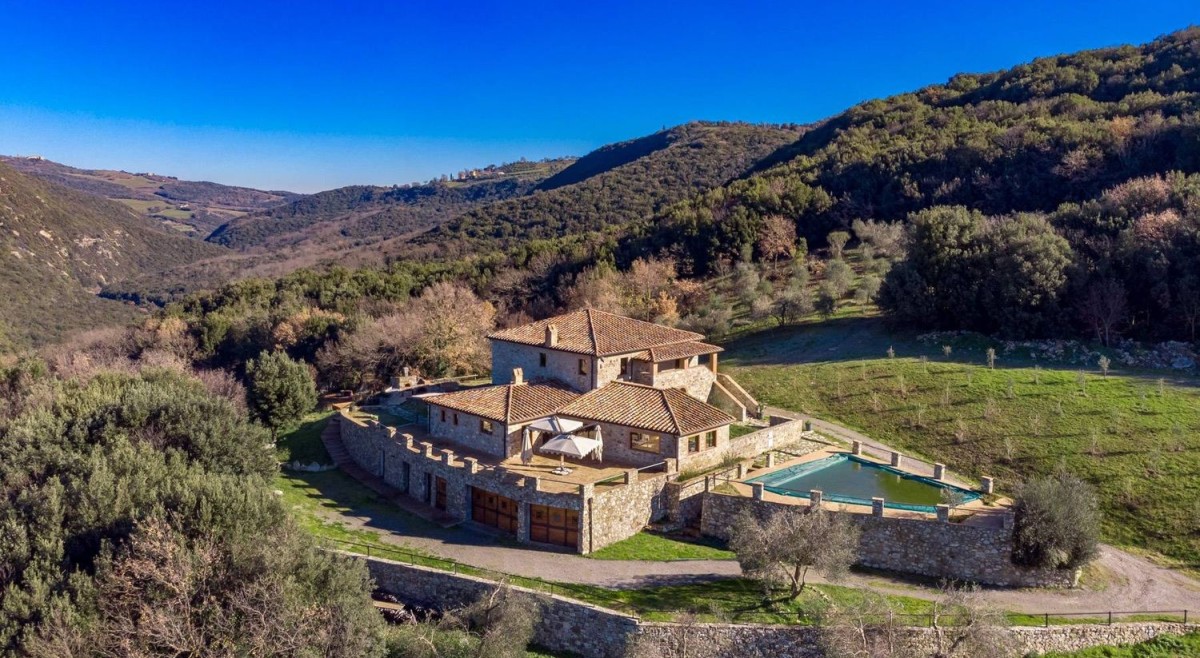
- Restored stone casali set within 20–100+ hectares
- Brunello di Montalcino wine estates
- Agricultural holdings with olive groves and truffle land
- Turnkey compounds with guest residences and staff quarters
Access is often via private roads. Panoramic positions ensure no visual intrusion. Advanced security systems, wellness pavilions, wine libraries, and integrated smart-home infrastructure are discreetly incorporated into centuries-old stone structures.
For globally visible individuals, Val d’Orcia offers what few luxury markets still can: anonymity without compromise.
Wine, land, and strategic passion assets
Montalcino anchors the region’s international prestige through Brunello di Montalcino DOCG — one of the world’s most respected wines.
Acquiring a vineyard estate here is not simply lifestyle-driven; it can represent:
- A tangible agricultural asset class
- A brand extension platform
- An intergenerational business
- A diversification strategy within EU jurisdiction
Agricultural land across Tuscany has demonstrated long-term stability, and premium wine production offers both emotional and commercial upside when structured strategically.
For many UHNW families, these estates become legacy anchors — assets to steward rather than trade.
Fiscal and structural considerations
Italy has quietly positioned itself as attractive to internationally mobile wealth. Of particular relevance:
- A €200,000 annual flat tax regime for new residents on foreign income
- Competitive inheritance structuring compared to several EU markets
- Strong legal protections for property ownership
- Acquisition flexibility via domestic or international entities
Val d’Orcia is approximately two hours from Florence and Rome international airports, offering seclusion without isolation. Private aviation facilities are within comfortable reach, reinforcing its practicality as a European base.
How it compares to other prime Tuscan markets
Tuscany offers three distinct prime profiles:
Forte dei Marmi
The region’s most visible ultra-prime coastal enclave. Strong liquidity, high seasonal rental yields, and significant price momentum. More exposed to global wealth cycles and trend-driven demand.
Chianti
Highly recognisable, accessible from Florence, with broader inventory and consistent lifestyle-driven demand. Balanced in terms of rental potential and transaction volume.
Val d’Orcia
Defined by scarcity and permanence. Fewer transactions, more discretion, structurally limited supply. Appreciation tends to be steady rather than speculative, supported by rarity rather than turnover.
In strategic terms:
- Forte dei Marmi offers liquidity and short-term momentum.
- Chianti offers accessibility and hospitality upside.
- Val d’Orcia offers preservation, privacy, and generational security.
For those prioritising capital defense over visibility, Val d’Orcia stands apart.
Restoration as stewardship
Acquisition here is often an act of cultural stewardship. Sensitive restorations preserve original stonework, wooden beams, and travertine detailing while integrating:
- Renewable energy systems
- Geothermal climate control
- Museum-grade art storage
- Wellness and spa facilities
- Estate management infrastructure
The result is refined rather than ostentatious — properties aligned with modern performance standards while honouring centuries of architectural history.
A market for those who do not need attention
Val d’Orcia does not compete for headlines. It does not rely on marina culture, nightlife, or high-visibility status signalling. Its value lies in what it refuses to become.
The landscape immortalised by Renaissance painters will remain unchanged for centuries to come. Ownership here is participation in a protected continuum of land, culture, and heritage.
For ultra-high-net-worth individuals seeking:
- A finite European anchor asset
- Structural scarcity
- Landscape permanence
- Discretion and privacy
- Intergenerational positioning
Val d’Orcia offers something increasingly difficult to acquire in global luxury real estate: certainty.
In a world defined by acceleration, this is the Tuscan market billionaires prefer — precisely because it does not try to be one.